

Russia is waging war with Ukraine not only on the front but also in cyberspace. Every day, Kremlin propaganda broadcasts many fakes about Ukrainian troops and politicians, trying to turn both the domestic consumer and the Western audience against Ukraine.
In Ukraine, they are trying to build their information policy and protect themselves from false information, coordinating what goes into the public space. However, it is difficult to track fakes and warn them in advance. For this purpose, certain politicians declare the possible adoption of unpopular decisions.
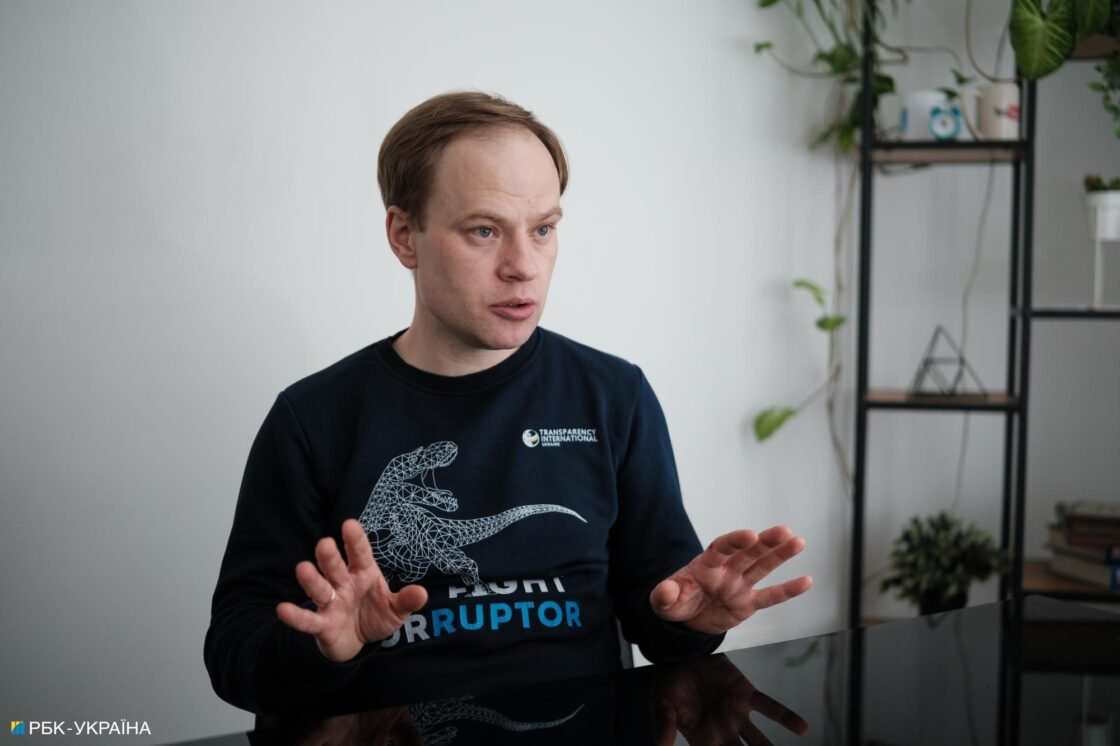
What will be done with information channels, why 2024 will be a decisive year for the national telethon and how to motivate conscripted citizens to join the army – the chairman of the Committee on Freedom of Speech of the Verkhovna Rada talked about this in an interview with RBC-Ukraine Yaroslav Yurchyshyn.
Will Telegram and TikTok be blocked in Ukraine?
– Recently, people have been discussing your initiative to block Telegram. On the one hand, yes, a lot of different information, including disinformation, goes through Telegram, on the other hand, the blocking itself can be considered an infringement of freedom of speech. Has your opinion changed on this issue in the last month?
– My opinion remains unchanged. The best way to interact with any social network is to establish contact with the administration and mechanisms that make it possible to influence actions that contradict the Criminal Code of Ukraine. For example, when the United States discovered ISIS-related posts in Telegram, at first Telegram also tried to ignore these facts but a full-scale lawsuit began and Telegram without further ado closed the channels and removed verification from the accounts.
Previously, Telegram generally ignored the appeal of the Ukrainian authorities. Now we come to people.
– Pavel Durov?
– We communicate with different people. Do we have a 100% guarantee that Durov is the owner of Telegram? According to him, yes. And he does not say much. There is a person who is nominally responsible for communication in Eastern Europe, and accordingly in Ukraine as well.
After intensifying our discussion about the need to try to interact with social networks, the position has changed. If earlier there were no answers at all, now the request that was sent by the SBU about at least 26 telegram channels is being considered.
– And what channels are these?
– “Legitimate”, “Resident”… They are all quite public. The SBU monitors everything that can be interpreted as a justification of Russian aggression – both anonymous and personalized channels. But there are already clear arguments for these 26 channels.
In such channels, the network is very clearly traced – bots that disperse some harmful theses on other synchronized channels. Therefore, we are currently trying to establish communication with the Telegram administration. This is now the most popular network. At the same time, we do not know the ownership system of Telegram, the probable registration, which was initially in Russia, then there was an attempt to register in the USA, but it failed and the owners seem to have registered in the UAE.
In addition, there is no information that Durov gave up his Russian passport. He is now a citizen of the UAE, but this does not mean giving up his Russian citizenship. That means, there is probably some kind of control over Telegram from the Russian side, and we have no guarantee that all the information of individual people there is under protection and is not released to the secret services of the Russian Federation.
There are a few things that are particularly stressful on this network. For example, when the late Navalny created a bot to collect information about the previous so-called elections in Russia. This bot was instantly blocked. There was an argument that this is, they say, politics, and Telegram rejects politics, but even now we see hundreds of political channels on the network. Such stories, when Telegram blocks things that are not in favour of Russia, show that Durov’s communication with the Putin regime may have remained.
To block Telegram, you need to have a clear argument – the NSDC’s decision on sanctions, for example. For this, some serious critical situation with a leak of information must occur. We would really hate for that to happen, so we have to make a choice.
– Telegram has now become one of the main sources of information. We are mass media, we are registered, we pay taxes and are responsible for disinformation. There are various mass media – grant and commercial, but they all pay taxes. Telegram channels, millionaires hardly pay taxes and do not bear responsibility to people, but position themselves as mass media.
This is wrong, it is non-competitive. This state is not performing its functions. On the one hand, we complain that we do not have resources and on the other hand, we drive legal business into unfair conditions. Understanding this, the most promoted Telegram channels do not wait for an advertiser to come to them. They come to a business, for example, to Uklon, and say – you order contextual advertising from us. Uklon says – from which firm? Why should I order? They answer him and say, pay with crypto or cash and we guarantee everything will be fine. And if the business refuses, it creates image problems.
This is a classic scheme. And these are unequal rules of the game. Because this money, will go into pockets, it is impossible to track it and no tax is paid for this advertising. Well, that’s if we don’t say that it all looks like blackmail.
– Is blocking Telegram an infringement on freedom of speech?
– No, it is not, because freedom of speech is derived from personalization, which means, we understand who is behind this word. Accordingly, when this word violates the legal framework, for example, there is a call for terrorism or justification of Russian aggression, then you must understand that your word leads to certain consequences.
Recently, the Centre for Countering Disinformation at the National Security Council made a very good analysis that clearly showed cause-and-effect relationships. At first, the Russians were harshly brainwashed, in particular, with the help of Telegram, about the fact that “kokhly (a derogatory term used for Ukrainians) are not people.” Then there were the atrocities in Irpen and Buchi. Negotiations with prisoners, calls to relatives, and the results of the testimony clearly showed that it really works. Therefore, when they talk about the freedom of speech of anonymous Telegram channels, what is it about? Who is behind this term?
– What about taxes? I understand that you have already contacted the State Tax Service.
– Yes, we asked whether Telegram pays taxes. And what steps does the tax service plan to take for Telegram to still pay according to the “Google law” (“Google tax” – the law that obliged large technology companies such as Google, Amazon and Meta to pay a 20% tax on added cost – ed.)?
A separate question – is the economic activity of individual Telegram channels recorded? Advertisers turn to them. If there is advertising, there is some commercial activity, and in what status? So far, there has been no answer to these questions from the tax office.
– We also see that the authorities are now trying not to ignore Telegram, but to recognize that it exists and even somehow communicate with individual channels. For example, at some press conferences or briefings, there are already people who present themselves as journalists on Telegram channels.
– If we follow logic, how should the history of Telegram, as a source of information, develop? First, according to the law on media, such channels should be registered as electronic sources, after which they could all go to official events. It is a strange situation when we declare European integration, adopt a law on media that allows electronic media to register, and then spit on what we adopted and invite unknown people to press conferences.
If the conditional “Trukha” were registered, we would know who is behind them and who is responsible. This is the choice of the authorities themselves – not to invite, for example, unverified sources, so as not to fall into a trap when you invite someone, and literally a day later some shadow capital from Russia passed through this channel. In this case, if we even go to the administration of this channel, it will simply re-register tomorrow and continue to exist. The state does not have the opportunity to run after every Telegram channel, because it is not so difficult to create and promote a Telegram channel if desired.
The key story is to interact not so much with channels as with network administrations. Then it will be possible to block certain content, as it happens on Facebook or YouTube. Now there is an initiative that is consistent with what is happening in the European Union – if a social network is not ready to show its ownership system, then it is verified as non-transparent from the point of view of financing and restrictions are imposed. These restrictions do not apply to private correspondence, but you should understand that this is a suspicious network for the state and there is no guarantee of 100% protection of your private data.
– Let’s sum up – you don’t give up the idea of blocking Telegram?
– The story is that in order to impose some sanctions, you need to go a long way. That means fixing the problems, fixing the fact that the network is not working, fixing the challenges that we face for national security, presenting it to the National Security Council, the decision of the National Security Council, the presidential decree and the implementation of the presidential decree. Does this card stay on the table? Yes. Can it be used? Yes, any attack on our information security could be very detrimental.
– In the US, the idea of closing TikTok is currently being discussed. If they do, will we impose the same sanctions on TikTok?
– On the one hand, we have such a basis for sanctions – if such sanctions are introduced in a partner country, we introduce them. Everything is very difficult here, but it can become another trump card in negotiations not only with TikTok but also with Telegram if the States take such a drastic step.
What exactly are the States talking about? About the fact that it is not known how personal data is collected, it is not known how it is processed or it is not known what the personal data is used for. They understand that in the post-information age, this is a key resource, an important human asset. And if it is not used in the legal field, then in the final version not only the person suffers, but also the state as a whole. Therefore, the story develops, despite the fairly high standards of freedom of speech in the United States.
We are following the process. We follow the process in Spain regarding restrictions on the use of Telegram (in Spain the court first blocked and then reversed its decision to block Telegram – ed.), we follow the recommendations of the Norwegian government not to use either TikTok or Telegram in management processes. It must be understood that in the Scandinavian countries, if there is a recommendation of the state not to do something, then most of the society does not do it.
We follow the process of limiting the use of artificial intelligence. We will now adapt the Digital Service Act in Ukraine because it will be part of our European integration task. Therefore, we will definitely act.
Why 2024 will be decisive for the national telethon
– Regarding the work of the national telethon. Do you see any benefit from it now?
– It is necessary to understand what we are comparing it with. If we compare the need for a single marathon at the beginning of the invasion, then of course, both the effectiveness and the need have now decreased. But the question remains – four of the six channels that signed the memorandum regarding the telethon are commercial channels that at one or another period of their history were connected with one or another financial and industrial groups, or simply put, oligarchs.
We understand that in the process of de-oligarchization, the vast majority of channel owners transferred their ownership to channel editors and media representatives, but we as a state did not monitor whether these representatives, who now nominally own these channels, have the resources to maintain such machinations. That means, when we said “A”, we did not say “B”, we said – yes, de-oligarchize, but we did not check whether deoligarсhization really took place, because we do not see the property system. And, most likely, we will not see it until the end of the war. So can we predict that now that the channels are disconnected, the influence of the previous owners will return? Yes.
It didn’t go anywhere. The state, de facto, has chosen such a soft form of de-oligarchization, when we give small financial resources, and the channels, for their part, guarantee to adhere to certain editorial standards, so that we do not have conditional Solovyov or Simonyan sitting on the airwaves.
– You previously stated that 2024 will be a decisive year for the telethon. So, will the issues of the influence of the channel owners be resolved?
– We still do not understand how to work with this. You can, of course, as the authorities said at the beginning, decide to let the telethon run until the end of the war. But why will 2024 be decisive? Because our international financial aid is decreasing, as a result, our economy is significantly decreasing. This is a lack of funds in all directions. And we have, first of all, to provide for the Armed Forces. We must have money for shells for the Armed Forces and Patriot reloading.
Therefore, if by the end of 2024, it will not be demonstrated that the single marathon has changed its format, that there is a balance, there is good news from the front, and that people’s trust is being restored, then we will have to think about ending it. Because we are now seeing a downward trend in the use of a single telethon and an upward trend in the use of social networks. Then it will be even more difficult to explain to our international partners and our own people why we finance ineffective information policy.
Well, when there is less money, less of it is distributed through one’s communication channels, and one must not forget about one’s own. Here somewhere, the TV channel “Rada” suddenly appears. There are successful holdings – “Starlight”, “1+1”, “Mi – Ukraine”, and there is, for example, “Inter”, which will agree to any conditions, because the situation is difficult, the previous owners are under sanctions lists, and the existing ones – candidates for sanctioned lists.
They’re losing recognition, aren’t they? Now ask the citizens, with whom do they associate Vadym Karpyak, Natalya Mosiychuk and Olena Frolyak? People will not talk about some channels, they will talk about the telethon. Because these are the brands of a single marathon. When Karpiak holds a press conference, he is not presented as the presenter of ICTV, he is the presenter of a single marathon. When the Titanic sinks to the bottom, the question arises in commercial channels that understand how to swim and have good communications with advertisers – why do we need this banquet? It is not justified, we lose.
Therefore, if there is no mechanism to return at least partial trust to the single marathon, problems may begin. With the single marathon, trust in the authorities also begins to fall, and this is quite reasonable because we announced that the single marathon is an official source. It is the mouthpiece of the government. If trust in the mouthpiece falls, trust in the person holding the mouthpiece falls. The question begins to arise, who else can invest in a marathon? We can already see Dmytro Razumkov’s quotes on the “We are Ukraine” slot. And there will be more of these political players there.
– Can we expect that the telethon will be disbanded in 2024?
– I think not before the end of 2024 because they are already financed. Will the channels themselves decide that enough is enough? But at the end of 2024, we will see if it will continue to work. I will not say that taking and stopping the marathon is the optimal solution but I would not like the return of the 2014-2022 broadcasting, when during the war, not only Medvedchuk channels but also those channels that are now included in the marathon, sat in pure tears talked about the fact that, perhaps, it was necessary to ask the people of Crimea whether they wanted the occupation or not. Therefore, there are nuances here.
How to motivate conscript men to join the army
– Mobilization. In addition to various nuances, the issue of calling up journalists is discussed. Is it possible in our circumstances? How does the legislator look at it?
– The reservation itself exists in other important industries, that is, up to 50% of the workers of certain enterprises or departments can be reserved. But it is not necessary to talk about the calling up of journalists for many reasons. First of all, we don’t have the same luxury as in Russia, where all the federal channels are called up, they are not invited to “SVO”. We do not have as much mobilization resources as in Russia. Secondly, we do not consider the information direction as a separate direction of struggle. The information front as such exists, but we ignore it. We hope for the consciousness of our media.
At the same time, we understand that the mobilization of media workers is a huge trump card because the best press officers are from the media. And of course, they work much better with journalists and understand what to show, how to show that a journalist is not our enemy but a person who will come, will show the direction, and then additional ammunition, weapons and volunteer help will come in this direction.
Regarding mobilization in general, we do not have a mobilization leader or a mobilization process. This is the most negative phenomenon that could happen. I will immediately point out that mobilization is already taking place in our country. We mobilize thousands every month. It’s true, it’s not the tens of thousands that were before. This is not the state of February 22, when in a few days the army was reformatted from 200 thousand to almost a million.
The volunteers who were the first to go to the front, no matter how cynical it sounds, have finished. Many are wounded, many have died, and many have been fighting for so long that, in principle, they should have a chance to rest. And in such critical conditions, the capacity of the government is determined.
– You recently stated that people should be motivated to join the army. How do you see it?
“Unfortunately, the government proposed mostly forced mobilization mechanisms. Yes, we have a duty to protect the state. But we do not have such a thing as in Israel, that all citizens have an obligation to serve. Historically, it has somehow turned out the way it is now. But now all men who are fit for service have the duty to perform this service. Only someone fulfills this duty, and others decide that this is not what their mother brought them up for. And in this case, of course, it is unfair to the former. They were also not raised for war, and in general, people are not born for war.
Motivation can be different. For example, quality education. For many, the problem is not that they don’t want to, but that there are no guarantees. And then there are stories from the same telethon when a person went to buy a hat, was given a summons and sent to the front three weeks later.
– Many men say the same things. The problem is not only fear, but the fact that many do not understand how much they will be taught, whether they will pay attention to their abilities and at least roughly give them a specialty based on their abilities. Will they provide everything necessary, or will they pay the salary on time?
– We do not look at it comprehensively. We look at it as a fact – a person goes to serve. And what is happening with the family? What happens when a person returns from service? He returned, God willing, healthy, but lost a productive period of his life. What are the bonuses, that is, how do we compensate for this time? And not only financial resources, it can be preferential conditions, loans for business and some preferential conditions for education. That is, relatively speaking, we buy back this period of economic activity from a person and family. And we say very sincerely – look, we guarantee you that there will be training, although we have a lot of programmes with our international partners. We tell people that we are currently recruiting not for infantry, but for assault units, but, again, professional training according to NATO standards is also possible there. And we are talking about clear terms of service.
Then you come back, and you have an interest-free loan from the bank to restore your business. You have a secure workplace. You have rehabilitation, not only physical but also psychological. Not only you but also your family. And it’s all cheaper than how we at present search for, catch people and so on. Some brigades have a personal approach, and there are honest conversations about the fact that it is scary, but here are such and such guarantees that the state will provide you.
I say once again – there is no leader in the mobilization now. And the president, the Ministry of Defense and the General Staff must be included in this process so that they act together. Nothing has changed for years and we have come to the point where we have friction between the military and civilian commands. At some stage, Zaluzhny was removed and Zelenskyi did not take responsibility either. Immediately, Russians began to go online and talk about the fact that they were being sent to slaughter in Ukraine. Here are gifts from TSN in the form of stories showing a guy, already at the front in three weeks. Then Stakhiv in the Lviv region begins to tell how to avoid mobilization (Lviv pseudo-activist Ostap Stakhiv – ed.).
All this built a terrible mistrust. And people get the impression, why all this? That is, I am, of course, a patriot, but I can also work on the economic front or the business front. I’m a volunteer there, I pay taxes, maybe that’s enough?
– You are talking about guarantees for conscripts. Do you see how these guarantees can be created now?
– Of course. But for this, someone has to take responsibility, because the topic is already an image failure. For example, Zelenskyi comes out and says – we are reviewing the approaches to mobilization, we are now stopping this process, I, as commander-in-chief, ask the Ministry of Defense, the General Staff, the deputy corps, advisers, international partners to work on this bill in such a way that it allows us to motivate. But those who violate the laws should be prosecuted with all severity. And I am ready to “lead” this process. But no, that won’t happen.
Now, most likely, it will be a discussion at the level of “how to reach at least some decision on this draft law”. If you look at the edits that were submitted to it, there are a lot of good ones. For example, the right of a person to serve in a particular brigade, if he has a relationship with this brigade.
The key question now, which arises very often in Europe, is why should we allocate weapons when they cannot mobilize people? This is a problem.
Is there a threat to freedom of speech in Ukraine?
– Returning to the topic of freedom of speech. You communicated the case with Bigus. In your opinion, is this a representative case or an isolated one?
– This is a case, it is not representative. Of course, for those who are subject to such obstacles regarding journalistic activity, it is very personal for them and they record very clearly that this should not be the case. The very development of the event, and monitoring of journalists is bad. As a result of this surveillance, there is an illegal leakage of information and attempts to discredit journalists. As a result of the dismissal of the department head who ensured this monitoring, the communication of the head of the Security Service with the G7, with parliament, with the journalists themselves, and with the European Union.
Yes, the SBU was suspicious of one of the Bigus workers. But no suspicion gives one the right to use information obtained during investigative actions for discrediting. Therefore, in this case, we stupidly take this whole story on drugs out of context. Until the moment, until some bright head, close to the authorities or someone else, decided to leak it, until that moment it was a criminal proceeding. After that, that’s it. This is a communication failure. And procedural. They shot themselves in the foot.
Next are the cases of Mykhailo Tkach and Yuriy Nikolov, proceedings have been opened in all cases, and individuals charged with offences. And then there are attempts to minimize the responsibility of those who did it. This is not always a political order, but it is very often the desire of the investigator himself to “solve” this case faster, to get a decision in court faster and to give society an answer. But the key question remains – who bears the responsibility?
When it comes to working with journalists, the main thing for us is not to go to extremes. One of them is to say “That’s it, horror, we are starting a global revolution here, repressions against journalists.” This is provided that the greatest threat to Ukrainian journalists is the Russians, who have already killed 74 journalists and are holding another 26 hostages. The other extreme is to wash our hands and say “We shy away from problems with journalists, it does not concern us.” If journalists have problems, the state must protect them, and it does not matter where these problems occur. Did it happen in Poland? So the Ministry of Foreign Affairs has to stand up and prove that Poland’s actions were unjust.
The government should understand that you should not come to a press conference as if journalists were your enemies. For example, they will start telling me, I don’t sleep 24/7, I go around the world, I beg for weapons as if only I need them, I don’t see my children and the like. I go out here, and they still stick to me. Such is our job. Adult communication begins with drawing conclusions from mistakes.
In this case, in 2023 we will lose in the rating of freedom whereas in 2022-2021 we even increased it, which was very powerful in those circumstances.
– Military censorship. We understand that this is justified, but occasionally there are cases when it is a ban for the sake of banning.
– Let’s be honest, military censorship is impossible in Ukraine. When you talk to the military and they say – here a rocket fell on a civilian house, how do you hide it? A person simply drives by the place where it happened, takes a photo on his phone and sends it to Telegram channels. But if everything is allowed to be filmed, then the genie will be unstoppable. They will begin filming places where air defence systems are located, other equipment and flights over military facilities.
But here, too, communication is needed. The military should also sit down with journalists and say where it is not possible and why exactly it is not possible to comment. Journalists rightly say that where it is impossible to visit, Telegram channels have already been. Therefore, let’s not publish until it appears in the networks.
Next story. We just recently had a round table with the military, the Security Service, the National Police, the Ministry of Defence and military personnel. And except for questions where Ms. Humenyuk’s last name sounded in every example of “what not to do”, everything else was as constructive as possible. For example, we understand the restrictions of the curfew, but when you rush to hand in the material, because tomorrow is some big summit, and you are stopped at the checkpoint and your accreditation does not mean anything for this roadblock – well, that’s another story.
Responsibility is a basic thing. And now we have the fewest people who are ready to take it on. Yes, in critical moments we mobilize. I recently spoke with my acquaintance, a Swiss philosopher who is currently helping Ukraine, and he said – you have no idea how cool you are. Well, I mean, I can’t think of any other country that has fought with volunteers for so long. But we must understand that we must learn to be adults and stop using Soviet systems because of our reluctance to destroy something and build something new. If we do not immerse ourselves in reality, we will not win. Because we can win in virtual reality even now. Introduce a law that Russia does not exist. And no one attacked us. But the reality is different and we need to grow up.
РБК-Україна





