

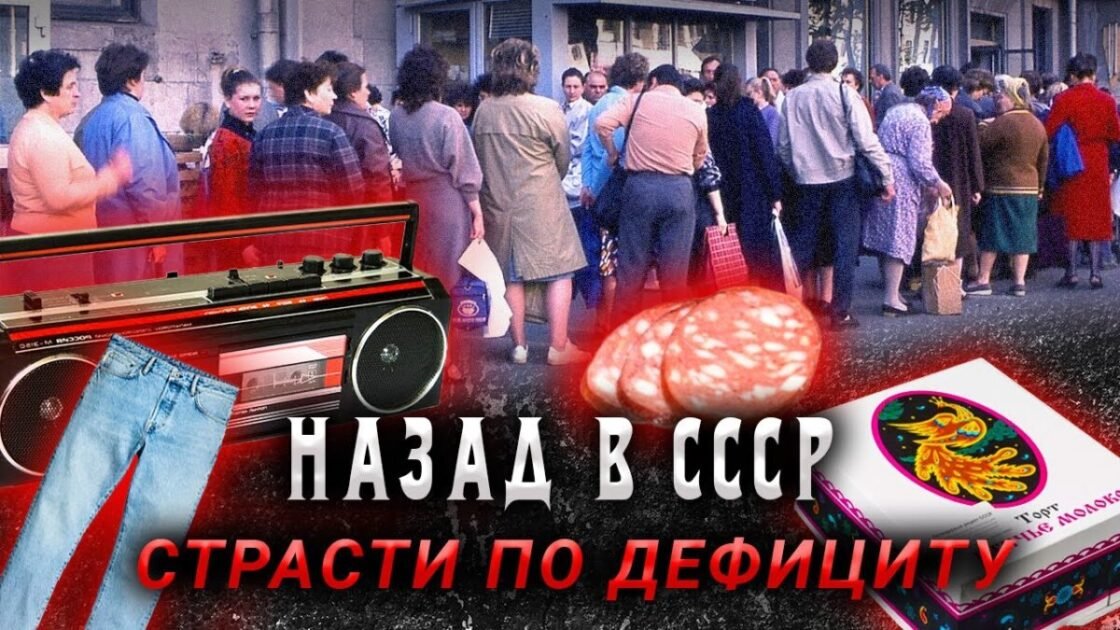
Socially significant products suddenly disappeared from the shelves of Vladivostok supermarkets. Disruptions began with loose sugar, the main types of cereals, oatmeal, pasta, tea and baby food. The deficit caused panic buying and price increases, so stores resorted to limiting sales to one person per household. Even basic flour was threatened with a sell-out. The authorities of the region attribute the temporary shortage to the difficulty of delivering goods to the Far East by rail. The Kremlin has other priorities regarding the priority of railway transportation.
Although the wave of shortages is explained by logistical difficulties, this is only half the truth.
Since the beginning of 2014, empty store shelves in various regions of the country, which became the subject of active discussion even in the censored media, were explained by an increase in purchases during the New Year holidays and difficult weather conditions. Then Russians felt a shortage of basic products: meat, milk and eggs.
It turned out that the country, which impressively reports on unprecedented growth rates in agriculture and claims to be the key agricultural exporter in the world, suddenly failed to provide its own basic needs and turned into an importer.

The egg crisis and chicken shortage crisis swept through Russia as early as 2022-2023. Prices for basic products increased by more than half. Stores switched to individual sales and introduced restrictions on the sale of eggs in the same hands. Residents of Russia lined up in huge queues to buy the necessary products. Although the authorities once again explained that the egg crisis was a temporary phenomenon, provoked by chicken flu and a seasonal surge in purchases, and opened several criminal cases against speculators, there were no more eggs on the market. And there will be a shortage. On the one hand, there is a lack of Western technologies, fertilizers, equipment, and incubation material, and on the other hand, the impoverished population switches to basic social food products and “sovereign” domestic production fails, provoking panic, shortages, and price increases.
It seems that the déjà vu of the late eighties and early nineties was returning to Russia when the country focused on a lot of tanks and guns, “conquered space”, and that grocery shelves, except for the storefronts of Moscow and Leningrad, shone with emptiness.
Although the current shortage is not as striking as in the scoop, Russians still see that the assortment, quality, choice and price have changed significantly.
Western goods left the market or became scarce therefore prices rose significantly (parallel imports do not satisfy all needs, and secondary sanctions and bank restrictions gradually tighten the nuts of supply gaps).
The import substitution programme, about which the government excitedly reports, and which once again gilded the Russian nouveau riche, only led to the fact that the Russian “analogues” are significantly inferior in quality to the “former” Western ones and cannot compete with cheap Chinese production.
Instead of growth, there is a loss of domestic production capacity and minimal competition in the home market, which is already intra-Chinese. And if in 2022, on the wave of panic, everything was written down as potentially scarce goods, everything from animal feed to chocolate, seafood and even fruit was swept off the store shelves but now the structure of the deficit is different.
Even though during this time Russia tried to establish new logistics chains, launch parallel imports, significantly increase supplies from so-called friendly countries, and by robbing Western investors and campaigns to “launch” “new brands” on the market, this did not solve the situation. The prices of inferior quality goods are rising rapidly, only in 2024 Russian campaigns predict for the most optimistic goods a rise in prices to a quarter of their current value.
Before the war, the structure of the Russian economy assumed that the raw nature of the economy and the lack or absence of domestic production in almost all consumer sectors would be covered by imports at the expense of surplus profits from oil and gas dollars.
Now, having lost the opportunity to buy high-quality and reliable Western goods, Russia is forced to switch to low-quality, but expensive Chinese products.
During the two years of struggle for “economic sovereignty”, for example, now 92% of car imports are Chinese brands. Popular Western cars are sold at high prices, in single copies or from the secondary market of used cars.
There is a huge problem with spare parts for them. Despite the parallel import and adjustment of supplies of cheap replicas from Asia, it is almost impossible to buy original spare parts and they cost three times as much. Over the past year alone, prices for spare parts have risen by almost a quarter, and buyers have practically no guarantee that they will not run into a low-quality counterfeit.
The Russian auto industry, which planned to “raise its head”, is in a deep coma after the blitzkrieg takeover of the market by the Chinese. However, the latter does not have time to raise reserves, and therefore there is a shortage in the supply of parts, software, technology and diagnostic equipment.
Usual brands of household appliances, such as Bosch, Samsung, and Panasonic, which closed production in Russia or stopped importing their products, have disappeared from the shelves of Russian stores. And even if they can still be dragged across the border by parallel import, it is expensive to repair them in the event of a breakdown or carry out maintenance. Low-quality Chinese brands took over the market.
Russians constantly experience difficulties with access to the most necessary medicines. Although official propaganda reports that there is enough for everyone, social networks repeatedly explode with news about the lack of basic medicines. Oncology patients complain about interruptions, and diabetics do not have the opportunity to receive devices for continuous monitoring of sugar levels in time. Foreign antidepressants have disappeared from the shelves, and Russian replicas have serious side effects. Even basic antipyretics, antiepileptic products, or cold sprays are in short supply, and their prices have therefore increased three to four times.
There is a lack of even the most necessary vaccines, for example against chickenpox; there are problems with vaccines against measles, rubella, rotavirus, polio and other diseases.
Russia is experiencing a shortage of special equipment and spare parts for it. Western brands have suspended their work, and the supply of components is complicated. Therefore, Russian campaigns are forced to either rent used equipment or import analogues from China.
In Russia, there is a huge crisis in the supply of semiconductors. Russia does not produce its own high-quality and modern microcircuits and chips. Access to Western markets is closed, and parallel imports are as difficult as possible. And chips are used everywhere: from household electronics, to transport, machine tools and automated systems in all sectors of the economy.
The situation is simply catastrophic in those industries that degraded after the collapse of the Soviet empire: machine tool construction, chemistry, and microelectronics. Import substitution will not help here: there is a lack of technologies, production facilities, and above all, specialists.
For example, the production of machine tools consists of many technological components and electronics, which can only be imported. And the production of machine tools is the basis on which other branches of production depend. Currently, the machine tools are supplied by China and therefore it kills in the bud the possibility of recovery of this industry in Russia, further lowering its technological level and making it dependent on itself.
In microelectronics, which Russia wants to create from scratch, its largest manufacturer, Mikron, has reached a technological level that the West crossed back in the 2000s.
The crisis is gradually covering agriculture also, which is already evident through the empty shelves and sky-high prices experienced by Russians. There is a lack of both material and equipment. After introducing import substitution in 2023, the share of purchases of Russian equipment did not increase but rather decreased. Russian and Belarusian equipment cannot cover the market needs, especially specialized equipment which was previously imported from Europe. Agricultural producers lack high-quality seed material and processing tools, which already affects the rapid growth of prices and the predicted crisis, for example, in the vegetable market.
Russian pharmaceuticals mainly worked on imported raw materials, only the name on the package was national because the art of making packages is beyond control. More than 80% of pharmaceutical raw materials are imported.
We are not talking about complex polymers, lithium and raw materials for household chemicals, the production technologies which Moscow does not possess.
High-quality cosmetics for those who can afford them are as scarce as eggs, because Russian cosmetology depends on imported components for more than 70%, and the supply of 41 of the 79 most necessary components to Russia is prohibited by sanctions.
In Russia, the civil mobile communication system is deteriorating. Leading global manufacturers, even Chinese. refuse to supply base stations to support the networks of Russian operators.
The digital economy of Russia, which was in its infancy, is also covered by an analogue copper basin. For example, out of about 190,000 ATMs, about 70% are American-made. The average service life of an ATM is five years. Currently, Russia is in a feverish search for Chinese counterparts. There is a problem with POS terminals for accepting cards, because the French campaign, which had more than 50% of this market, left Russia and stopped technical support.
The most unexpected turned out to be a possible shortage of fuel. Russia already felt the shortage of diesel fuel last fall. This year, the “country that used to be a gas station” resorted to an embargo on the export of Russian gasoline to postpone the crisis, which cannot be avoided, at least during the presidential elections. The Ukrainian defence forces and the lack of access to the necessary technologies guarantee long-term problems with continuous fuel supply, especially in the European part of the Russian Federation.
But one of the biggest problems is the lack of labour resources. In 2023, more than 85% of Russian campaigns faced a shortage of personnel. Professional workers were swept away to meet the needs of the war, and anti-migrant hysteria significantly reduced the flow of migrants to those industries where Russians did not want to work.
The shortage of personnel will only provoke a new round of production deficit. And it will be difficult for Russia to get out of this pique. Already before the eyes of the new Russian generation, Russia is plunging into a late dip with a huge army of idlers involved in the power bloc and imperial administration, a sharp drop in the quality of life, a shortage and high cost of quality products, speculation and queues for the most necessary.
So far, the flow of “cargo 200” from the Ukrainian territory and grave goods, which support the consumer activity of the economy, is not in deficit.
It all started with a lack of conscience when in pursuit of the imperial ambitions of the crazy Kremlin dwarf, Russians exchanged a comfortable life for death, destruction and hopelessness…







