
First, it is necessary to give historical information about this nation, in the most concise form, and based on written sources: Chinese, Persian, Mongolian, German and Russian.
Buryats or Buryat-Mongols (self-name Baryaid) is the northern part of the Mongolian world, state, and nation, localized in the Circum-Baikal region. In the 17th-18th centuries. The Buryats, in the conditions of the collapse of Mongolian unity, were conquered by Muscovy-Russia and lost their independence, falling under the yoke of the Pokhabovs, Kaftyrevs and other bandits with their ego “after me there’s even a flood.” This conquest and, then, the policy of repression from all Russian regimes gave rise to all the problems of the people today. A nation with a two-thousand-year history and culture, ancient writing, is now on the brink of ethnic survival. It was so savagely divided into 5 parts that it became a minority in all its territories, its elite was killed, and its language was expelled from the schools of the Republic…
So, the Buryats (Bargut, Bargu-Baryaad) were first recorded by Chinese chroniclers in their chronicle Tang-shu in the 6th century, as part of the principality of Bargudzhin-Tukum, which stretched from Baikal to the Gobi. The Chinese noted that this was a state of warriors, where there were 10,000 regular troops and 60,000 tents (i.e. families), and they often fought with the Orkhon Turks. In the 13th century Bargudzhin-Tukum was listed in the “Mongolian Nuuts tovchoo” – “The Secret History of the Mongols” – the main monument of the history of the Mongols. At the beginning of the 14th century, they are also indicated in the “Collection of Chronicles” of the vizier of the Ulus, Hulagu Rashid-addin, a Persian who created this masterpiece of the world by order of Genghisid Ghazan Khan based on “Altan Debter”, the genealogy of Genghis Khan. In the 17th century, the same Buryat tribes were indicated by the Russians who invaded us, as part of the Fraternal Horde – the Buryat principality, simplifying the self-name “Baryaid” to Barad, Brat, Bratsk Horde, the ferocious Bratskys…
The population of Bargudzhin-Tukum, i.e. Buryatia, bred indigenous breeds of cows and bulls, horses, Bactrian camels, sheep, goats, pigs, chickens, wolfhounds of the Khotosho/Bankhar Huns, also developing agriculture, metallurgy, blacksmithing and other industries, trade with China, Tibet, India, Bukhara, Persia, which has been proven by archaeologists. After the All-Mongolian Khural of 1206, the best warriors of Bargudzhin-Tukum served in the personal guard of Genghis Khan and his 4 Genghisid sons and became famous generals and commanders like Jedi-noyon, Djurdzhagan-noyon, and many others.
But the first world-famous state on the lands of Buryatia and Mongolia was the Xiongnu Empire (3rd century BC – 1st AD), in which the ancestors of the Buryats are indicated as “Western Huns” (otherwise: northern. Eastern Chinese called the southern Huns – V.Kh.). The largest researcher of the history of China and Xiongnu-Mongolia Chuvash N.Ya. Bichurin (Russian Orthodox Church faith, father of Iakinf, knew the languages of Han, Mongols, Manchus, Tibetans, Koreans, lived for 13 years in Beijing and studied Chinese chronicles and the brainchild of Sima Qian “Shi Ji” of the 2nd century BC – the main monument of Chinese historiography ), output: “1. Xiongnu is the ancient popular name of all Mongols, the ethnonym Khun – Xiongnud in Buryat, Mongolian, Kalmyk and other languages of the Mongolian nations means Man, People; 2. Mongols have been an autochthonous population of the country of the same name since at least the 25th century BC; 3. They took the name of the ruling House tribe; 4. Donghu, Xiongnu, Xianbi, Rouran, Khitan, Tatani, Tugu, etc. are Mongolian tribes.” Let us add: that the archaeological monuments of Buryatia and Mongolia are completely identical and indicate the ethnic identity of the Huns, Buryats and Mongols.
This identity, like the Mongol-speaking Huns, was pointed out in the 18th century, and world-respected researchers of Russia and Siberia – academicians from Germany G.F. Miller, P.S. Pallas, I.E. Fischer, I.G. Gmelin, I.G. Georgi and others, in the 19th century. Rashpuntsag, V. Bergman, I.Ya. Schmidt, G.N. Potanin, K.F. Neumann, H. Howworth, A. Terry, N.Y. Bichurin and others, in the 20th century. A. Luvsandondov, R. Rinchin, B. Munkacsi, A.P. Okladnikov, N.N. Dikov, G.N. Rumyantsev, M.V. Vorobyov, B.B. Dashibalov, A.S. Shabalov and others. Turkologist I.L. Kyzlasov wrote that the material culture of the Huns sharply distinguishes them from the Turkic nations and, on the contrary, brings them closer to the Mongols. The most famous burial grounds and settlements of the Xiongnu were found in Buryatia and Mongolia. Ivolginskoye settlement or Hunnu-Khoto is 2 km away from Ulan-Ude (1st century BC – 1st century AD) and is a fortress city of pebbles and concrete: a commercial, administrative, craft and agricultural centre in this province of the Xiongnu Empire. Its inhabitants had highly developed cattle breeding, and crafts – blacksmithing, metallurgy – with iron smelting workshops, weapons, pottery, bone carving, and agriculture (dispute: migrant?). The city was densely populated; houses and artisan workshops formed streets divided into residential and industrial areas. In the city centre, was a house of the fortress city ruler measuring 15 m by 12 m. A burial ground with 216 graves and the remains of 244 people was explored 1 km away from the settlement. Nearby, near Mount Tologoi, there are several sacred places of worship for the Buryats (not only Tengri but also Buddhist). Ilmovaya Pad, a complex of burial grounds of the Huns of the 1st -2nd centuries, is also of great importance for the history of the Buryats. BC. near Kyakhta, Dyrestyn Kultuk – a settlement and burial ground near the village. Dyrestui, Bayan-Under – an Iron Age settlement there, Orgoyton – a burial ground with a princely mound (Iron Age) in Dzhida and a dozen others, artifacts of which are exhibited in museums in Buryatia, Irkutsk, Moscow, Chita…
But the richest “elite mounds of the Huns” are in modern times. Mongolia and Inner Mongolia, in the centre of the Xiongnu Empire. In Noin-Uula, for example, 90 km north of Ulaanbaatar in 1924-25. sensationally rich artefacts were found – exquisite carpets and clothing, silk fabrics, gold and bronze belt buckles, dress plaques, pendants, necklaces, pendants and other items, made from “native gold of Mongolia”. The Xiongnu were not only a state of warriors but also conducted extensive trade with Byzantium, Iran, and China: the latter was the importer of this native gold. The lands from the Gobi to Baikal, i.e. Xiongnu-Mongolia, are storehouses of alluvial native gold, and now, at the beginning of the 21st century, Mongolia has become one of the leaders in world gold production, extracting more than 20 tons annually, half of which is from mines. True, “large-scale gold smuggling is taking place from Mongolia to China, which, like 2 thousand years ago, still lacks this metal.” Let us also note: the coat of arms of the Xiongnu with the image of the Sun and Moon was preserved only among the Mongol people. The word Xiongnu is read the same way only in Mongolian languages: Hun – man, Xiongnu(d) – people, people: this is recognized by all Hunologists.
Archaeologist and historian of Central (Mongolian) Asia, academician. A.P. Okladnikov concluded: “Ekhirits and Bulagats, the core of the Buryat people, are the oldest Mongolian tribes proper and are known as Mongols…moreover, on their indigenous lands in Bargudzhin-Tukum, in the Baikal region.” Russian invaders of the 17th century, as well as historians from Europe (there were no Russian historians of Siberia until the mid-19th century), noted here “a continuous array of settlements of the Bratsk Horde,” i.e. stationary “Big Brother towns”, along the valleys of two great rivers of Siberia – the Angara and Lena, from Padun and Nizhneudinsk to Lena and Baikal, and in Transbaikalia – “thousands and thousands of yurts” from the mouth of the Selenga to the mouth of the Uda, further along, the river valleys Selenga, Khilok, Chikoy and their tributaries. Professor of Buryat history N.N. Kozmin concluded that “the settlement, urban culture of the Buryats…” stood “…at a very significant cultural height and was destroyed only by the Russian invasion”, that the very struggle of the Buryats against the Russian conquerors “testified to such a national fusion, which could only have been given in the past long-term national-state organization” (Kozmin. Economy and nationality // Siberian Living Antiquity. Issue 7. Irkutsk, 1928. – P. 8). The scientist Mathias Gedenstrom, a Swede, having studied the North, Siberia and Buryatia for 20 years, highlighted the Buryats, their irrigation, how their water pipes “water their arable land and meadows”, that “their grain is always harvested even in droughts.” Irkutsk Governor N.I. Treskin, not yet the “king of Siberia,” wrote at the same time: “The Buryats of the Irkutsk district have had agriculture since ancient times, and they have it in a flourishing state.” Ukrainian Russian historian N.I. Kostomarov revealed: that the Russians adopted the khatryukhai (twisted) kalachi from the Buryats and called them “brotherly kalachi”. Decembrist N.A. Bestuzhev wrote in 1839: “In the Irkutsk province, except for Transbaikalia, the Buryats are the real breadwinners. The same cannot be said about Russian old-timers” (Bestuzhev. Goose Lake. – Ulan-Ude, 1991). In 1626, Cossack ottomans V. Tyumenets, M. Perfilyev and others reported to the tsar the results of military intelligence: the Bratsk Horde is rich in all kinds of livestock and grain, there is silver and silver threads, iron, cauldrons, beautiful fabrics…, sabers, daggers, belts covered with silver, gold…
Historians of the 18th century, noting that the Buryats of Transbaikalia are nomads, and their yurts are made of felt, like those of the Mongols, pointed out: that in the Baikal region, wooden larch houses are drilled, which they call ger or tour, surrounded by a whole complex of one-two-three-story outbuildings, huge haylofts and woodpiles; these are the main signs of a settled agricultural culture and civilization; When it was warm, the Western Buryats moved 3-7 km to letniki-dachas (nazharai hure), where their homes were yurts, but also made of larch. Academician Fisher pointed out a nuance: Western Buryats live sedentary lives, in large houses, but others also have felt tents and yurts from the era of Genghis Khan. A Greek from Moldova, Baron N.G. Spafariy, geographer, historian, and philologist, who spoke 10 languages, concluded in 1675: Western Buryats are “sedentary, sow oats, buckwheat, millet, barley, and in Kuda – wheat,” they “have great winter yurts, but others yurts made of felt… Last year, 1673/74, the Cossacks of Nerch and Albazin defeated 3,000 Tabangut, who fled…” The Ambassador of Peter I (to China), the Dutch scientist Izbrant Eades, wrote in 1692: “Irkutsk stands in the very centre of the Buryat Country and it is covered in watchtowers, fortified with many cannons, the fear of the Buryats in Irkutsk is enormous… The Buryats do not roam here, but lead a sedentary life, living in wooden yurts in the summer, and in the winter in wooden houses, which stand close to each other like in villages…along the rivers…they go along the rivers in kayaks, but along the great Selenga in ships. Around Irkutsk and up to Verkholensk, grains grow in abundance, the land here is very fertile… Omul is the main fish of the Buryats… Their bulls are huge, from 800 to 100 German poods. Bulls and camels are not sold for money but exchanged for red Hamburg cloth, Persian raw silk, gold and silver, or for sables with light fur.” Eades noted that “there are no fur-bearing animals around for 5-6 miles…, but there is still a lot of game – I myself saw thousands of wild sheep covering entire mountains like snow.” His deputy Adam Brand added: the Buryats travel to China in caravans on huge camels.
The Irkutsk vice-governor, the learned Swede Lorenz Lange, having studied the peoples of Siberia, concluded in 1716: “The Bratskie live very richly, they have all kinds of livestock and a lot of it, the one who has from 400 to 500 horses is considered a beggar… The Bratskie make different vodka fortresses, but not by fermentation like all nations (Central Asia and Southern Siberia – V.Kh), but by distillation… Their clothes are distinguished by quality and variety, they use beautiful coloured fabrics, which they brought from auctions in Bukhara, Persia and China, Tibet and northern India. They wear long pleated caftans and short green leather corduanas. This nation, both men and women, is better dressed than all the peoples of Siberia.” Former Hetman of Left Bank Ukraine, Colonel D.I. Mnogohreshny (exiled by the Russians, but saved them by the Selenginsk fort from the siege of the Buryats and Mongols in January-March 1688), wrote in 1689: “Buryat princes, Zaisans, Shulengi and Sites constantly go to China to buy silk, velvet, gold, mirrors and other goods.” Trade was in money, not barter: hundreds of thousands of lans and other money remained with the Buryats after the Russian seizure of trade with China.
According to G.F. Miller (Description of the Siberian Kingdom, 1733-1743, 5 vols.), I.G. Gmelin (1732-1738, Travel through Siberia, 4 vols.) and I.G. Georgi (1770s. Description of all the nations living in the Russian state, 1776, 2 vols.), the Transbaikal Buryats are engaged only in cattle breeding, “they live very prosperously, some have up to 1000 heads of sheep,” and the sheep are fat-tailed, like the Kalmyks. Miller, who created the first ever scientific work on the history of Siberia, the “father” of this history, clearly indicated two HKT, 2 types of Buryat farms: in the Cis-Baikal region, pastoral and agricultural, practically sedentary, because they roam twice a year for 3-5 km, ploughing the land, they sow rye, barley, buckwheat, plant huge crops of hay, in Transbaikalia, there is “pure cattle breeding”, where little hay is harvested, only in some places, for calves and lambs.
Speaking about the beginning of the capture of Buryat-Mongolia, the historian indicated the long-term military reconnaissance that the Russian ottomans carried out before attacking the “warlike” Buryat Country (Miller, p. 48). He found a Russian intelligence document – a questionnaire for “servicemen”: why did the Buryats begin to live on the Kana River, very far from their homeland near Lake Baikal; how many there are, what weapons and warriors; Are they preparing to attack the Russians in Yeniseisk? Will they attack the people who have already been identified by the Russians, but were previously theirs, etc?
Miller described the construction of forts, through which the Russian Cossacks advanced to the borders of the Brotherly Horde – Buryat-Mongolia. Miller concluded that the governor Dubensky in 1629 received a Decree from the Tsar to start a war against the Buryats, with the Yenisei governor Vaska Argamakov sending assault troops but the princes of the Kott people flatly refused to lead these troops, to show the way to Braty, explaining the refusal with fear of the Buryats. After all, the Buryats will “cook them in their huge cauldrons” according to their (from Mode and Genghis Khan – V.Kh.) Mongolian laws of war as traitors.
Miller also described that the Buryat princes of Cisbaikalia sent their military detachments to the common struggle of the people of Southern Siberia against the Russians. He attempted to manoeuvre among several of Kirghiz tribes, who had their princes in Russian captivity in amanates. Apparently, without the princes, they did not dare to fight, they entered into bargaining with the Russians in the hope of receiving Russian military service and food (following the example of the Tobolsk and Tomsk Tatars), and without paying yasak.
Seeing the heroic war of the people of Siberia, “many Kachin Tatars,” followed by the completely “non-military Kottovo people and other nations,” began to go over to the side of the warlike and constantly warring aborigines of Southern Siberia. Let’s give just one plot of the war: the Cossacks captured Prince Mungat, but he, having strangled both Cossack guards, escaped, and then called on the people to slaughter the Russians on “all the roads of our Great Steppe.” The rebels monthly drive away the herds of Russians, and themselves under their towns and forts, trample grain, burn houses, kill peasants, attack garrisons, lasso those who come out, “jump along the Steppe, dragging them on lassos.”
Further, academician Miller concludes from this phase of the “Russian-Siberian War” that the Russians are tired of “pacifying non-peaceful people”, who one month “pay yasak correctly”, the next they promise, and the third they “beat and rob Cossacks and peasants”, some people pay yasak, others themselves demand yasak and gifts from the king; therefore, they began to persuade the “powerful”, for example, the Mongolian Altyn Khan, to enter into Russian citizenship, and promise him benefits for this.
The latter “shamelessly asks for gifts for himself, his wives, children and grandchildren,” and then again demands new gifts – now for his cousins and nephews, a year later – for his second and fourth cousins. After 5 years of humiliating bargaining for the Russian authorities, Altyn Khan “solemnly shed”, but not himself, but through his brothers-in-law. The Russians, having given gifts, are trying to persuade Altyn Khan to force their nomadic brothers to calm down, stop attacking Russian forts and settlements and kill, lassoing, Russian peasants and servicemen “anywhere and everywhere, wherever they are found.”
The ambassador from Altyn Khan – his Buddhist teacher Lama – conducts lengthy negotiations with “both sides” of the political dispute, meanwhile, military operations do not stop at all, which the Russians suspect (and not without reason) Altyn Khan of a double game. Therefore, mutual accusations of the two “sides” for the captivity and pogrom of “ours,” etc. continue. (pp. 61-63).
The fate of Krasnoyarsk and all its servicemen and peasants more than once “hung in the balance”; The governors and ottomans repeatedly begged Moscow to allow them to leave this unfortunate city for good, until they, the Russians, were completely slaughtered by uniting these “fierce hordes of Asians.” Tomsk, which by status was obliged to help Krasnoyarsk, Ketsk and other outposts of Russian colonization in this direction, was also in the same desperate situation.
Miller revealed that smallpox and all infectious epidemics were brought by the Russians. “In Siberia, smallpox is undoubtedly a new disease, introduced already in Russian times. It caused enormous harm to the Ostyak, Tungus, Yakut, Samoyed and all the people of Siberia.” But the Buryats avoided these epidemics, writes the scientist, thanks to the powders of their Buddhist healing lamas. Only the Buryats did not die. This is how Miller, Doctor of Medicine and History, assessed the health care of the Buryats. By the way, when the scientist Finn Castren, a Catholic, fell ill there, he prayed for the Buryat lamas and their “heavenly miracle powders.”
F. Kudryavtsev found from Karl Ritter: “The Khorinsky taisha had 10,000 horses and 40,000 sheep. Some Daurian Buryats have up to 1000 camels, 400 horses, from 2 to 3 thousand cattle, up to 8000 sheep and several hundred goats.” And now? — 2-3 heads of cattle and 5-6-7 sheep?
German historians of the 18th century, participants in the first two academic expeditions, admired the Buryat blacksmith’s craft as an art, Buryat jewellery inlay on steel, silver, gold, copper, tin… I.G. Gmelin described the reality of the 18th century: “Buryat daggers, knives, scabbards, spoons, horse harnesses, belts, pendants, silver threads, beads, necklaces, bracelets, earrings, inlaid with silver, gold and precious stones under the name of fraternal (i.e. Buryat – V.Kh.) works are famous throughout Russia.” He wrote: many Russian residents of the vast region were fed from this trade, and Russian merchants and resellers of Buryat blacksmithing and jewellery traded them at all retail outlets in Siberia. He also indicated the market volume of continuous production of these products, which has long become a separate industry of the Buryats.
Historian of Buryatia and Siberia, Professor V.P. Girchenko identified a new step in the development of this branch of the Buryat economy: the trade in inlaid products of the Buryats, and then their production, moved to Transbaikalia, to the fort of Itanza, where several professional groups (craftsmen and jewellers – V.Kh.) moved from pre-Baikal Buryatia ( Girchenko. Russian and foreign travellers of the 17th, 18th, first half of the 19th century. – Ulan-Ude, 1939. – P. 19).
The Buryats also developed their own salt production, in the iron cauldrons they made, especially in the Kudinskaya Valley and the Angara region (now Usolye), and on the lakes of Transbaikalia they mined self-planted salt “gudzhir”. Salt was very highly valued at that time: the contents of the Cossacks were called Bread and Salt Salaries. Buryat salt was in great demand throughout Siberia and since ancient times.
From the Siberian hunters and reindeer herders – clan groups of the Appropriating Economy, the Buryats, in exchange for the surplus product of their HKT: cattle, grain, salt, Mongolian bows, iron and jewellery inlaid with gold, silver and precious stones, received sable, mink, black fox furs and beaver. They sold this fur to Khalkha-Mongolia, China, Tibet, India, Persia, and Central Asia, buying their tea, silk, velvet, damask, Chinese, gold and silver trays, jugs, mirrors, bowls and other luxury items that mainly the khans and princes bought: taishas, zaisans, shulengs, sites. Ethnographer M.N. Zabanov, having studied the folklore of the Ekhirits and Bulagats and having revealed the huge role of trade (not barter), generalized: “Buryat heroes, who own numerous subjects and perform heroic deeds, are also good merchants. By the 17th century, the economy of the Ekhirites and Bulagats was of a fully established nature, with developed trade… It was a sizeable market in trade with Central Asia and Chinese merchants.” And now?
Scientists from Germany and Swedes noted: Buryatia is abundant in thermal springs (Arshans – V.Kh.), and there are houses, tables and benches with ancient Tangut, Tibetan and Mongolian writings on fabrics, explaining what diseases exist and how to treat them. The Buryats take advantage of these baths, take care of and renovate all the buildings there, Buddhist prayer books… They throw money there to the spirits, and the Russian people collect it, “the soldiers who were with me got about 20 kopecks” (Lorenz Lange). Balneology – treatment in baths with mineral waters, mud therapy, as well as manual therapy, has been for the Buryats since ancient times the “Know-How” of their primordial folk medicine, not a compilation from India, Tibet or China, although the Buryats had a variety of long-standing and close relationships.
There is a stereotype that “wild nomads, without producing anything – in the absence of a Producing Economy, robbed rich caravans along the entire Silk Road (SRP); having robbed poor merchants of their fabrics, they attacked settled artisans in Central Asia and Northern China, taking away their metal objects and jewellery. But the GSR on the Buryatia-Mongolia section was not “wild”; there were firm economic and trade rules of Genghis Khan (before the arrival of Russian gangs); sources indicate that in Buryat-Mongolia – Pre-Baikal and Trans-Baikal, merchants from China and Central Asia, Tibet and the Himalayas, even North Indian principalities lived there permanently. And now?
Large Buryat feudal lords pursued their own goals of expanding trade with China – without the mediation of the related khanates of Khalkha-Mongolia. Already the first Cossacks learned from the Tungus: the Buryats “go to the Chinese state along the river Selenga navigating for 10 days,” then walked “8 days on dry land” and moved to another river flowing to China, “but the Tunguz do not know the name of that river” (Collection. pp. 36, 37). The Cossacks saw commercial shipping among the Buryats, a network of transportation (Baikal, Angara, Kitoy, Selenga, Uda, Dzhida, Khilok, Chikoy, Temnik, Orongoy), which shows the level of their economy: the overproduction of goods and the need for their sale gave rise to a powerful development of trade, which brought it into a separate branch of the economy. I will note here: the Mongols of Kublai Khan (born 23 September 1215, died February 18, 1294) had the largest navy in 1274 and 1281. : 4,400 warships with 140,000 “sea soldiers”; in the Buryat language there are names for whales, sharks, killer whales… – creatures of the ocean. All this hints at our residence by the ocean, near our sister Korea and Japan: but apparently, due to a terrible tragedy, the people went deep into the mainland.
At the same time, ethnographic Buryatia was a set of territories of the Buryat tribes, which were once part of the Xiongnu and all other Mongol khanates, including Khamag Mongol Ulas and Yekhe Mongol Ulas of Genghis Khan, by the 17th century, in conditions of feudal fragmentation, were de facto independent: the formal dependence of the Buryat taishas on the khans of Khalkha was determined by calculation: the Buryat princes shared the furs they collected in Siberia with the Khalkhas, who provided them for this military assistance in case of need. The Buryat princes sought to preserve the long-established system of yasak duty for the people of Siberia, which arose even before Temujin. In any case, “by the arrival of the Cossacks, most of the population east of the Yenisei were tributaries of the Buryat princes” (History of the BMASSR. 1951. p. 112). Fur (primarily sable) was the most valuable commodity for both the Mongolian and Chinese markets, as well as the Russian ones. S.V. Bakhrushin concluded: “Given the extreme primitiveness of the finances of that time (Muscovy-Russia), the weak development of money circulation, Siberian furs entering the treasury were the most important factor in maintaining the Moscow budget.” F. Kudryavtsev revealed “sable fever” – the pursuit of yasak in the form of furs and the desire to seize “new unknown lands.” This is what attracted people to move to Siberia and conquer nations.” P.T. Khaptaev established: yasak in furs accounted for 1/3 of the income of the Russian treasury, therefore there was an “open robbery of the Buryat-Mongols” (Khaptaev. Essays. P. 32)
“I could not conquer the ferocious Bratskaya Horde” completely (for having healed the wounds in the arshans of Tunka after another loss, the Buryats rose again and destroyed their forts), Moscow, with three special royal decrees, populated all of Buryatia with Russian peasants in stripes and, giving them guns, thereby creating a united front against the Buryats, it turned the tide. There is no such long and fierce war in the history of Eurasia, 138 years of bloody conquest! “And that they, Alexey, Kurbatko, and Vaska, with the service people and those who were eager for a brotherly pogrom, would take all their bellies and horses and all sorts of cattle, and with that pogrom of their bellies and cattle, the sovereign granted them servicemen and willing and industrial people for their service.” This document is evidence of Moscow’s criminal-bandit strategy specifically towards the Buryats: “I couldn’t subdue the ferocious brothers,” Moscow, having given guns to all the Russians of the vast region, indicated: rob the Buryats and get rich! See: Ordered to go to “Buryat” // M. Kretschmar. The pogrom committed by the regiment of Governor Y. Khripunov. “Open robbery” of the richest people of Siberia, who collected the same thing, had their own army, all-Mongolian military experience and state organization, naturally could not help but provoke and caused their powerful rebuff – the Patriotic War of the Buryat-Mongols, which lasted a century and a half – from 1629 to 1767 (Local battles in remote villages began already in 1618).
Foreign scientists have found the roots of the fighting spirit of the Buryats in…the Zegete-aba raid. They see the phenomenon of this action in the constant generation of the male warrior spirit among the Buryats and Mongols. But he was the first to admiringly describe such a raid of the Mongols in Bargudzhin-Tukum – i.e. in Buryatia, the Persian Rashid-addin back in 1310: several hundred thousand horsemen gathered at a designated time and place and, at a signal, squeezed a ring from which not a single animal escaped… Colonel of the Russian General Staff M.I. Ivanin in his book “On the Art of War and the Conquests of the Mongols”, St. Petersburg, 1846, concluded: “This was not just a hunt, war tactics, clear discipline, the ability to instantly assess the changed situation and make a decision were honed on them.” “Collective hunting took place only in winter, after the end of fieldwork” (Okladnikov. P. 357), and it was not … an important source of the economy, it was a military tournament, where all the Buryats demonstrated to each other that they were warriors, that they were in the ranks: hands are strong, eyes are sharp, mind is clear and predatory. Most of all, the aging Buryat was afraid of “becoming worthless” in the eyes of the strong and dexterous fighters of his clan tribe. With the strengthening of the Russians in the region, they first of all put an end to Zegete aba. The end of the broadcast of that spirit led to the loss of everything.
S.A. Arutyunov, 1st anthropologist of the Russian Academy of Sciences, concluded: “The Buryats are the only people in Siberia who have their own historical written monuments… a people with a strong national tradition. They are an integral part of the Mongolian world. The Mongolian cultural world has a long, eight-century history, already in the form of a united state. This was not only a nation and state of warriors and conquerors, it was also a nation of scientists; writing, astronomy, and medicine flourished in the monasteries… Other nations of Siberia did not have such an external powerful cultural centre, a centre of cultural irradiation.” // New Buryatia. 16 Oct. 2011.
D.A. Clements, a prominent ethnographer and archaeologist, a German, wrote in the 19th century: “The Irkutsk Buryats have been cultivators since ancient times… The Kudarinskys at the mouths of the Selenga do nothing except farming and fishing. They rarely ride horseback… The Buryats have the advantage that they have a well-known culture and profess a religion that considers ignorance a mortal sin… The Buryats have long been inquisitive and thirsty for knowledge. In this regard, they are much more susceptible than some Russians, for example, the Old Believers… who still consider smallpox vaccination to be a seal of the Antichrist; during cholera, they did not allow doctors to see them! The Buryats have their own doctors of the Indian-Tibetan school, and they do not deny either smallpox vaccination or the new medical means of Europe… The Buryats have long developed crafts, well-established carpentry workshops…, stone and metal work, painting and sculpture workshops.” (Siberia, its current state and its needs).
A. Kappeler, professor of Russian history, Austria, wrote in 1997: Buryats in the 18th century, had schools at the monasteries…, taught secular disciplines…, their literacy level was higher than that of the Russians.
N.A. Bestuzhev, a convict in Buryatia, “the smartest of the Decembrists,” a Western thinker, historian, translator, artist, and Buryat ethnographer, invented “Bestuzhevs”: a boat, weather instruments, a stove, a carriage, a clock; his wife was a Buryat Sabilaeva, from her he had 2 children; already in 1829, after 2 years of acquaintance with the Buryats, he concluded: In terms of mental abilities, the Buryats are on a par with the best nations of the world.
VC. Kuchelbecker, having studied the Buryats of Barguzin, their life, daily rhythm, and relationships, February 12. 1836 wrote to Pushkin: Buryats are hardworking, honest, prudent, prudent. The distinctive Russian vice is drunkenness: everyone drinks here: men, women, old people, girls, and women almost more than men;
L.Ya. Sternberg, an ethnologist, having studied the struggle of foreigners in Russia in 1900-1907, concluded: By the brightness of their national individuality, by the energy of their political manifestations, the Buryats, who have grown (like the Tatars) to the need for press organs and printed works, should be placed in the first row…of nations (foreigners). During the liberation period, they held more national congresses than any other foreign nation…, their struggle had a distinct individual character of the national liberation movement… The Buryat language absorbed, thanks to Lamaist schools and translated literature, all the sophistication of Buddhist philosophy and Hindu education. To adapt such a language for teaching all the treasures of European culture is the work of one generation… // Sternberg. Foreigners. 1910. – pp. 225-269.
In general, before the arrival of wild Russian gangs (to extortionately take from the Buryats, the richest people of Siberia, their golden-haired fields, their huge herds of cattle, their silver and gold, their luxurious sable and mink coats and corduans), the Buryat economy was long-established and strengthened, established a character of its world system, with highly developed trade (livestock, bread, furs, salt, omul, jewellery, blacksmith, carpentry and other industries). It represented a huge market in the international trade of Central Asia, Persia, China, Tibet and India, “their merchants who penetrated Buryatia since the era of the Dinlins…”.
The 138-year-old Patriotic War of the Buryat people against the invasion of Cossacks, Streltsy, Reitars, Dragoons and other combatants who were looking for “Russian happiness – to grab for free the goods of the Buryats, their wives, girls and robbers for sale and fornication,” I have described in my new work “The bloody Russian conquest: from the capture of Buryat-Mongolia, Siberia, the Caucasus and to the Russian invasion of Ukraine in 2014 and 2022,” so I will move on to the conclusions – the tragedies to which our people have been subjected over the centuries of yoke in the empire of Russianism. After all, back in 1995, Dzhokhar Dudayev revealed: Russianism is worse than Nazism, fascism, and racism, i.e. the most terrible ideologies in the world, for Russians have neither faith in God, nor morality, nor shame.
As a result of our military defeat in the Patriotic War, Russian tsarism shot all the fighters who survived after the last battle of 1767. Okladnikov (p. 389) concluded: “After this war, the Western Buryats found themselves in a particularly difficult situation, who became the object of the most savage persecution and bestial chauvinism.” Let us recall: in 1552, in the Kazan Khanate, defeated by Russian archers and Cossacks, the Russians carried out a terrible massacre of prisoners by decree of Ivan the Lyuty, a homosexual and syphilitic: “In full, they killed their wives and children, the soldiers beat everyone” (Royal Book – p. 308). Rafts with mountains of corpses were floated down the Volga to frighten neighbouring nations and break their will to fight. The Russians mirrored the same form of intimidation in Buryatia: along the Lena, Angara, Selenga and other rivers of Buryatia, rafts with mountains of Buryat corpses were also floated to a ) intimidate neighbouring nations; b) instill fear in the hearts of Buryat women, children, and elderly people, and c) thereby discourage their men from continuing the war for independence.
The entire system of transparent and honest Buryat government of the proud Bayar Khans and Kudugurs was destroyed, in whose place “taishi Khomyakovs, new sites, who could bow low” (A.P. Okladnikov) were raised, becoming more sophisticated in inventing ever new demands from the “native” people, in the desire to serve/please the new masters: the wild Ivashka Pokhabov, the even wilder Treskin… From there come the origins of servility and servility, cowardice and ingratiation, sycophancy and grovelling, previously unknown among the Buryat-Mongols… Samples – Dams. ., shamelessly mincing after the meeting of the Congress Council, drill to Potapov in order to snitch …
Then the Russians took away the best lands of the Buryats, from 2/3 to 3/4, in the Cis-Baikal region and Transbaikalia. I will cite only one confession of I. Chernev, from his work “Family. A chronicle of the Native Village”, 1987, pp. 7-8: “The self-will of family men in the struggle for land resulted in a lot of blood. Having encountered resistance from the Gash ulus, which did not want to cede to them several tens of thousands of acres of black soil, the family members attacked the ulus on a dark night and slaughtered all the fraternal ones down to the last baby. The fraternal lands were ceded with blood and battle. And the family life began to live freely.” The seizure of Buryat lands especially intensified under the “hangman of Russia” Stolypin at the beginning of the twentieth century, when “the lands of the natives are taken away through a blatant violation of their land rights, and resettlement from Russia is carried out for the glory of the great-power nationalist principle of “Russification of the outskirts” (Lenin, 1912). Elbek-Dorji Rinchino, one of the fathers of Buryaad-Mongol Ulas 1917-1920, later a professor at KUTV in Moscow, deduced from the nations of Siberia that “… the Russian-peasant majority systematically, from century to century, through open violence and seizure of the lands of foreigners gradually drove almost all of them into the steppes, tundras and mountains” (Rinchino. pp. 40-42). Bloody atrocities!
These wild atrocities of the Russians towards the conquered “foreigners” of the Kama, Volga, Siberia, the North, the Caucasus, Central Asia, Poland, and the Baltics found “legitimation” in the arrogant imperial formula declared by A.P. Ermolov, “the pacifier of the Caucasus”: “The only attitude towards the conquered nations should be frightening, demonstrative harshness and violence. Among nations hardened in ignorance, the first law is strength. Only fear of death and hunger will keep them in submission.”
But these wild cruelties of the Russians were generated by their … poverty and envy. N.M. Yadrintsev concluded: “When foreigners in luxurious sable and beaver fur coats came out to meet the Russians, this aroused in the Cossacks (chilled, hungry, in lousy, torn sheepskin coats – V.Kh.) terrible envy and a thirst to profit at the expense of the natives” (Yadrintsev. Siberia as a colony . – Tyumen, 2000. – P. 108).
So the Minister of War of the Russian Empire A.N. Kuropatkin, “the pacifier of the natives of Central Asia in Geok-Tepe” (but shamefully lost to the “macaques” in 1905), declared to the Buryat delegation in Chita in 1903: “Keep in mind that if your people behave badly, you will be responsible… You will be instantly wiped off the face of the earth. There will be no trace of you left. Look how many Russian soldiers there are here, and I can get hundreds of thousands of them, and in an instant, you will be crushed and destroyed. You cannot demand anything, you can only ask for mercy” (See Khamutaev. Accession. 2nd edition. – P. 100). So in the democratic year of 1919, V.N. Pepelyaev, a Siberian regionalist (!), Chairman of the Government of Siberia in Omsk, who envied the European education and knowledge of languages of the Buryat intelligentsia, the craving of their people for Knowledge, and on the petition of the Buryat delegation for the establishment of Buryat self-government, he inscribed: “I wish I could flog you!” (ibid., p. 101). In 1992, the most democratic year in Russia, Vice President of the Russian Federation A.V. Rutskoi in Irkutsk, in response to the explanation of the minister from Buryatia that in Ulan-Ude the Buryats at their congress were discussing a draft law on the rehabilitation of the repressed Buryat people, “with some inexplicable anger he shouted: tell your people, nothing will work out for you!” (See Ibid. p. 100). “Democratic Russia” – in words, but in reality the cave racism of all Russians is two faces of one empire – Russian Nazis.
At the turn of the 19th-20th centuries. Tsar Nicholas II openly supported the monarchist party of Purishkevich, who from the stands of the State Duma directly demanded “to ban dog dialects!”, i.e. non-Russian languages, organized pogroms and murders of Jews, attacks on non-Russian churches, desecrated cemeteries of Armenians, Jews… In response, national democratic revolutions of the advanced nations of Russia arose, which, joining forces with the revolutions of Russian social democracy, swept away the “gendarme of Europe” in 3 days. Looking to the future, Poland, Finland, Lithuania, Estonia, and Latvia gained independence (where, back in the early 18th century, B.P. Sheremetev reported to Peter I: “I killed everyone I could and destroyed everything I could” in the Baltic states; he reduced its population by 2/3, i.e. by 75% // Quoted from Khazanov A.M., historian of Russia, Wisconsin, 29.X.2018). 35 nations themselves created a union and autonomous republics, while small nations received national autonomies: districts, communes and village councils.
The Buryat-Mongols, who had an extensive network of political stratification – 5-6 parties, trade unions, societies, publishing houses and printing houses in St. Petersburg, Moscow…, already on 25 April 1917, created Buryaad-Mongol Ulas, an independent state led by Burnatsky. The Buryat government recreated its tax system, its army, and government institutions befitting the state from top to bottom, recreating again the aimags, khoshuns, somons, destroyed by tsarism, but which were again met with hostility by the Russians of all strata of Buryatia. There were open threats of murder of all the Buryat leaders and, even, the destruction of all Buryats in general – even from the stands of their congresses!
All the “fathers of the nation”, the ideologists of pan-Mongolism – “the most wonderful idea in Central Asia” (the term of the prominent Mongolian and Buryat studies of the world from the USA R.A. Rupen), were exterminated by Moscow, except for M.N. Bogdanov, burned by the white ottoman Semyonov in the furnace (according to other sources, burned after execution) on New Year’s Eve from 1919 to 1920. “At this time, Baron Ungern arrived from Dauria to Chita. The Burnarduma delegation…informed (him) about Bogdanov’s disappearance and asked for help. In the evening, he reported that Bogdanov was no longer alive, and began to scold Semyonov… In addition, he warned that a hunt was being prepared for E-D. Rinchino.” The German Ungern, a Buddhist, turned out to be more decent than the Russian Semenov, who swore his love for the Buryats and Buddhism. “Having covered up the traces of the crime, the Semyonovites gave a false report to the newspaper that the officer who killed Bogdanov had been shot by a military court for abuse of power.” In their secret acts, they described the “execution of state criminal Bogdanov” and that the officers Tirbakh and Budagov, who executed the criminal, were promoted to generals. “The Buryat people don’t have enough tears to mourn the death of their best sons… the leader and fighter for the rights and honour of the Buryat people was brutally killed by the bloody hand of Ataman Semenov,” the newspaper “Voice of the Buryat Mongol,” wrote in its obituary then,” Sanzhieva T. E. M.N. Bogdanov. And now Russian Nazis are killing “enemies of Russia”, demonstrating on video, and their leader Putin promotes them to Heroes of the Russian Federation, to deputies of the State Duma…
With the strengthening of the Buryat-Bolsheviks in our region, they formed the Buryat-Mongolian Republic in 1923, headed by M.N. Erbanov, by merging two Buryat autonomies of Transbaikalia and Cisbaikalia, created in 1920-21. This autonomous Republic, in a short period of 13 years, earned itself enormous prestige in the Soviet Union with its inspired work; her delegation in January 1936 was pompously received by the highest authorities of the USSR, awarded the highest orders of the country, Erbanov was called the “Eagle of the East”, and the Republic was an outpost of Soviet power in the East. I will give just one fact. At KUTV, the main university of the country, which trained leaders for the nations of the East (76 nations!), among 12 prominent teachers, like A.V. Lunacharsky, M.N. Pokrovsky, L.B. Krasin and others, lectures were also given by Buryats: Prof. E.D. Rinchino, Doctor of Sciences V.I. Trubacheev, Associate Professor, Head of graduate school. Among their students are many future prominent figures of the world – Liu Shaoqi, Deng Xiaoping, Ho Chi Minh, A. Avtorkhanov and Kh.Israilov… But just six months after the loud adoption of the Constitution of the BMASSR, which enshrined the most important constitutional norms, including the inviolability of its borders, the united BMASSR was blasphemously divided into 5 parts. The famous Buryat Cavalry Brigade was disarmed and destroyed. The entire leadership of the BMASSR was exterminated, and again for “pan-Mongolism”, for “an attempt to create Greater Mongolia under the protectorate of Japan.” Then the USSR destroyed more than 10 thousand Buryat-Mongols – officials, scientists, engineers, teachers, poets, writers, i.e. the entire intellectual elite of the revived nation, finally rushing to the heights of education, science, art, and creativity after 3 centuries of slavery in the empire of drunken and foul-smelling Tsar’s servants: the Pokhabovs there, Treskina…
Let me emphasize: Erbanov, being a Bolshevik-Leninist, was not a pan-Mongolist; he opposed Moscow’s plan to create a separate Buryat language and literature, separating them from the general Mongolian literary one, criticized the Kremlin for the wild ban on the Old Mongolian writing, and then for the ban on the Latin alphabet. This “cultural pan-Mongolism” of his, but, most importantly, the rapid passionate development of Buryat-Mongolia according to all criteria (even in the development of the cultures of the indigenous people of Siberia, for which the Buryats created governing bodies, educational institutions, theatre, opera, ballet, scientific institutes), has enormous authority among the nations of the USSR, they frightened Stalin: he savagely dealt with her. “You are a Buryat Mongol!” — was enough to bring charges against any Buryat, as concluded by the Minister of Justice of the 1990s, R.D. Nimaev (and in “independent” Mongolia Moscow added to this wild accusation: “Are you a Buryat? – that means you are a White Guard!”, and killed 30 thousand Buryats with the hand of the “Stalinist puppy” Kh. Choibalsan).
This is political genocide: the destruction of a national government and the imposition of an administration by the oppressors; not a single nation in the USSR was subjected to the extermination of the entire elite of the republic – aristocide. Mongolian Professor, K. Tanaka, Tokyo, wrote: “The Buryat Mongols were the first among the Mongols to receive a European education and tried to embody the ideas of the European liberation movement… The BMASSR developed rapidly… and became a living example for all Mongolian peoples.” Then he concluded: “The murder of the Buryat national elite, the division of the BMASSR into 5 parts, the removal of the word “Mongolian” had one goal – to weaken the Buryat-Mongol people, to consolidate the separation of the Buryats and the Khalkha Mongols, to destroy pan-Mongolism…” // Tanaka K. Life for Siberia. – Ulan-Ude, 2017. – P. 192. And how many dirty public denunciations are there for the KGB to deal with Professor Tanaka (for the fact that since the 1980s he has been tirelessly travelling to Buryatia and gradually stirring up “Buryat nationalism”, which “is friends with Khamutaev, the leader of the nationalists”), published by Russian journalists from Buryatia, almost all “secret employees” of the KGB, especially in the 1989-2000s. How many Buryats have already been killed as “enemies of Russia”!? During the centuries of occupation? In the twentieth century alone? During 24 years of Putin’s shooting of “enemies”?
I will cite a letter from Chechen Khasan Israilov (Terloev) to the leader of the Chechen Autonomous Soviet Socialist Republic F.P. Bykov in Jan. 1940: “The Soviet government is waging a war to destroy my people piecemeal—either as kulaks, now as mullahs and “bandits,” now as “bourgeois nationalists.” Now I am convinced that the war is being waged to exterminate the entire people. Therefore, I decided to lead the liberation war of my people. I understand too well that it will be difficult not only for Checheno-Ingushetia, but even for the entire national Caucasus to free itself from red imperialism, but the fanatical faith in justice and the legitimate hope for the help of the freedom-loving Caucasus nations and the whole world inspire me to this, in your eyes, daring and senseless, but in my opinion the only correct historical step. The brave Finns are now proving that the great empire is powerless against a small but freedom-loving nation…”
Soviet Russia, having killed and shot the entire Government of Buryat-Mongolia, also killed and shot the entire Government of independent Mongolia: 28 ministers and the prime minister, who were deceitfully invited by Stalin to Moscow for the holiday. The murder of the leaders of the Buryats and Mongols by Russia was due to its genetic fear of pan-Mongolism, as “the most dangerous idea and ideology of Greater Mongolia,” and the fear of revitalizing “the victorious spirit of Genghis Khan to his descendants.” But, fearing their uprising, Stalin promised the Buryats “union status” and invited the BMASSR, the only Autonomous Republic, to the Parade of the Union Republics in Moscow (which he scheduled for May 1940).
Having killed the Buryat leaders, the Kremlin imposed Russian racists on them. So, the head of the department of the Central Committee of the All-Union Communist Party S.D. Ignatiev, having become the head of the BMASSR, brutally “cleansed the infected republic,” i.e. its personnel and its industries, from “pan-Mongolism”, from 1937 to 1943. From what? Our Mongolian self-awareness, introducing us to a wild identification that the Buryats are not Mongolian, but “a young Siberian nation, saved by the great Russian nation from the greedy Mongolian feudal lords.” There is no other example in world history of such execution of ethnicity. Any Buryat-Mongol from childhood knew about his Mongolian origin, was proud of Genghis Khan, his Yassa-Constitution, his great commanders, our great written history of the State of warriors and scientists… Tens of thousands of destinies were broken, and enormous ethnopsychological damage was caused to the nation as a result of him, Ignatiev, and ethnocide to exterminate the “Mongolian identity of the Buryats.” For his wild reprisal against pan-Mongolism, the Central Committee of the All-Union Communist Party gave him an order and powerful career growth: Minister of State Security of the USSR, Secretary of the Central Committee, 1st Secretary of the Bashkir, then 1st Secretary of the Tatar, regional committees of the CPSU.
After him, another executor was sent to us – A.V. Kudryavtsev, who was already for 8 years destroying “the remnants of pan-Mongolism and bourgeois Buryat nationalism” in 1943-1951. He organized a real cultural genocide of the Buryats and their intelligentsia. All old Mongolian literature, incl. Buddhist, the treasury of the history and culture of the Mongols, was confiscated and burned, art was deformed under the wild ideological prohibitions of the Kremlin, the heroic Buryat epic of the world pinnacle “Geser” was branded “feudal-khan” by Kudryavtsev, a stupid scribbler. Outstanding epic scholars, scientists and writers, poets were subjected to repression, expelled from their Buryatia, their destinies and families were broken, intimidated and humiliated. For these enormous monstrous “ merits” in de-ethnicizing the Buryat-Mongols (a people with an ancient written culture and Indo-Tibeto-Mongol origins), Moscow nominated him, the racist Kudryavtsev, as a leader in Bashkiria. Here he also famously “cleansed the Bashkirs of nationalism” and was sent to the union republics: to sweep out nationalism from Belarus, then from Uzbekistan; but Uzbek N.A. Mukhitdinov begged the Secretary of the CPSU Central Committee G.M. Malenkov to remove him by showing him the most vile forms of Kudryavtsev’s work with the Buryat-Mongols.
It is important to note here: that cultural genocide against the Buryat-Mongols began from the very beginning of their incorporation under the yoke of autocracy, the most savage in history (see “Foreigners about Russia in the 17th-19th centuries”). First, the tradition of Zegete-aba, the annual tournaments of the Mongols, as “reviving the spirit of victorious warriors,” was destroyed. Then the Russian authorities closed the borders they had created between the Buryat-Mongols and the Khalkha-Mongols, so the blood-forming daily connections of the Mongols were cut – the channels of all-Mongolian identification, the broadcast of a common proud history, culture, traditions and honor. Then the Mongolian…breeds of livestock were destroyed, and the Bactrian camel is a symbol of Mongolian Asia, they say, “There are no Mongols in Russian Siberia and there are none of their symbols.” After the destruction of all the Buryat-Mongolian breeds of fat-tailed sheep, cattle, horses, even goats and “Hun dogs” of Khotosho, other, foreign, flimsy breeds were brought in. 1929-1939 the Muscovites banned the old Mongolian script, in which all the folk wisdom of the Mongols was stored, but, when the Buryats introduced the Latin alphabet, they soon banned it too, and, imposed on them, Ruska, and Cyrillic alphabet. All these measures of cultural genocide pursued one goal – the acculturation of the Buryat-Mongols, separating them from the treasury of knowledge – old Mongolian writing and literature, for marginalization (mankurtization) and transfer to the young-literate ethnic group of Siberia. This meant one thing: Russia sought to render the Buryats unconscious, destroying, first of all, their proud historical memory as the Mongols, a nation of world history. It achieved a lot of this: 1-2 generations grew up who consider themselves Buryats, but not Mongols. Moscow destroyed all the Buddhist temples with their faculties of medicine, astrology and philosophy, their priceless rarities, took out thousands of gold and silver objects of worship, everyday life and culture, killed – by bullet or starvation in the Gulag camps, almost all lamas, lama healers, about 23 thousand! Buddhism, of course, belittled the warlike spirit of the descendants of Genghis Khan, but nevertheless, it is to Buddhism that we owe everything – “our moral and mental culture,” according to L.Ya. Sternberg (Sternberg. Buryats. 1910).
Having torn the Buryat-Mongols away from Mongolia, Moscow then cut out the nation-forming part of the name – Mongolian – from the name the Buryat-Mongolian Republic. This is an unprecedented act of Russian political genocide. The cynicism of the action was also evident in how it was formally carried out. To the Kremlin’s “question” whether Mongols live in the BMASSR, historians gave two answers: the Russians answered “No,” and the Buryats “Yes,” saying: the Buryats are Mongols, and their historical name is Buryat-Mongols. The Kremlin chose the Russian response, and the republican parliament, “cleansed of pan-Mongolism,” approved it. From around the 1950s, Moscow drowned thousands of Buryat villages, fields, pastures, cemeteries, and sacred places of the Buryats… by blocking the Buryat Angara River with three hydroelectric power stations. 35 Bokhan ulus villages alone went underwater (my teacher, Prof. T.M. Mikhailov, cried to me along with many old people who refused to leave their homes). In Buryatia, in the Ust-Orda Buryat National District (more precisely, Osa and Bayandai), Moscow carried out nuclear explosions, the consequences of which are hidden, but it is clear to the whole world that they are always terrible.
Since 1937, the Buryats have been raising the question of returning the brazenly stolen territories by Moscow. So in 1944, K. Saidukov, the head of the Ust-Orda district, wrote. In August 1990, 100 of “the most authoritative veterans” of the Buryat people, Heroes of the USSR and Socialist Labour, prosecutors, judges, and scientists, made an open Appeal to the Supreme Soviet of the USSR. In 1992, a letter (which I gave to Yeltsin in Ulan-Ude) from the Buryat Movement “Negedel” and the Buryat-Mongolian People’s Party about the rehabilitation and reunification of the territories criminally taken from Buryatia, was answered by the Deputy Minister for Nationalities Affairs of the Russian Federation, a certain Pechenev, Doctor of History and Sciences. A letter to the President of the Republic of Belarus Saganov V.B., mentioned that the Buryats of the Russian Federation have the best indicators in higher education, including candidate and doctorate degrees, and by this criterion alone they cannot be recognized as a repressed people. This is the cynical Russian answer of Yeltsin’s “democrats” to the Buryats and their Republic.
In May 2007, 199 veterans addressed the same matter to the President of the Russian Federation but the letter (taken away by G.N. Manzhuev, because the FSB suppressed mail to the Kremlin) remained unanswered. Not published anywhere, it was subjected to boorish ridicule in the newspaper “Number One” on 30 May, as “a Buryat threat to Putin with the “buz revolution” (buzy is a Buryat dish like khinkali..), “yurt Maidan”, and in July of the same year through the President of Buryatia, Putin blatantly appointed a “Varangian”, an Udmurt, having understood the slavish servility and political impotence of the “ethno-leaders” of the Bazarovs, with “faces shiny with fat”, not ashamed, but proud of the ability to “lick to the prostate” (according to Nemtsov). In 2006-2007, responding to requests from the Buryat congresses to return the autonomous okrugs to their native Republic, Putin, laughing, merged them into Russian regions. And thus he declared: “A dead donkey is for your ears, not for the return of your territories.” This is a vivid example of a truly Russian, racist, always imperial course towards the damned non-Russians.
In 2007-10, Putin (in the KGB he was called a cigarette butt, a moth ) was “inflated with permissiveness” that the Buryats did not rebel, but silently swallowed his spit, and went on the attack: he held “parades of voluntary entry” – of all nations, into Russia. The 450th anniversary was danced by the Bashkirs, the 375th anniversary by the Kalmyks, the 260th anniversary by the Altaians, the 100th anniversary by Tyva, the 245th anniversary by Ossetia…When in 2011, on the eve of the “350th anniversary of the voluntary” entry of Buryatia into Russia, I published a book about the bloody seizure of Buryat-Mongolia by the Cossacks, I was subjected to wild persecution from the FSB, Nagovitsyn and Bazarov, I was threatened with prison (with “Polonius”), and I fled from the “RF”. Speaking to the Buryats at the Opera House, Russian Prime Minister Putin laughed: “Being part of Russia gave you protection and helped you preserve your identity.” He was so cynical about the conquered people. Then Putin expelled the Buryat language from the schools of Buryatia: Russian People created an empire by force and why should they learn dog dialects – the languages of the Buryats and other “cockroaches”? Nicholas II called non-Russian peoples macaques, and Putin dismissed them as cockroaches. Racism is the first Russian trait and tradition, but under Moli, this arrogance boiled over.
Killing the hero-fighters of the people (Sagan-baatar, Bayarkhan, Kutugur, Sheptuhe, Bogachey, Shiptagur-baatar and thousands of others in the 17-18 centuries), killing the “fathers of the nation” (Dorzhiev, Bogdanov, Rinchino, Baradin, Zhamtsarano, Sampilon and others in 1920-39), creating an “elite” of corrupt people like Taisha Khomyakov in the 18th century, Ochirons, Boldogoevs in the 20th century, Bazarov in the 21st century, Moscow is forcing measures to de-ethnicize the Buryat autonomies, killing their leaders. According to the unanimous opinion of readers of Asia-Russia Daily, V.B. “died suddenly” under Putinism. Saganov, E. Egorov, I. Pavlov, E. Khamaganov and dozens of others. L.Ch. Nimaeva in Geneva at the session of the UN Working Group on Indigenous People in 1994 asked “to influence the leadership of the Russian Federation to recognize the Buryats as a repressed people,” and the D-N asked the same D. Dugarov in The Hague at the UNPO in 1997. They “died suddenly”: in 2001 and 2003. The Nazs savagely killed Zhenya Khamaganov! The tragedy of the ethnic group is that it cannot defend its rights in this “most nationalistic country in the world” (Berdyaev), which is now marching in Nazi marches. According to Novodvorskaya, 90% of Russians are evil, Soviet and expansionists; according to A. de Custine, Russians have an unbridled passion for conquest and murder. Putin’s guru Prokhanov himself boasted: “We Russians, are an imperial nation and we cannot be anything else.” Russian people, from the homeless to Putin, never change in their passions. R. Reagan also concluded: that the Russians actually believe that we will attack them. It is not the psychiatrist who has to talk to these people, but me!” What is it like for foreigners, Roni?
That is why A.G. Dugin, the guru of the Russian Nazis, Professor at Moscow State University publicly sets a goal for Putin: “Russia must become an empire! Our main goal is to destroy the civilization of the West! Until the US is crushed, we will always be under threat! People who don’t hate the USA are not people! NATO is afraid of war! And the U.S. Therefore, it is necessary to conquer Europe at once and annex it to Russia, protecting it from evil spirits, under the Russian Tsar-President! Expel the 5th column from Russia! But in Europe, the 5th column can be found! Ukrainians must be killed and killed! Ban the Internet, physics, and chemistry!” // en.wikipedia.org/wiki/Aleksandr_Dugin He is sure: that 90% of Russians also dream about this.
So, to summarize, I will highlight the basic building blocks of knowledge for a. Buryat; b. non-Russian Russian Federation; V. countries of the world:
- Throughout the centuries of colonial conquest and the yoke of Moscow, the Buryats have never come to terms with the loss of national independence; for centuries they have been fighting for its revitalization, in one form or another. But now, in the conditions of Putin’s course towards the restoration of the “Great Russian Empire”, i.e. Russia as the “gendarme of Europe”, the vilest intrigues against the freedom of people, against democracy and the rights of people, our autonomous statehood has been turned into a fiction. The Republic, having become a powerless colony of Moscow, wordlessly supplies its men as “live meat” to the wars of the Russian Federation, as now in Ukraine, where the army and inveterate criminals commit atrocities: murderers, robbers and rapists taken from prisons, as well as “soldiers of fortune”, i.e. e. PMCs like the bandit Prigozhin, financed by the number 1 terrorist in the world – Putin.
- The richest mineral resources of the Republic do not serve it and its people, but are plundered by thief number 1 – Putin.
- Instead of developing it, the Buryat language was expelled from the schools of Buryatia by Rus-Nazi No. 1 – Putin.
- The Buryat Autonomous Okrugs are deprived of the status of autonomy, and of the patronage of their Republic, and its creative and scientific potential, they are now rapidly degrading in the Russian Irkoblast and Transabkhazia. This is a consequence of the cause – the malicious ethno-hateful political action of the No. 1 fascist on Earth – Putin.
- The population of Buryatia, abandoned to the mercy of fate by the puppet regime, is impoverished and marginalized, as exemplified by the participation of its “citizens” in criminal wars for money. Thousands of Buryat families are divided due to the flight of men from conscription, and thousands of families are in a hopeless situation – from unemployment, from lack of money, from conscription for war.
- Putin and his lackeys in Buryatia are increasing the policy of de-ethnicization and marginalization of the Buryats. As a result, we, the Buryat-Mongols, are today placed at the last stage – dissolution, de-ethnicization. It is stupid to appeal for help to those who seek to eliminate us: by Russifying, exterminating not only the ethnic characteristics of the Buryat-Mongols but also them physically. For every Muscovite killed in Ukraine, there are 285 Buryats, and 350 Tyva… this is a fact of Russ-Nazism of the Russian Federation, specifically Putin and Shoigu.
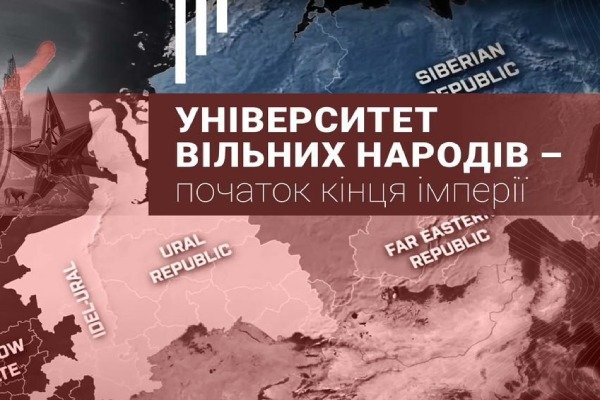
- All non-Russian ethnic groups of Russia are in a similar deplorable situation, so we appeal to their political institutions with a call to stand together against this inhuman, racist, great-power, militant Putin clique of “hawks”, to join the League of Free Nations to jointly achieve world recognition community – represented by the UN – the independence of our republics and autonomies.
- We, the non-Russian nations, should under no circumstances agree with those who are hastily promoting themselves as fighters for a “new demoRussia”, for a “real Federation and Federative Treaty”. Enough! “We don’t trust the Russians anymore! (and Khodorkovsky!). Russia has not succeeded as a state, it is Muscovy, which is robbing all of Russia, all non-Russian nations and their mineral wealth.” “Russia is the embodiment of absolute evil, and it must be destroyed once and for all.” Otherwise, “by arming 200 gangs of nationalists, separatists and terrorists of the world in the FSB PMC,” Putin, the killer of hundreds of thousands of people, will send Europe and then the world to hell, “and the Russians to heaven.”
- We, the Buryats, appeal to the people and authorities of Japan, to whom we have historically had and still have the warmest feelings, to help us throw off the yoke of the “RF”. We fully support the demands for the return of the “Northern Territories” of Japan and the “Karafuto Prefecture” – Sakhalin.
- We, the Buryats, recognize the bloody conquest of Buryatia and the Buryat people by Muscovy-Russia in the 17th and 18th centuries as genocide and, considering the continued presence of our people as part of this racist empire disastrous for its survival, we demand recognition of Buryatia as an independent state and a member of the United Nations (UN).
- Therefore, we, the Buryats, appeal to UN Secretary-General Antonio Guterres to accept us, representatives of many nations and political organizations in the League of Free Nations, to jointly adopt a plan of measures necessary to implement the basic principle of international law – the right of nations to self-determination, according to recognition of the rights of non-Russian nations to decolonization and independence, to decolonize this unreformed Nazi Russia, which has become a threat to the whole world and a country of terrorism.
- The national question of the nations enslaved by Russia—their right to independence from the Kremlin—should become the main agenda of the UN, and sound loudly on all continents, from all platforms of international organizations and states. The National Question of non-Russian nations is a question about the Tragedies of these people, their aspirations and dreams – and therefore it is our trump card. It is the “Achilles heel” of Putin’s Russia, which lies to the whole world that the Russian and non-Russian people of Russia are united and support him, Putin. The whole world must hear from us, the enslaved nations, what an incarnation of Hell Russia in general is (from Ivan IV to Stalin) and Putin in particular, and help us get out from under the yoke of Russia, the most nationalistic country in the world (Berdyaev). All nations have the right to leave Russia, choosing their own path of self-determination: whether as an independent country; associate member of the Caucasus Federation; US Trust Territory…; become a region in Norway, Sweden, Finland, a prefecture in Japan…, a state in the USA, Canada… Non-Russian nations are obliged, for the sake of their self-preservation, to achieve independence from the Kremlin.
Achieving it depends only on us, on the honour of the signatories. We, members of the Buryat movements, established today at the congress on 23 July 2023, the Committee of Buryat Independence – a single governing body and adopted the Declaration of Supporters of the Independence of Buryatia. On 4 July 1776, Americans swore their lives, fortunes and unblemished honour to fight for their Declaration and they created the United States. We, the Buryats, having signed, and vowed to achieve the goal together.
Vladimir (Bolod) Khamutaev, Doctor of Historical Sciences, Head of the Congress of the Buryat People, since 23.07.2023 – Chairman of the Committee of Buryat Independence.
New York, USA.
Sources and literature: Rashid addin. Collection of op. T.1. M. 2001; History of the BMASSR. T.1. 1951; Collection of documents on the history of Buryatia; 1970; KPMYA No. 15; G.F. Miller. Description of the Siberian kingdom from the conquest… – St. Petersburg, 1750; I.E. Fisher. Siberian history. – St. Petersburg, 1774; P.S. Pallas. Traveling through different provinces. – St. Petersburg, 1773-1788; Decembrists about Buryatia. – Ulan-Ude, 1975; P. Chernev. Family life. The chronicle sat down. 1988; A. Okladnikov. Essays on the history of Western Buryat-Mongols. – L., 1937; F. Kudryavtsev. History of the Buryat-Mong. people. – M.-L. 1940; A. Pushkin. T. 10. Letters. M. 1958; V. Girchenko. Russian and foreign travelers of the 17th, 18th and 1st half of the 19th centuries. about the Buryat-Mongols. – Ulan-Ude, 1939; Essays on the history of the colonization of the North and Siberia. – Petrograd, 1922; V.Khamutaev. Annexation of Buryatia to Russia. 2012. Edition 2; It’s him. Bloody Russian Conquest: Electr. book on Amazon; N. Yadrintsev. Siberia as a colony. – Tyumen, 2000; Astolphe de Custine. Russia in 1839; Kappeler A. Russia is a multinational empire. – M. 1997; A.M. Bitter. Untimely thoughts. – Petrograd, 1918, – M. 1990 (the book was taboo for 70 years); P.Ya.Chaadaev. Philosophical letters. 1828-30. – M. 1991 (for 160 years the book was taboo by the imperial and Soviet authorities).