
The current military-political situation on the planet is increasingly being called the “Third World.” Radio Liberty interviewed Russian and Berlin historian Alexander Gogun, who is also a military analyst for the German newspaper Tagesszeitung.
A year ago, he published his next book, “The Well-Planned End of the World: How Stalin Prepared the Third World War,” in Leipzig. Since then, this monograph has been published in Estonia, where it has already become a bestseller, and in December, the author presented it in the parliament of this country. On 7 May of this year, the historian presented the Lithuanian edition of his book in the Lithuanian parliament. The book “The Well-Planned End of the World: How Stalin Prepared the Third World War” was also published in Ukrainian.
The conversation is devoted to how the Kremlin’s globalism of the mid-20th century is similar to and different from the aggressive expansion of today’s authoritarian Russia under President Vladimir Putin.
– Does the European Union expect a full-scale attack by Russia? This is sometimes said by certain officials in the West…
– We have been hearing similar words regularly since at least February 2022. Let us recall that in March 2024, a German newspaper, citing a report by the German intelligence agency BND, wrote that Russia would be ready for war with NATO as early as 2026. As we can see, the formidable Russian army is just as diligently trampling in the Donbas, and Syria, among other things, has left the Kremlin’s orbit.
Yes, the West could support Kyiv more, but the assistance that has already been provided is enormous, even though Ukraine is not a member of NATO or the EU.
The West’s collective response to an attack on one of the alliance countries will be much more powerful than the current support for an important democratic ally, but not a member of the North Atlantic Treaty.
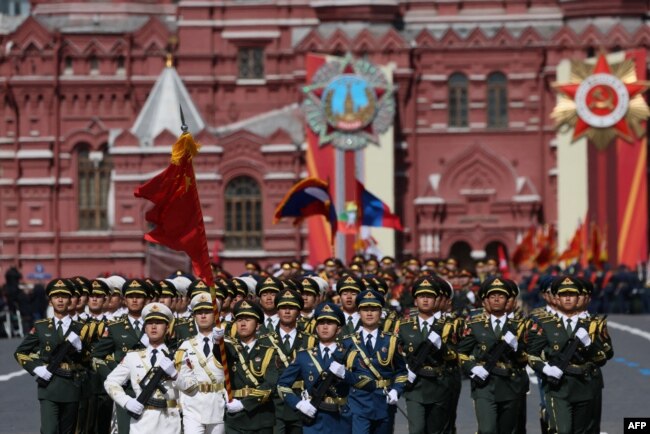
Russia has a population of 140 million, Ukraine now has over 30 million, and even this country is no match for Putin’s military machine.
The population of the European Union is 450 million, and the population of NATO countries is one billion. The Kremlin knows arithmetic.
And if we compare the economic potential of Russia and the West, these are simply incomparable values. EU countries – from Finland and Estonia to Portugal – can sleep relatively peacefully.
– But Putin has more than enough power for provocations in any case, right?
– Hybrid attacks continue, and political assassinations, terrorist attacks and sabotage, and border provocations may occur even more often.

However, a full-scale military clash is impossible. Putin is already having difficulties recruiting contract soldiers, and partial mobilisation would mean men fleeing abroad. The Russian economy is already creaking due to a labour shortage. And how can the authorities convince soldiers and even officers to attack not small Ukraine, but an enemy that is many times superior to Russia itself?
Putin is already having difficulties recruiting contract workers
In addition, despite humanity being richer than it was a hundred years ago, our subcutaneous fat layer is thin; no one has the money for a world war now. As soon as Russia and Ukraine are at war, the whole world will be in a fever – food and energy prices are jumping, and in the European Union, housing has also risen sharply.
The combined share of these two countries in world GDP is 2%. And if not 2, but 20% of the global economy or even more fight among themselves, this means total collapse and chaos, which the Kremlin cannot help but understand. Every act of aggression is carefully weighed in terms of petrodollars, income and expenses.
The topic of my research is that a global nuclear war was possible in the 1950s, when the main means of delivering bombs was aviation, and therefore, with effective air defence, nuclear weapons were not so scary.
And since the 1960s, the missile era began, and the rule of mutually assured destruction of nuclear powers still applies: whoever fires first will die second.
This is not even a Pyrrhic victory. Neither Putin nor Xi Jinping needs this.
The “Axis of Evil” between Russia and Iran. Can the US Destroy It?
– But it could also be a simple mistake. Many people believe that Putin is an imperialist who has little connection with reality.
– No, although with such romantic chatter, this cold-blooded, sly man is circling his own voters and trying to mislead foreign experts and politicians.
Why did he not conquer Kazakhstan then? After all, it is, firstly, a more attractive raw material target than Ukraine, secondly, an easier military conquest, and thirdly, the West would not stand up for this country as much as it stood up for Kyiv.
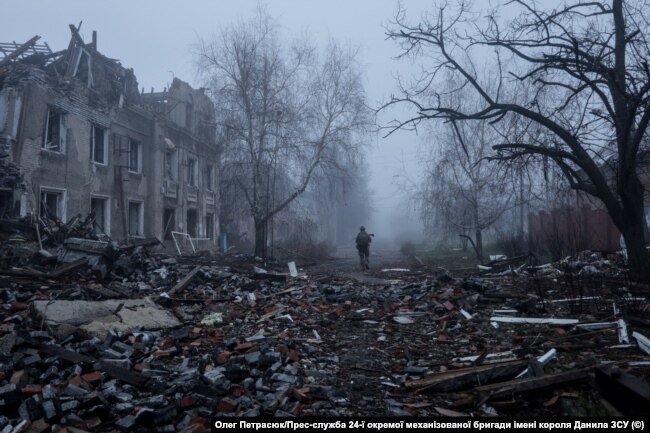
No, for the current regime in the Kremlin, Ukrainian democracy is a mortal enemy, whose mere existence erodes two neighbouring dictatorships at once.
Ukraine, like Belarus and Russia, is an East Slavic country, where the majority is Orthodox, and, moreover, a significant part of the population speaks Russian, and everyone understands it. If they manage to build a free state there, then the Russians can ask themselves: Are we worse off?
Russian authoritarianism is a military threat in the medium term
That’s why the presence of democracy in Estonia, Latvia, and Lithuania, which are ethnically and religiously not close to Russia, much less close to Russia than Ukraine, infuriates Putin’s clique less than freedom in Kyiv, Orthodox Georgia, or Moldova.
All of these countries, like Kazakhstan, are at risk of Russian invasion if a democratic revolution takes place there and Russian opposition émigrés begin to criticise the Putin regime from there.
In other words, not for the entire post-Soviet space, but for its majority, Russian authoritarianism is a military threat in the medium term.
But parts of the former Russian Empire, such as Finland, Poland, or Alaska, do not need to fear the invasion of tank columns.
– So, Stalin was much more dangerous than Putin?
– This is only at first glance.
Yes, in today’s Russia, there is no Gulag, the government is not starving millions of people, the Russian military-industrial complex is not producing mountains of chemical and bacteriological weapons – but only poisons little by little, the Kremlin is not planning a global meat grinder and enslavement of the planet.
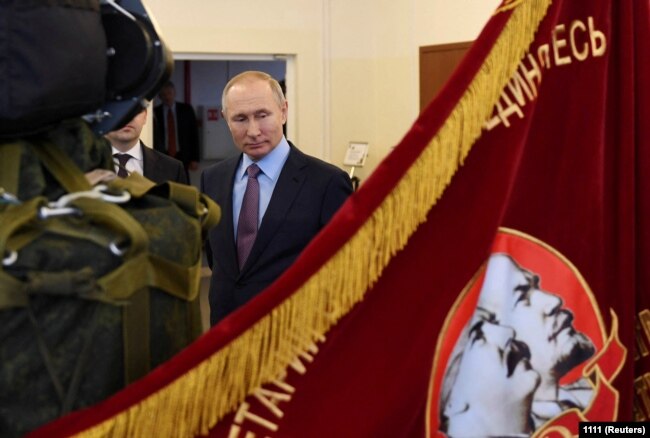
However, despite the change of eras, Putin’s regime is no less destructive than Stalin’s. In a situation where the ecological crisis and global warming have put the planet on the brink of disaster, the Kremlin is only making the situation worse.
The Kremlin is using international conflicts to raise fuel prices and using various tricks to slow down the development of renewable energy sources.
By unleashing bloodshed in Ukraine and Africa, indirectly or even encouraging terrorism, Moscow is undermining fragile global stability.
Instead of consolidating efforts to save the biosphere, Russian propaganda through a network of trolls is provoking strife in different countries.
At the same time, Russian diplomacy, under the guise of slogans about a multipolar world, is actually implementing the ancient principle of “divide and rule,” diverting attention from Russia as, perhaps, the main focus of global destabilisation.
A gas station country wants to remain so indefinitely. Coal production in Russia is also consistently high, so the Kremlin is raising fuel prices with the help of international conflicts and is also using various tricks to slow down the development of renewable energy sources. But playing with fire is turning into fires in the Siberian forests.
Putin, like Stalin, is a cynical globalist. Wherever he can reach, he tries to influence and harm with the help of special services, and sometimes “soft power” – propaganda, which in the conditions of growing authoritarian tendencies often falls on fertile ground.
Wherever they go, Russian soldiers trample the sprouts of democracy with their boots.
The astronomical sums, a record in history, that governments around the world are now investing in equipping armies and intelligence services could be directed towards greening and cleaning the planet or saving the Earth.
“Where the foot of a Russian soldier steps, it is ours.” What are Putin’s plans for the occupied territories?
– The Putin regime has endured military setbacks in Ukraine and unprecedented sanctions. Will it continue to harm humanity?
– Unfortunately, in the near future, it is not visible that a wave of protest will rise from within Russia. The war was started to prevent a revolution in Moscow, and the Russian authorities coped with this task. The opposition was partially expelled, some intimidated, others recruited, and others killed.
It cannot be said that the Kremlin’s strategy towards the West has been a failure. Due to nuclear blackmail and bluff, neither the EU, North America, nor Australia ever set a goal of overthrowing the Putin regime.
A decade and a half ago, the then-US Secretary of State Hillary Clinton stated that America was losing the global information war and that it was losing, in particular, to Russia.
Somehow, the West’s educational efforts towards Russia have not changed much since then, even February 2022 did not become a turning point. In many ways, the Kremlin remains active and proactive on the world stage, while the West remains reactive, generally passive, and does not even counterattack.
– Is the situation hopeless and without prospects, and will Putin or his successor or heir continue to disrupt the world order, to sow the wind only to reap the storm?
– Many Europeans focus too much on the Kremlin, but Russia itself doesn’t make much sense. Economically, it’s mostly a raw material appendage of its neighbours around the world, and in politics, the Putin regime is primarily the younger brother of the communists in the PRC.
Many Europeans are overly focused on the Kremlin
And Russian culture and science are in a very deplorable state.
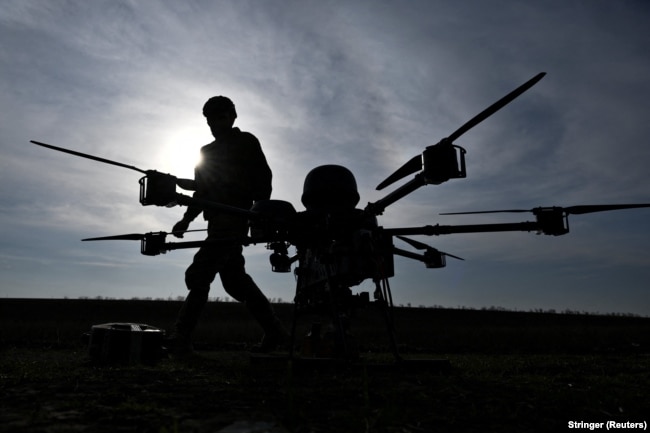
Let’s think about it – even in the most important sphere for the government – the military-industrial complex, despite astronomical cash injections, “scientists” have to resort to barbaric theft and pay exorbitant prices for consumer goods – breaking open imported refrigerators and dishwashers, digging out microcircuits from them, and inserting them into drones.
Putinism is very dependent on all neighbouring dictatorships.
Therefore, most likely, the Chinese revolution will become a harbinger and impetus for the Russian revolution, and several other neighbouring ones.
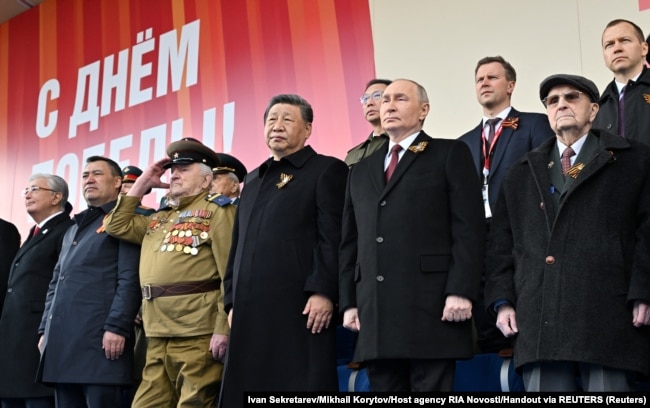
First of all, the system of government in the PRC is much more clumsy and backward than even Putin’s. Totalitarianism, monopoly of the Communist Party, no elections, the Internet under complete control, digital “crazy”. Recently, Reporters Without Borders published a new global Press Freedom Index, and in it, China is in third place from the bottom, everything is worse there than in Russia.
The system of government in the PRC is much more clumsy and backward than even Putin’s
Secondly, China has fewer natural resources than Russia, but many times fewer per capita. They cannot be squandered endlessly without thinking about making management open and effective.
Thirdly, the Chinese mentality is also important, that is, its examples in two neighbouring Chinese states – Taiwan and Singapore. Both of these advanced states are inhabited by the Chinese. They, like cheese in butter, develop precisely thanks to freedom. And the prosperous Hong Kong, where residents are accustomed to freedoms, during its step-by-step integration into the red giant, can become an expensive Trojan horse for the communists.
The economic difficulties in China that everyone is now aware of are not a crisis in the PRC, but a crisis of the PRC itself. A crisis that will inevitably end in collapse, and the wind of change, or rather a hurricane with a domino effect, will sweep away neighbouring dictatorships as well.
Радіо Свобода