

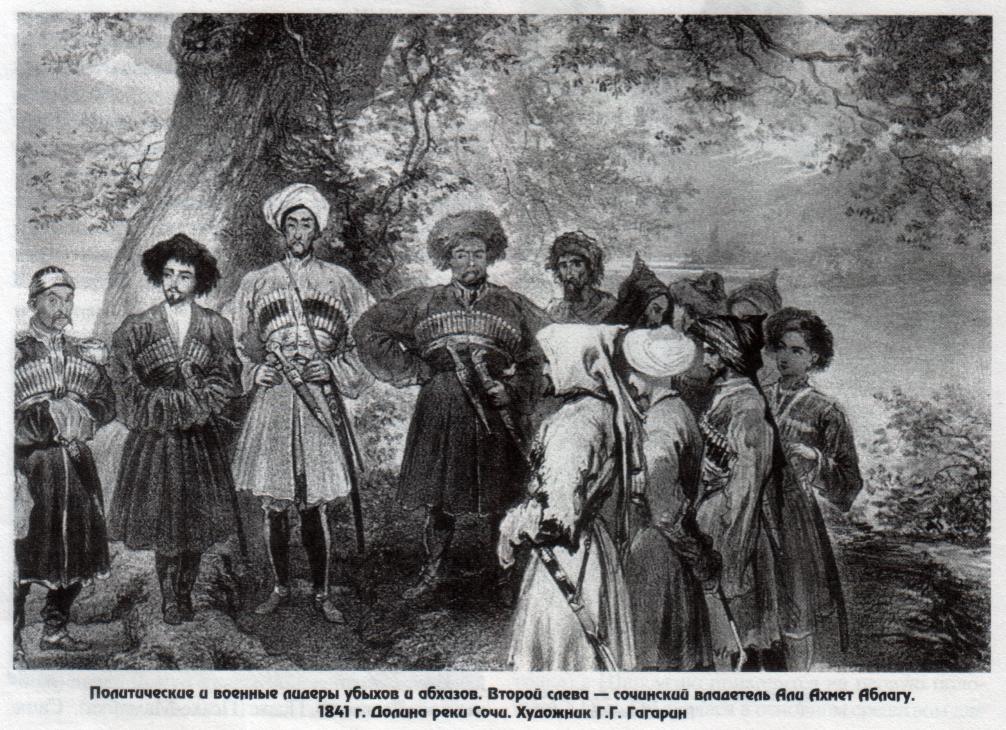
On the grave of the modest Turkish official Tevfik Esenç in the small village of Hacı-Osman is an inscription that today is considered one of the most sacred in world philology and, at the same time, one of the greatest condemnations of Russian imperialism.
“The last Ubykh, who immortalised the Ubykh language, who wrote and spoke this language.”
This inscription was engraved in accordance with the dying wish of Tevfik Esench himself, who wanted people not to forget his gift of civilization and his obligations to his own people. Indeed, Esench was the last person to speak Ubykh and helped preserve not only its memory but also the language itself—at least in research and textbooks. Together with the famous French linguist Georges Dumézil, he published the book “Le verbe oubykh”. He left behind samples of the language, and this is incredible, because the former speakers of Ubykh used 81 consonants with only three vowels, try to imagine it, let alone pronounce it!
But the reader may have a natural question. Why did the Ubykh language disappear in the first place? Where was Ubykhia, and did it exist at all?
I assure you, it did. According to ancient legends, Ubychia is the mythical Colchis, that is, perhaps it was here that Jason sailed with the Argonauts for the Golden Fleece, and from here he fled with the dim Medea. Now Ubychia does not exist, and of course, no Colchis.
This is Sochi. Polluted Sochi. Sochi, named after the main Ubykh river, the Shacha.
So, during the Caucasian Wars, Russian troops occupied this ancient Ubykh land, exterminated a large part of the population, and those who remained alive were given an ultimatum well known to us from the times of the current Russian-Ukrainian war: either Russian citizenship, or get out of here. Almost all Ubykhs did not want to live under the rule of the “white tsar” and moved to the Ottoman Empire. And, of course, they never lived compactly again, and over time, almost all of them switched to the Turkish language. Tevfik Esench, who was raised by his grandfather and grandmother, speakers of the ancient language, was lucky enough to learn everything, remember it, and tell scientists. This is all he could do for his disappeared people.
Try telling the Russians that they live on foreign land in Sochi or Adler – this will cause nothing but laughter, although the Russians expelled not only the Ubykhs, but also other nationalities of the Caucasus from the land of ancient Colchis. These nationalities still live in the region – but, of course, they no longer have any rights to their homeland. Moreover, even in our time, Russia tried to establish control over one of the mountain villages of neighbouring Abkhazia. Yes, this is not a joke: the Russians tried to carve out territory from a self-proclaimed republic, which they themselves declared an independent state! But where there is Russia, there is expansion and theft.
The disappearance of the Ubykhs cannot be called the destruction of one of the peoples of Russia – because these proud people were never a people of Russia, and vengeful Russians, even a century after their exodus from their native land, continued to portray them in their own historical research as robbers, slave traders, and pirates – well, at least not Nazis. It was more difficult to deal with the nationalities of Russia who remained on their land, but the Russians are succeeding. In just a decade of Putin’s rule, the number of native speakers has decreased several times, and soon philologists will have to look for their Tevfiks Esenchivs in order to at least preserve the disappeared languages.
So when I say that one of the main tasks of the Russian-Ukrainian war is linguocide and the final massacre of the Ukrainian language, this is not an image, but a plan, a real plan. If this plan did not exist, Russia would not have demanded, against the backdrop of missile bombings, to recognise the special rights of the Russian language and the Church. If this plan did not exist, the FSB would not have used its agents with deputy mandates for decades, who have not gone anywhere today, for a persistent and inspired fight against everything Ukrainian.
If this plan had not existed, there would have been no war.
Vitaliy Portnikov
Facebook 





