

Historian visiting Sergei Medvedev
Today our guest is Mayrbek Vachagaev, a historian and author of the podcast “Chronicle of the Caucasus”, and we will talk about the city of Grozny.
Not a Chechen city
– I read about the history of Grozny and concluded that for most of its history, it was not a Chechen city. It was a Russian frontier city near a fortress, and the Chechens were far from being the masters there.
– From the beginning, when General Yermolov decided to create a military fortress in 1818, he founded a city on the site of several Chechen villages. That is how the fortress appeared, which eventually in the 60s, after the conquest of the North-Eastern Caucasus, became a small town where only Russians and the military lived. No Chechen, even one who collaborated with the Russian administration, had the right to settle on the other side of the Sunzha River, where the fortress was founded, practically until the beginning of the 20th century. Two completely different cities appeared on both sides of the river. The Russian Grozny on the left bank would later become the capital and a large city. On the right bank, they allowed Chechens who had some merits before the Russian government to live: these were the same Chermoyevs, Kurumovs and so on, mainly merchants.
– At the beginning of the 20th century there were even Chechen pogroms.
On either side of the river, two completely different cities emerge.
– Since the market was on the side where the Russian part was, a trading environment appeared there, more aimed at involving Russians, Cossacks, Christians, and Jews, who began settling there in the late 50s and 60s of the 19th century. The first Jewish community appeared, later building one of the largest synagogues. This small market became attractive to Chechens, too, and they began trading there. Often there were pogroms, during which the Cossacks dealt with the Chechens. The reason could be trivial: someone insulted a person and did not give way, but this everyday reason always grew into hatred between these two ethnic groups.
– Was there any racism towards the Chechens from the Cossacks, the Russians?
– In any case, they looked at the Chechens as second-rate citizens. They were even offered to live separately. In the entire territory of Chechnya, for example, in the 19th century, there was only one school, which could not last for several years, since it was decided that there was no point in the mountaineers studying Russian. In general, the Chechens themselves organized schools to study Russian and so on. There was complete rejection of the Chechens on the part of the Russian administration and the Russian population of Grozny.
Oil
– When big oil is discovered in Grozny, what does it change?
The largest oil fields were owned by foreigners
– The Cossacks, who considered Grozny to be their fortress city, were losing their exclusivity because thousands of people from central Europe were starting to flock to the city from all over Russia. Having heard that dozens of foreign companies had started to organize oil extraction, which was then incomprehensible to many, people rushed there, and the city literally in a few years became a city. It became attractive for businesses related to oil, manufacturing and everything else began to appear. The city grew incredibly quickly, and literally in ten years, from the end of the 19th century to the beginning of the 20th century, the population increased dozens of times.
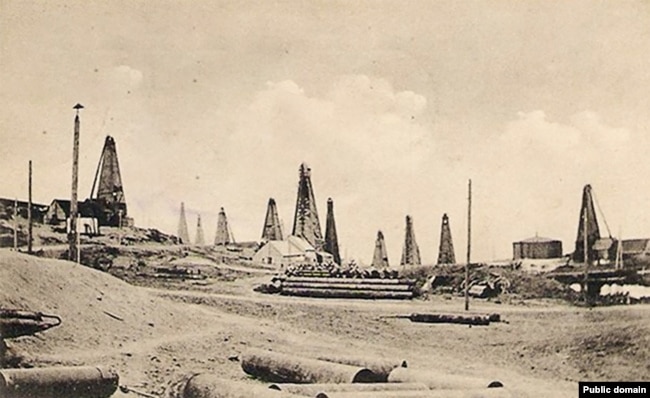
– But were the owners of the oil fields mostly foreigners?
– Yes, the largest ones belonged to foreigners. Not only the Nobels, but also Belgian, English, French, and Danish firms, including Azerbaijani oilmen who already had experience.
– By the time of the revolution, a quarter of Russian oil was produced in Grozny.
– And later – even more.
– That is when Hitler was making his way to Grozny…
By the time of the revolution, a quarter of Russia’s oil was produced in Grozny
– …he understood perfectly well that, having received Grozny, he would remove the issues related to fuel supply for his army.
After the revolution
– To what extent did the Bolsheviks manage to overcome the imperial Russian colonial legacy in the early years with the Leninist national policy?
– In other words, this is how it is presented: equality, brotherhood, we are all workers, toilers. But in reality, we still see that there are, for example, practically no Chechen engineers, even in the oil fields: they were not trusted.
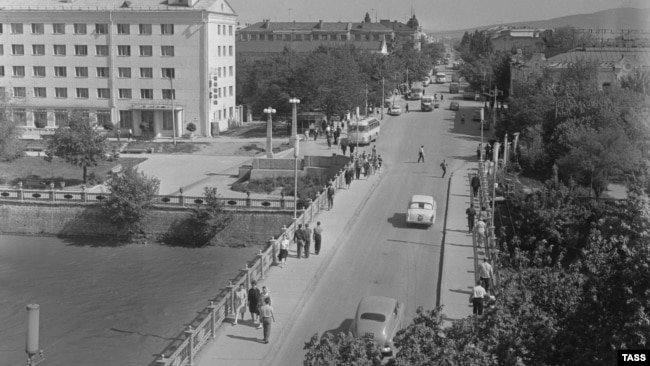
In the 1930s and early 1940s, Grozny remained a Russian city. It grew because it included Chechen villages that used to be suburbs, but this is a very small part. The centre and the administration do everything to prevent Chechens from coming to Grozny and settling there forever.

“Mandelstam immortalized this city.” Elena Fanaylova about Voronezh
– But these are villages. And the city infrastructure is on the Russian side: boulevards, stone buildings?
– All this is just beginning, because after all, Grozny itself was before the Soviet power, before the Bolsheviks… In one of the central newspapers of St. Petersburg, for example, a case was described in which an entire cart simply sank in the mud on the central street of Grozny. This caused a shock, and after that, the authorities finally forced them to restore some kind of order in the city.
– And was there a policy of indigenization, Chechens were put in secondary roles in the party leadership?
An entire cart simply sank into the mud on the central street of Grozny
– The second secretary always had to be a Chechen, and after the unification with Ingushetia, the third secretary was always an Ingush. If, for example, the director of a plant somewhere in Grozny was an Ingush, then the deputy had to be a Chechen (and vice versa). If the director was Russian, then his deputies had to be a Chechen and an Ingush. The regional and city party committees decided who would be where. The rector of the university, for example, always had to be Russian, and the vice-rectors were of other nationalities.
Deportation
– We are approaching another black date in Chechen history. 23 February 1944: Operation Lentil, the deportation of the Chechens. How complete, how devastated was Grozny?
– As we said, Grozny remained a Russian city. The suburbs were completely evacuated, and refugees from the occupied parts of the USSR were settled in the place of the Chechens: Ukraine, Belarus and parts of Russia. The authorities connived, at the arrival of as many people as possible, and their settlement in Chechen settlements, including the suburbs of Grozny.
– So people simply moved into houses that already had beds, poultry, and livestock?
– Yes, there was everything, because people were only allowed to take personal belongings and food for three days. When the Chechens returned later, they found nothing.
– Was the deportation total?
– Absolutely, one hundred percent. Those who remained (for example, from the NKVD) changed their nationality: they could register as Russian, Kumyk, or anyone else, but not Chechen.
– Did all the toponymy change?
– Completely. Not a single settlement with a Chechen name remained then.
– I read that even cemeteries were destroyed and gravestones were used for sidewalks.
Not a single settlement with a Chechen name remained at that time.
– Yes, and after returning, the first thing the Chechens did was dig them up and return them to the cemeteries. But since many were destroyed, no one knew to whom each monument belonged. Almost all the bridges over small rivers were paved with tombstones.
– Did the population question the idea that the Chechens were collaborators?
– The population was told: that you couldn’t sympathize with them because they were collaborators, they supported the German army. It was easier for the people to deceive themselves: they understood that if they accepted this interpretation, then everything would be written off. It was very difficult to accept this for one simple reason: there was not a single German on the territory of Chechnya.
Even when I entered the university in 1982 and we asked our teacher: “Do you honestly think that the Chechens were collaborators?” he said: “Yes. If the party says so, then that’s how it was.”
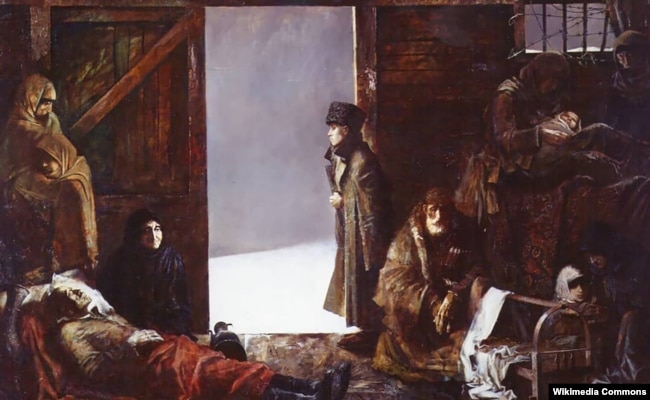
– How did the return happen?
My father lived on the street for four months, then he got some money and bought his own house.
– In January 1957, they indicated that there was a possibility of returning, they warned that the Chechens would have to leave in small groups. But in the first few months, almost half of all the Chechens left. They came, knocked on their yards and saw that the people there did not want to leave. In the end, it turned out that the Chechens… For example, my father, his mother and two small children lived for four months in the open air near their gates, because the family that lived there refused to leave. In the end, my father tried to get money for these four months, got it and bought his own house. This was practically everywhere. But the authorities also demanded that these people not leave other people’s houses. In the end, almost all the people from the villages were forced to leave, and the Chechens returned to their homes. This took several years.
Late Soviet period
– How did the attitude towards the Chechens change in the last decades of the Soviet Union? Was the stigma of collaborators removed from them?
– No. The fact is that, even when the Chechens were returning from Kazakhstan, the first uprising on the territory of the USSR was in Grozny. In 1958, the Russian population of the city demanded that the Chechen-Ingush Republic not be restored. Even at the end of Soviet power, the residents of Grozny lived with this thought: you are still collaborators.
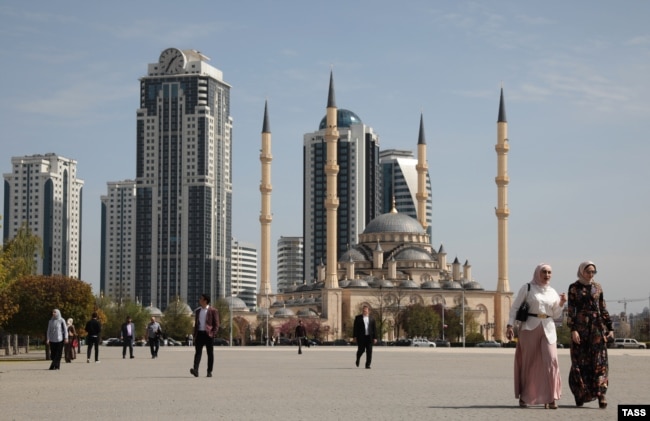
In 1982, when I had just entered the university, I and four of my new friends who had also entered were riding on a tram. We had all come from villages, had paid nothing, had achieved everything ourselves, and were heatedly discussing it in Chechen. Then the other passengers began to complain: “Stop speaking the Barabar language!” (that’s what the Russians from Grozny called us – the barbars). They stopped the tram and said: we won’t move until the police arrive. We had to get out.
So, my student life in Grozny began with me being shown my place: you are an underprivileged resident of this capital. To the same teacher I told you about (he taught academic communism), already in 1987-1988 we said: you must admit that you were wrong all these years, recognizing the Chechens as collaborators, we demand that you apologize. He refused to apologize, saying, “You are all criminals and the descendants of criminals.” Our entire class stood up and left. It was the first protest at such a level that even the regional committee of the Communist Party interfered. As a result, he was removed from teaching at the faculty, and he died.

“The windows do not have curtains in this city.” Mikhail Krutikhin about Oslo
Chechen war
People were buried alive in basements
– The First Chechen War began 30 years ago. What is happening in Ukraine, in Mariupol, in Bucha is a terrible trauma and grief for us now. It seems that the same thing happened 30 years ago, but to my terrible shame, I must say that we did not react to it like that. Maybe Sergei Kovalev, Memorial, human rights activists did, but life went on.
– I showed one of my acquaintances, a native of Grozny, two photographs side by side. I asked: do you sense the difference? He said: well, this is Grozny, 1994, of course. And I said: no, this is Grozny, and this is Mariupol. That’s how identical the destruction of Mariupol and Grozny is!
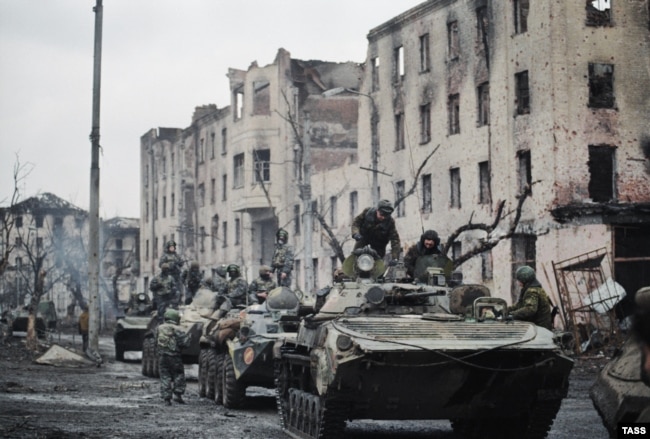
By the time all this began in 1994, the attitude towards Chechens in Russia was again, by and large, negative. They were always talking about some Chechen bandit groups in Moscow and St. Petersburg, talking about notification. No one asked how it was possible to send notification from Chechnya without having a bank in Chechnya, without having contact with the Central Bank of Russia, or with any bank in the Russian Federation. All these notifications were still sent from neighbouring republics, but the generally accepted term “Chechen notification” remained.
And so, when all this started in Chechnya, many began to say: “Well, that’s what they deserve. Why did they come out against Russia? Why don’t they want to stay in Russia?” Russia itself was going through very difficult times at that time: remember the dispersed Supreme Soviet and so on. President Yeltsin’s rating at that time was minimal.
– Karyakinsky: “Russia, you’ve gone crazy!”…
It was a total extermination of the civilian population.
– Against this background, the Chechen card was simply manna from heaven for Russian politicians. They hoped that it would change people’s attitudes and turn their consciousness away from focusing on Yeltsin and Moscow, and towards the periphery: these ungrateful Chechens want to separate from Russia!
– How many people died in Grozny that winter?
– Unfortunately, no one counted the victims.
– They talked about 30 thousand.
– I think there were many more victims. When after the war they cleared out this or that multi-story building, they simply found skeletons in the basements: people were buried alive there. There were not only air strikes, but also Mr. Rokhlin supported this with tanks and guns from the Tersky Ridge. People had nowhere to even run, and they were forced to seek refuge in basements. Most of them died there. It was a total extermination of the civilian population, and not just the militants, as they liked to say in Moscow.






