

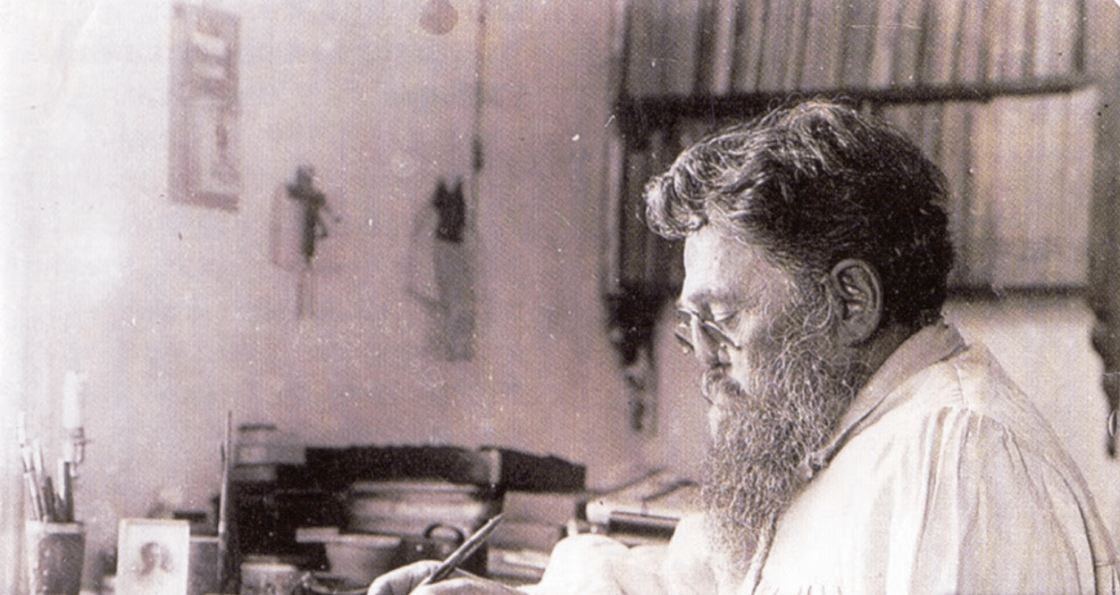
On 1 March 1881, two important events took place in Russia. First, Emperor Alexander II was assassinated in St. Petersburg. Second, the first private independent newspaper in the Asian part of the empire, the Siberian Newspaper, began publication in Tomsk. It educated several generations of Siberian regionalists. They, in turn, almost separated Siberia from Russia in 1918.
To stay up to date with the main Siberia.Realities stories, subscribe to our YouTube, Instagram and Telegram.
“Wherever our government directs its breath, flies are sure to die,” wrote one of the first editors of the “Sibirskaya Gazeta”, a regionalist, traveller, journalist and eternal oppositionist Alexander Adrianov in 1912. This universally fair statement for Russia then applied to very specific professors of Tomsk University who supported the city administration in a high-profile corruption scandal initiated by our hero. But Adrianov spoke no less disparagingly about the tsarist governors, the ministers of the Provisional and Provisional Siberian governments, his regional colleagues, and the Soviet government.
In short, Adrianov was the first and for many years the only professional Siberian dissident. The first to live the life that his Soviet and post-Soviet followers would live a century later.
Anatomy of a Dissident
Alexander Adrianov was born into a wealthy, by the standards of his time, intelligentsia family. His father and grandfather were priests who combined the work of saving souls with worldly entrepreneurial and educational concerns. For example, Adrianov’s father Vasily Nikiforovich wrote articles for the Tobolsk Provincial Gazette and had a bronze medal from the Imperial Geographical Society.
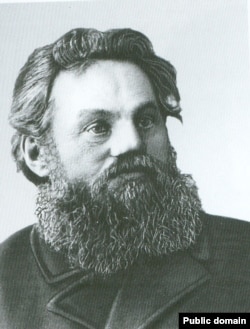
Adrianov received a good education in the natural sciences. He graduated from the Tobolsk Provincial Gymnasium, one of the best in Siberia, where Dmitry Mendeleyev’s father, the writer Pyotr Yershov, taught, and where almost all Siberian historians and regional experts of the second half of the 19th century studied. He graduated from St. Petersburg University, where he successfully combined the status of a recipient of a prestigious imperial scholarship and student librarian with a stormy youth – he subsequently underwent long and difficult treatment for syphilis. In particular, already being a respected Tomsk journalist, he decided to have plastic surgery on his nose, for which he was suspected by his wife of wanting to return to “the prospects of a personal life.”
As a dissident, Adrianov did not forget about the business interests of his project. Thanks to Adrianov, the only private newspaper in Siberia, Sibir, moved from Irkutsk to Tomsk and became Sibirskaya Gazeta. In fact, under strict censorship, Adrianov bought the “broadcasting rights” and relaunched the project. True, he did not turn out to be a particularly successful businessman – his letters to his teacher Grigory Potanin are full of lists of debts, showdowns with creditors and crazy ideas on how to improve his financial situation. However, he experienced a pathological dependence on newspaper publishing and public statements. Shortly before his execution, in December 1919, during an interrogation, he said: “I consider my work at the newspaper a method of political struggle.”
At the same time, to improve his financial situation, Adrianov from time to time cooperated with the authorities. For the first time, he got a solid position as an official on special assignments under the Tomsk governor Anton Laks through connections – Laks had lived in Tobolsk for a long time and was a friend of Adrianov’s priest father. After Laks’s short-lived governorship, Adrianov got a job as an official “in the excise department” – in other words, he was engaged in inspections of alcohol production in the then analogue of the tax service. In many biographies of Adrianov, his official work is described as the employment of a petty clerk, but he made an excellent career, rising to the rank of state councilor. Almost a general’s rank, which was due to officials at the level of governor.
Like any professional dissident, he was a dreamer. In the “Siberian Soviet Encyclopedia”, in the article about him, located between Adonis Sibirsky and the village of Adrianov in Transbaikalia, it is said that Adrianov is “a traveller, ethnographer, archaeologist and publicist.”
While still in St. Petersburg, he met regionalist Nikolai Yadrintsev – he simply showed up at his apartment in Baskov Lane. Yadrintsev introduced student Adrianov to Potanin. It happened, it must be said, in 1874 – that is, Yadrintsev and Potanin were already seasoned intellectuals, known throughout the country, who had served exile for their beliefs in the case of separating Siberia from Russia.
Potanin takes Adrianov with him to Mongolia as a photographer – Adrianov mastered this most progressive art of those times as a student. And basically ruins the young man’s whole life with this expedition. Adrianov could have made an excellent career, but instead, he spends the rest of his life earning money for the next expeditions, fails to submit reports on past trips, digs up and floats stone slabs with runic inscriptions from Tuva along the Yenisei with some random boy, learns the Ostyak language and complains that the inhabitants of the Narym region cannot, due to their “stupidity and lack of memory”, tell him at least one local fairy tale or legend. It is difficult to estimate what contribution this made even to modern ethnography, but the contribution to the cause of increasing the entropy of the Universe is obvious and unconditional.
Against the Tsarist regime
Things didn’t go well for Aleksandr Adrianov with the tsarist regime from the very beginning. Of course, no one thought that the first issue of the “Sibirskaya Gazeta” in Tomsk would come out exactly on the day of the assassination of Emperor Alexander II – 1 March 1881. But what happened, happened. Already after the first issue was published, the gendarmerie began an investigation – was there any malicious intent on the part of the editorial board to time its first issue to coincide with the tsar’s assassination?
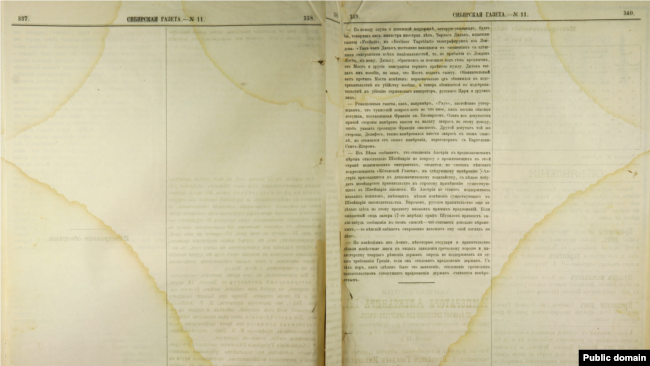
And so it went on. The second issue of Siberian Life, although published in a mourning frame, contained nothing but reprints of official materials. Not a single word of regret from the editors. The eleventh issue was planned to publish materials about the trial of the tsar’s murderers, but the censor cut out almost half the text. In protest, the editors published the issue with spaces in the places crossed out by the censor. The entire issue was confiscated by the police.
Three years later, Tomsk Governor Ivan Krasovsky asks Adrianov to maintain a “balance of positive and negative publications.” Adrianov responds to the governor:
“Our newspaper is fundamentally oppositional, and if we begin to portray the administration in a good and sympathetic light, thanks to its exceptionally rare decent actions, we will mislead the average person.”
Is it any wonder that the Siberian newspaper was eventually closed in 1888? Firstly, after much delay, a university finally opened in Tomsk, and the authorities decided that it was too much – gentlemen students + a liberal newspaper in one small town.
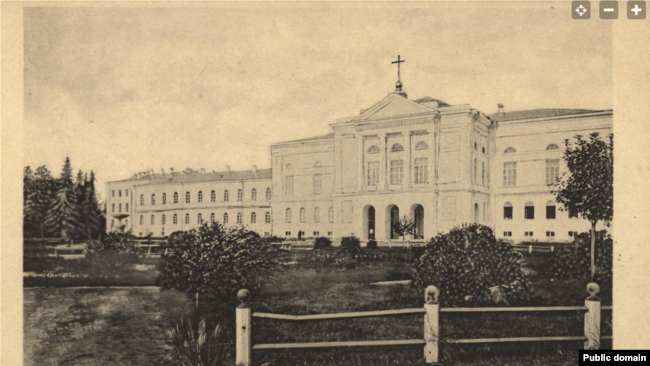
Secondly, by that time Adrianov had fallen out not only with the governor and officials – no, he had fallen out with everyone in the city. For example, the founder of Tomsk University, the trustee of the West Siberian educational district Vasily Florinsky, whom he called in letters to Potanin “a terrible chatterbox” who “lies to such an extent that he can easily be caught.”
Only the businesslike and apolitical Pyotr Makushin managed to relaunch the Sibirskaya Gazeta by cunning five years later. At first, he obtained permission to publish a completely dry Tomsky Spravochny Listok, exclusively with announcements and reports on the work of the government and the City Duma, which was gradually renamed simply Tomsky Listok, and then Sibirskaya Zhizn.
In 1910, Adrianov returned to Sibirskaya Zhizn, and already in 1913, the newspaper was involved in another scandal. Adrianov, as the head of the Sibirskaya Zhizn department, missed a complimentary note about the employees’ strike in the office of the Irkutsk-Moscow oligarch Alexander Vtorov. The note was recognized as slander and socialist propaganda, and Adrianov was sent into exile to Minusinsk.
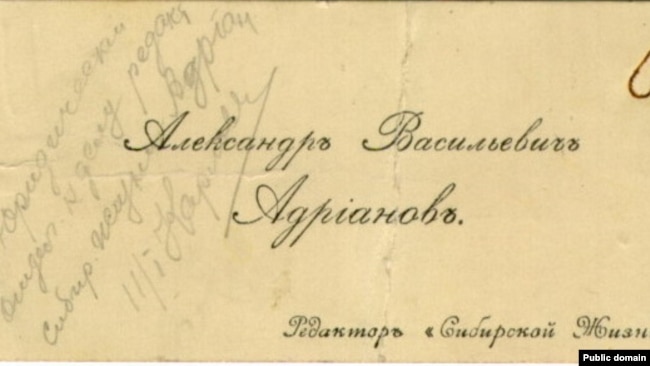
Less than six months later, in Minusinsk, he incites the local intelligentsia to publish an opposition newspaper, “Minusinsky Krai.” For this act, he is sent into exile even further – to the remote village of Ermakovskoye, where there was neither opposition nor intelligentsia. In this exile, with a break for an expedition to Tuva (incidentally, paid for from the budget!), Adrianov would spend three years, right up until the February Revolution of 1917.
Against the Provisional Government
It would seem that the dream of the eternal oppositionist to the tsarist regime has come true – the regime has collapsed and we can all start building a new socialist-democratic Russia together. But no – Adrianov’s romantic love for the new revolutionary government will not last very long and will end by the summer of 1917.
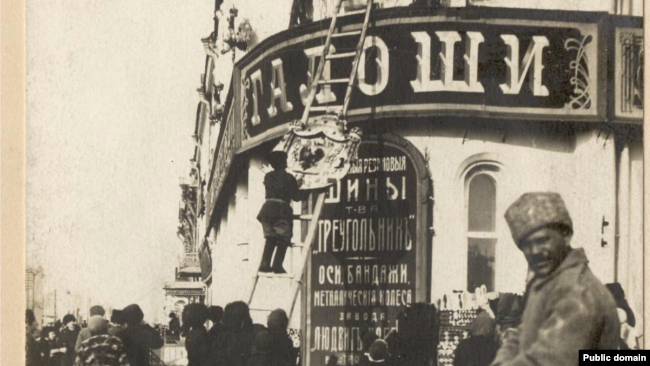
Then in his newspaper “Siberian Life” Adrianov will write :
“We, indeed, live under the sign of all sorts of ‘freedoms’ – freedom to commit murders, robberies and thefts of all kinds, freedom to lie and distort in print, only by wrapping ourselves in the toga of a democrat and pinning on a red bow, freedom to commit outrages, engage in censorship, arrest whoever we please.”
One might assume that Adrianov, who criticizes the government, sympathizes with the Bolsheviks. But no, in the issue of Siberian Life from 25 July 1917, the Bolsheviks are (quite rightly) accused of “preaching about the seizure of land by peasants, and the workers of factories and plants,” “discrediting any government,” “inciting the anarchic instincts of the crowd,” and “calling for civil war.”
In short, as was his long-standing habit, Adrianov quarrelled with all political forces. Things got to the point that on 8 July 1917, on the initiative of the provincial commissar (!), a special meeting of the most diverse political organizations was held in Tomsk – from the Cadets to the pharmacists’ union – which collectively decided to boycott “Sibirskaya Zhizn”. Rarely did anyone in the seething political life of that time manage to unite such different politicians around himself – Adrianov did.
The universal hatred only encouraged him. In the article “My Answer to Them,” published in “Sibirskaya Zhizn” three weeks after the boycott, Adrianov lists in detail his persecution by the tsarist regime, the persecution by the Social Democrats, the persecution by the Cadets, the persecution by the officials of the Provisional Government, whom he collectively despises. And he declares that “the boycott of “Sibirskaya Zhizn” are empty words! Only violence, brutal physical violence, can put an end to the existence of a newspaper.”
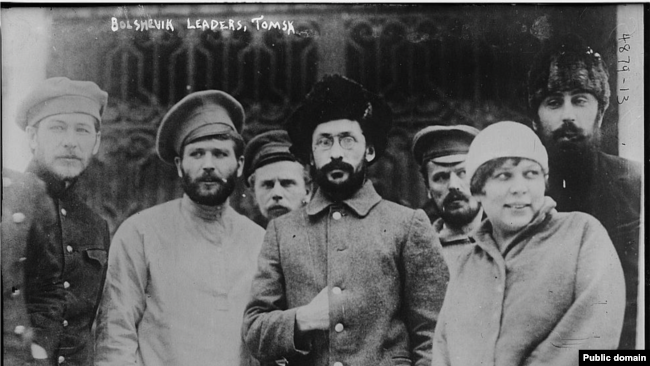
Violence was not long in coming. In January 1918, the Bolsheviks who came to power closed down Sibirskaya Zhizn, which refused to comply with the requirement to pre-approve the publication of “telegrams” – that is, the newspaper’s news feed.
Against the Siberian government
Having survived several months of forced inaction, by the summer of 1918, when Siberia was liberated from the Bolsheviks, Adrianov seemed to have concentrated enormous power in his hands. First, he is the editor of the revived and respected “Sibirskaya Zhizn”. In which he writes dozens of political articles, mostly about regionalists and regionalism. That is, he advances his agenda.
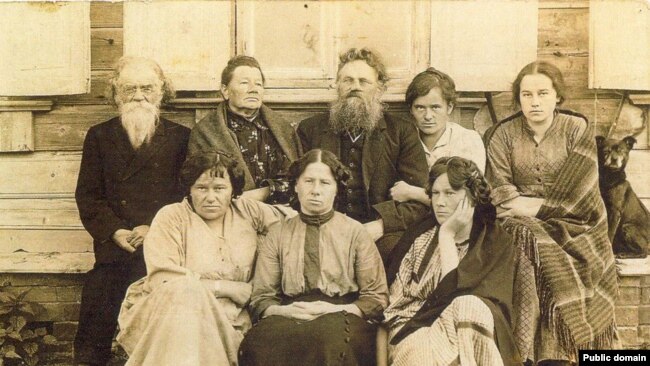
Secondly, he becomes the only link between the elderly Grigory Potanin (who by that time was already over eighty) and the external political world. The Siberian Soviet Encyclopedia wrote about this directly and unambiguously: “In his political speeches he often used the name of the elderly Potanin as a cover.” Adrianov becomes the “grey cardinal” of all Siberian regionalism.
Thirdly, he is a deputy of the Siberian Regional Duma. And not just a deputy, but the head of the second largest faction of regionalists and non-party members, and also the head of the so-called “Private Meetings of Duma Deputies”, in fact, the shadow apparatus of the Siberian parliament, in which all the main decisions were made.
What does he do, having become the absolute ruler of the Dumas and deputy mandates? That’s right, he mercilessly criticizes the Provisional Siberian Government. At first, he and his supporters do not show up at the meeting of the Siberian Regional Duma, where the ministers of the new government were elected, citing the fact that there was no quorum anyway (and in fact, either 36 or 70 people participated in the meeting, with the required quorum being 90 deputies). Then, having supported only the appointment of Pyotr Vologodsky as the Chairman of the Government, he rudely and publicly criticizes the candidacies of all the other appointed ministers.
He calls one “politically unprincipled and insignificant,” the second “imposing socialism,” the third he blames for the lack of “the necessary certainty and firmness,” and the fourth for “the lack of the necessary energy.”
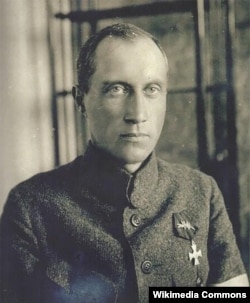
In the very first days of the liberation of Siberia from the Bolsheviks, Adrianov travelled from Tomsk to Novo-Nikolaevsk specifically to meet with the commander of the West Siberian Military District, Colonel Alexei Grishin-Almazov, the future commander of the Siberian Army. It is believed that he did this to persuade him, on behalf of the “Private Conference of Deputies” of the Siberian Regional Duma, to carry out a Bonapartist coup. Grishin-Almazov prudently refused.
Finally, at the last session of the Siberian Duma in November 1918, Adrianov demonstratively and publicly protested against Nikolai Avksentyev, the chairman of the Provisional All-Russian Government, elected in Ufa and especially arriving in Tomsk to dissolve the Duma. When the Duma deputies rise in greeting with cries of “Long live Avksentyev!”, Adrianov demonstratively sits down and does not rise until the minister-chairman leaves the meeting room.
Against the Soviet power
On the night of 17 December 1919, the army of the All-Russian government of Admiral Kolchak left Tomsk. A day later, power in the city passed to the Bolsheviks. Adrianov never liked the Bolsheviks, comparing them to an “abscess” on the body of Russia and calling them “crooks who do destructive things, lie, slander, set on, provoke, pursue their personal goals.”
He knew for sure that under the Bolsheviks his life was in mortal danger. On 10 December, a week before the evacuation of the “Whites” from Tomsk, Adrianov wrote a letter to Tomsk University and asked for his collection, collected in Tuva in 1915-1916, to be accepted into the geography office. He describes the reason for his request quite unambiguously :
“Considering the alarming state that has arisen in the city and the possibility of any excesses during which various property may be damaged and life itself may be endangered, I find it advisable to take measures to protect the scientific collections and materials in my hands.”
Nevertheless, Adrianov refused to be evacuated to the Far East and further to China. Perhaps his age played a role – by that time he was already 65. Perhaps his dissident habit and desire for new political battles played a role.
His fellow newspaper members did not appreciate this heroic zeal. In the diaries that Adrianov kept during the last week before his arrest, he mentions that he prepared the last issue of Sibirskaya Zhizn on 20 December 1919, virtually alone – “I did not find any of the employees”, “I sent notes inviting them to perform their duties”. They even managed to gather 7 of the 20 people listed on the staff for a joint meeting of the board and editorial staff. The rest ran away, expecting arrests and reprisals.
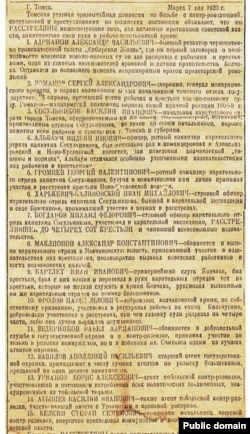
The Bolsheviks decided not to debate Adrianov and simply arrested him two days after the last issue of his newspaper was published. In March 1920, the Bolshevik leaflet Znamya Revolutsii reported that the Tomsk Cheka had shot “active opponents of Soviet power who had stained their hands with the blood of workers and peasants.” The revolutionary Bolshevik media expressed themselves in an unusually pompous style when talking about mass extrajudicial executions. Adrianov’s name was first on the list of two dozen executed :
Adrianov Aleksandr Vasilyevich – former editor of the Black Hundred provocative newspaper “Sibirskaya Zhizn”, where he was the first to speak about the need to introduce military field courts to deal with workers and peasants, one of the main inspirers of the bloody policy of the Kolchak government. He remained an implacable enemy of the proletarian revolution until the very end.
Just a few weeks after the last issue of Sibirskaya Zhizn was published, Znamya Revolyutsii would move into the vacated premises. Another 70 years later, with a three-year difference, two memorial plaques would appear on this building. In 1988, the name of Veniamin Wegman, a devout Bolshevik and editor-in-chief of Znamya Revolyutsii, who signed the issue with the Cheka execution list for publication, would be immortalized here. In 1991, a plaque with the name of Alexander Adrianov would appear on another wall of the same building.
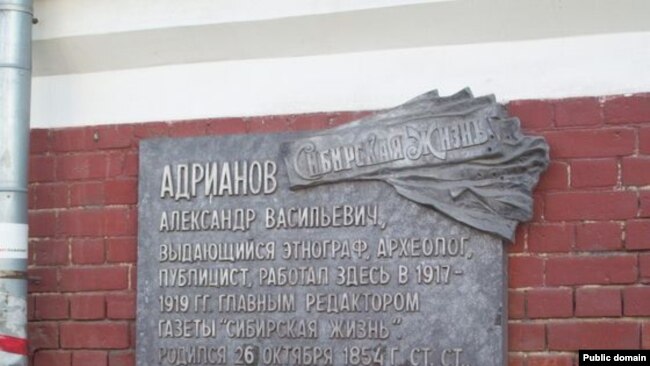
The walls with these two signs are perpendicular, looking at different streets of the same intersection. And this is very correct. Otherwise, Adrianov would have found a way to argue with his political opponent here too.
Сибирь-реалии





