

In January, protests broke out in Bashkortostan over the arrest of local activist Fail Alsynov, who was fighting against the production of hazardous materials. Thousands of protesters took to the streets of Baymak and Ufa.
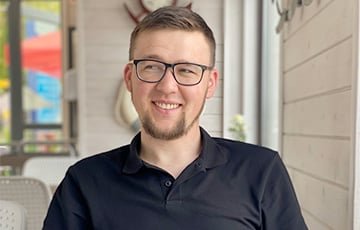
Were there any prerequisites for the start of these protests? How do Bashkirs live today? Are the ideas of separation from Moscow popular in Bashkortostan? Charter97.org website talked about this and more with Bashkir activist Artur (Ibragim) Zaripov :
— In 2020, when the head of Bashkortostan, Radiy Khabirov, tried to develop the Shikhan Mountain of Kushtau for soda, the defenders of the mountain came out to a spontaneous gathering. Seeing that bulldozers were digging up Kushtau, people, notifying each other, gathered themselves.
We have activists who alert people to stand up against injustice. Let us say, like-minded people on the issues of preserving language, history, culture, and natural resources that are illegally mined on our territory. They are the main backbone.
Ordinary people came out in defence of Fail Alsynov. No matter how they tried to show that there was outside influence: Khodorkovsky, Ukraine and “Western enemies,” ordinary people came out.
I will say that in Baymak, at first there was the detention of Fail, and then it grew into a demand for the resignation of Radiy Khabirov.
People were detained for two days, they entered their houses with weapons, many were simply grabbed, and they disappeared (some are still being searched for). To avoid repeated clashes, as in Baymak, people went out to protest in Ufa, but when they were approached, they said, “We are not protesting, we are just dancing. Is it forbidden to dance here?”
— What is the situation of the Bashkir culture and language today?
— The language is on the verge of extinction. Another 30 years of this kind of policy, and our language will no longer remain. In the 1930s, it was translated from Arabic script to Cyrillic. As a result, we lost great works of educational literature and poetry. Because of Soviet policy, our entire base disappeared.
Today the fact is that Bashkir is not a mandatory language to study. It is not a business language either, since in educational institutions, enterprises, government agencies and legal authorities everything happens in Russian.
People are told that in villages or at home, if they wish, then speak Bashkir. If I come to the city, to Ufa, and speak Bashkir, then they consider me a hillbilly, illiterate. I see this problem in many regions where Russia is pursuing a similar policy.
As for history, here too we are subject to complete Russification. After all, as I already said, we lost the books. It turns out that people from the USSR already told us who the Bashkirs were.
When I was at school, we were taught the history of Russia, in which it was written that, for example, our national hero Salavat Yulaev (protesters recently came to his monument in Ufa) is a “bandit”, an “extremist”, who went against the king and so on. At the same time, I took lessons in the history of Bashkortostan, where they told me that he was our national hero. Our central street is named after him and he fought for the freedom of Bashkortostan.
— Tell us, what is the socio-economic situation in Bashkortostan today? How do people live? Are there any jobs? What are their salaries?
— If you don’t take official statistics, then the average salary is about 30,000 – 35,000 Russian rubles ($300-$350). From our republic, which is rich in resources, Bashkirs go to work outside its borders to the northern parts of Russia. They work on a rotational basis to earn about 100 thousand Russian rubles.
Bashkortostan has gas, oil, and processing refineries, as well as gold mining (which the government hides) and the coal industry. Cattle breeding is developed, there are various terrains (forest, mountain, steppe) and black soil. Our republic is very rich, full of many resources, and people in villages live on 10,000 rubles a month.
— Residents of the national republics were actively mobilized into the Russian army fighting in Ukraine. How acute is the issue of mobilization in Bashkortostan?
— When mobilization was first announced, there were arson attacks on military registration and enlistment offices in different cities by nationally conscious citizens. We can say that our people are divided on this issue. A considerable part of them say that this is complete chaos and we will not give up our sons to be slaughtered for the interests of one person in the Kremlin. That’s one thing.
There are also mankurts who do not understand what is happening. There are Bashkirs who say: “I am Russian.” They were completely Russified. Some believe that without Moscow we would still be living in yurts. Although we would thrive without it, living a much better life.
In the Urals, Bashkortostan ranks first in terms of deaths in Ukraine. A lot of families receive the “cargo 200”.
I will say that I am not a nationalist, but the question is that they are destroying our, as they say, “small nations.” If we take a historical graph, they always keep our population at approximately the same number. As soon as we have population growth (we have strong family values, we are Muslims and lead a healthy lifestyle), then events occur that cause the growth to go down, and then up and down again. Russia does not allow us to jump over the bar, and this concerns not only the Bashkirs.
With this war, Putin is pursuing not only his own interests outside the Russian Federation. In this way, he destroys the potential of nationalities so that they do not rebel in the future.
— Is the idea of secession from Russia popular in Bashkortostan?
— Now it has become more relevant. I won’t lie, our people have always wanted this. We came under great repression during the period of the USSR, then harsh Russification and propaganda. The Russians have come to our land and are engaged in occupation activities. They even say, “You came here in large numbers,” and they also dictate to us how to live.
Now people are beginning to see the light. There is growing great dissatisfaction with the war in Ukraine in the republic, as many families are losing sons, husbands, and brothers.
I note that during the protests in support of Fail, they did not even talk to the people, as was the case in Kushtau, but were simply harshly suppressed, opening 111 cases per day – about 50 of them criminal. Such actions provoke the anger of the people and thoughts about what to do next. Many people understand that the source of the problems is Putin. They understand that the Russian system will not allow us to live differently. They have imperialist occupation views: to capture, rob, and destroy people.
— How do you see the possible future of Bashkortostan?
— My personal opinion is that we can live independently together with neighbouring fraternal nations. I mean, for example, Tatarstan. There are certain trends and a lot of talk about the unification of the Turkic peoples.
However, at the moment our main problem is Moscow, which has become a trap. Next, we will decide how, and by what system and laws people want to live.
Хартыя 97





