

The Verkhovna Rada is preparing for the second reading of the draft law No. 11402 “On the Basic Principles of the State Policy of Ukraine Regarding Interaction with the National Movements of the Colonial Peoples of the Russian Federation”. The authors of the draft law are people’s deputies from various factions, in particular: Yaroslav Yurchyshyn (“Holos”), Maria Mezentseva-Fedorenko (“Servant of the People”) and Volodymyr Vyatrovych (“European Solidarity”).
The document was registered in the parliament back in July 2024, but its active consideration began only recently – on 3 September, the draft law was adopted in the first reading. According to the conclusions of the relevant parliamentary committees, it has many shortcomings and does not contain a financial justification. However, the draft law on interaction with the movements of the colonial peoples of the Russian Federation was recommended to be submitted for discussion in the session hall.
“Politarena” talked about this bill and the prospects for its adoption with one of the authors, historian and former head of the Ukrainian Institute of National Remembrance, Volodymyr Viatrovych. It also discussed with representatives of the Russian opposition, Pavel Shekhtman and Ilya Ponomarev, the question of whether the Russian Federation has national movements of the same enslaved peoples.
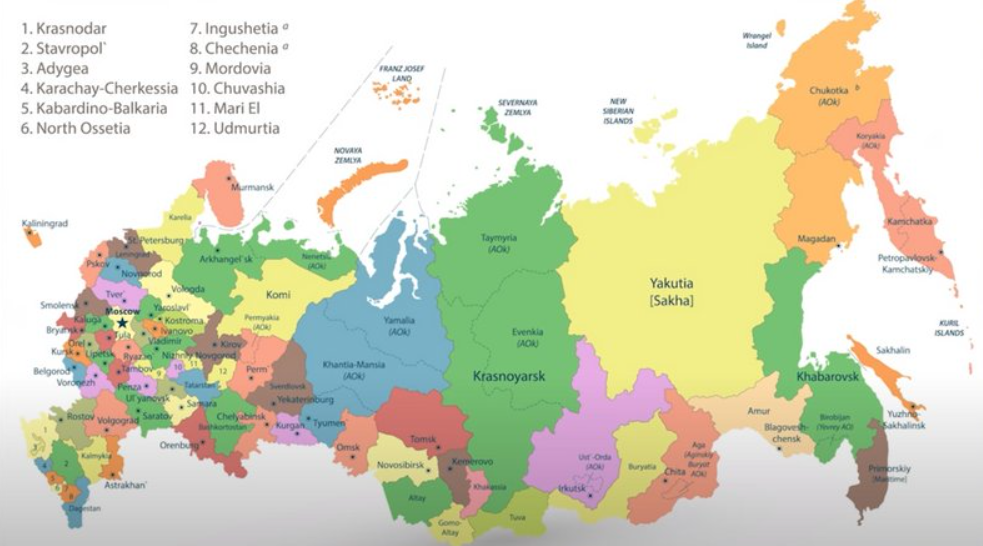
Reference: These days, Ukraine is celebrating the 35th anniversary of the mass student protest, which was later called the “Revolution on Granite”. In October 1990, on the October Revolution Square in Kyiv, which after this event became the Independence Square, students set up a marquee camp and began a hunger strike, putting forward a number of demands to the authorities of the Ukrainian SSR, which was under the dictates of the Communist Party. One of the demands of the youth was the refusal to sign a new union treaty, which was being prepared in the Kremlin. The implementation of this demand by the leadership of Ukraine became one of the triggers for the collapse of the Soviet Union. Meanwhile, the Kremlin managed to keep the national formations that were part of post-Soviet Russia as autonomous republics and regions in various ways. For example, Russia was able to return Chechnya only by force, after two wars.
Volodymyr Viatrovych: “Ukraine must lay the foundations of friendly relations with the national states that will create peoples enslaved by the Russian Federation.”
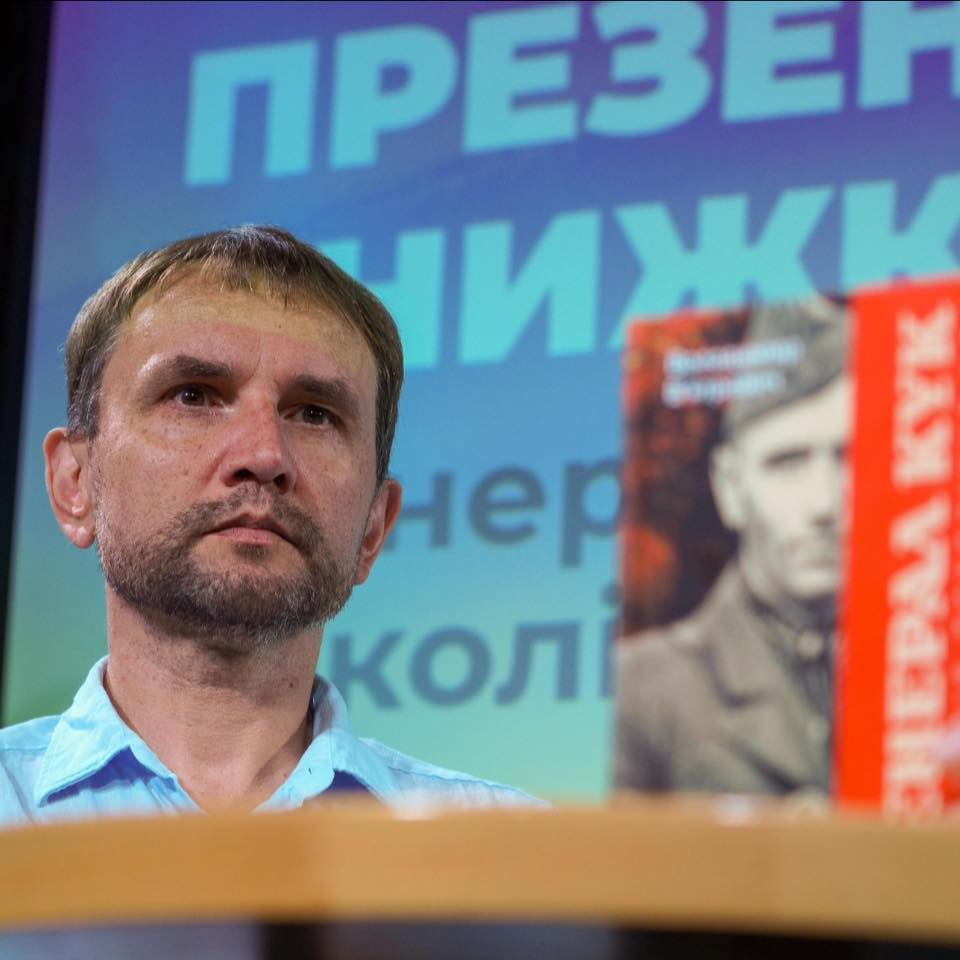
Mr. Volodymyr, for what purpose was this bill created?
Everything is simple here. Our vital interest is the development of national movements of the peoples enslaved by Russia, which will lead to the decolonisation of Russia. Russia threatens the security of Ukraine and all of Europe. Only when Russia ceases to be an empire will it cease to be dangerous.
The imperial character of the Russian state, on the one hand, allows the Kremlin to use the human potential and natural resources of enslaved peoples in its aggressive policy, including the war against Ukraine. On the other hand, this imperial character is one of the key vulnerabilities of the Russian state, the egg in which Koshchei’s death is hidden.
Our duty is to develop a policy of interaction with the movements of enslaved peoples that supports these movements. This, together with the actions of our army and anti-Russian sanctions, is the third important element, which we as a state, unfortunately, use very little. A systematic policy in this direction should not only bring our victory in the war closer, but also lay the foundations of friendly relations between Ukraine and those national states that will be created in the future by the currently enslaved peoples.
Therefore, the Verkhovna Rada created a Temporary Special Commission, designed to develop the main principles of state policy for interaction with the peoples enslaved by Moscow. This commission developed and registered this bill No. 11402 last year, co-authored by about 80 deputies from different factions and groups. It is a great pity that, due to various domestic and foreign political circumstances, this bill has not yet been adopted, but I hope that it will happen soon.
Are there really any national movements in Russia, or is it something we don’t hear about?
If someone had asked, say, in 1981, whether there were national liberation movements in the Soviet republics, we would not have seen any visible signs of such movements — neither armed struggle, nor mass rallies, nor riots. In the 50-million-strong Ukrainian SSR, there were perhaps a few hundred dissidents and prisoners of conscience; in Belarus or Uzbekistan, the situation was even worse. The majority of the population was “Soviet people,” and the minority that would have liked to see their countries independent was forced to remain silent under totalitarian conditions. However, after seven or eight years, there were powerful national movements in all these countries, the ruling elite was also changing its attitude towards Moscow, and in 1991, all these republics became independent states.
Centrifugal processes and the rise of national self-awareness also affected the Russian Federation itself, whose republics in the 1990s proclaimed declarations of sovereignty, and some even adopted Constitutions of de facto independent states, such as Tatarstan, or defended their own independence with weapons in their hands, such as Chechnya.
In Putin’s totalitarian Russia, open movements for independence are just as impossible as in Brezhnev’s USSR. Because of this, they give huge prison terms or simply kill. But among the zombified mass of the Russian population, there is certainly a fairly significant proportion of representatives of enslaved peoples who hate the Moscow occupation and are just waiting for the right time to rise up, to fight. These movements manifest themselves in very different forms – from the public position of national activists, hundreds of whom are sitting in Russian prisons and camps, to the massive rallies that we have seen, for example, in Bashkortostan, Yakutia or Kalmykia, from the activities of national organisations of enslaved peoples outside the Russian Federation to actions of armed resistance on its territory, for example, in Dagestan or Ingushetia.
Many representatives of enslaved peoples fight in the armed forces of Ukraine, including in national units formed in cooperation with their national movements.
There is a huge potential for the development of these national movements, since further Moscow colonisation threatens the very existence of the enslaved peoples. Their language and culture are being destroyed, resources are being plundered, the remnants of self-government are being eliminated, and representatives of these peoples are being used as cannon fodder in the war against Ukraine, mobilising them, in percentage terms, much more than Muscovites or Russians in general.
How can Ukraine support them?
The answer to this question is provided by Bill No. 11402.
First, Ukraine clearly declares its support for the right of the enslaved peoples of the Russian Federation to self-determination and its readiness to protect the national and human rights of representatives of these peoples at the national and international levels. The draft law contains references to the norms of international law, documents of the UN, the Council of Europe and other international organisations, as well as resolutions of the Verkhovna Rada of Ukraine, on which this policy is based. Such a signal in itself is extremely important for the enslaved peoples.
Secondly, the project defines the key principles of relations with national movements: what we recognise as a national movement, a representative body of an enslaved people or a state in the process of creation, what should be the attitude of these structures towards Ukraine and the Russian war, how should the issues of damage caused to Ukraine be regulated, what should happen with borders, nuclear weapons, etc. That is, Ukraine defines clear, stable and mutually beneficial parameters of these relations for itself, for Western partners, and for those national movements that will build relations with us.
And, thirdly, the bill defines the specific powers of various government bodies that should provide effective support to the national movements of enslaved peoples: to help train personnel, teach them how to build effective institutions, help them preserve their language and culture, fight for their own rights both within the Russian Federation and at the international level, support their media and public associations, and develop Ukrainian media whose audience will be enslaved peoples.
Where to get the money to implement this bill?
This cannot be about an accounting approach. Ukraine cannot win the war by resorting to purely symmetrical combat operations and competing with the Russians in financial or human resources. Support for the national movements of the peoples of the Russian Federation and the process of decolonisation of Russia in general is vital for our survival and victory. And every hryvnia, competently invested in interaction with national movements, will save tens and hundreds of hryvnias that we would otherwise have to spend on a war with a consolidated empire. Moreover, it is not only about money, but also about the lives of Ukrainians, which we will save by resorting to an asymmetric response. Also, about dispersing the forces of our enemy. The size of specific expenditures will be determined by the laws on the budget for each year, and we are talking about very insignificant expenditures that will allow us to obtain very significant results.
How do you assess the likelihood of this law being adopted by the Verkhovna Rada?
In my opinion, the fact that this project has been lying idle in parliament for a year is an irresponsible waste of precious time. Fortunately, now we see clear support for the project from both the Ministry of Foreign Affairs and other ministries and departments. The profile committee in September supported the adoption of the draft law in the first reading, so I think that in the coming weeks it will be considered at the plenary session and has every chance of gaining support. After that, the profile committee, together with our temporary commission and the Ministry of Foreign Affairs, will finalise the project for adoption in the second reading and as a whole.
Are there national movements in the Russian Federation? What do opposition representatives say?
Representatives of the Russian opposition, with whom “Politarena” spoke, perceive the bill in question generally positively.
“People there live in poverty, and give a poor person a penny, and they will kiss your hands,” — Shtechman
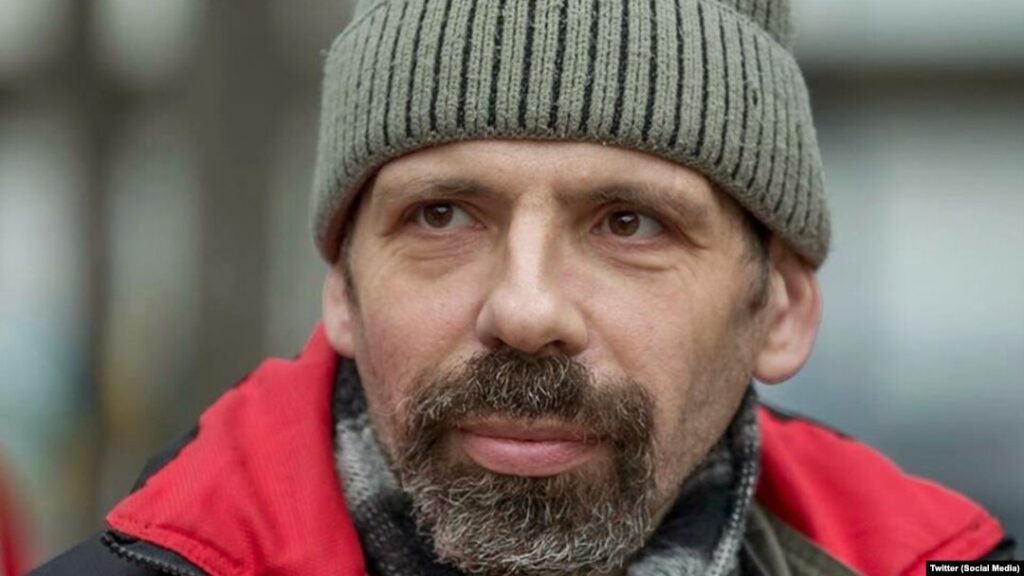
Pavlo Shekhtman, a historian and civic activist, escaped from house arrest in Moscow in 2015 and sought political asylum in Ukraine :
– The story of this bill is reminiscent of Aesop’s fable about the lion and the mouse. The plot is as follows. The lion caught the mouse, and it said: “Let me go, you’ll need me.” The lion laughed and said, “But since you’re so small, how will I need you?” And let it go. After a while, the lion fell into the trap and couldn’t get out, and the mouse came and gnawed through the rope. That is, I don’t see any direct benefit from all this, but it’s always better to have options than not to have them. It’s better to have those dissatisfied with the Russian government as allies than enemies. Whoever is not against us is with us.
As for national movements in Russia, I will say this. When I came to Ukraine in 2015, I argued with a Ukrainian who fought in Chechnya. He said that Russia should be destroyed from within and that we should spread propaganda about the national identity of the peoples. I objected to him. Previously, there was a centre for international cooperation in Moscow, where the Moscow diaspora gathered. I looked at their activists: Buryats, Yakuts, Dagestanis, Mordovians, and so on, and I said, “If you think that they all stand for independence and self-determination, then you are deeply mistaken.” The fact is that they are all “cotton wool” in these regions. Their intelligentsia is a group of people who, in their ideas, simultaneously seek out biographies of some Soviet generals who came from their nationality, and on the other hand, freely write books about how Russia saved their civilization and they are part of the “Russian world.”
Of course, in the age of the Internet, an advanced Yakut might wonder why they have the entire periodic table in their republic, but they live in dire straits, while Moscow says it does charity and built some kind of bus stop there.
The national republics of the Russian Federation are depressed regions. People there live in poverty, and give a poor person a penny and they will kiss your hands. As compensation, they are offered to be proud of a great Russia.
But, again, according to the fable of the Lion and the Mouse, they will wake up when the crisis comes again. We need to prepare for that. In Ukraine, before the Soviet Union began to collapse, only the West felt occupied. The rest were loyal to one degree or another. As soon as it began to collapse, there was a reaction.
“Chechnya and Yakutia may be the first to declare independence from Russia,” — Ponomarev
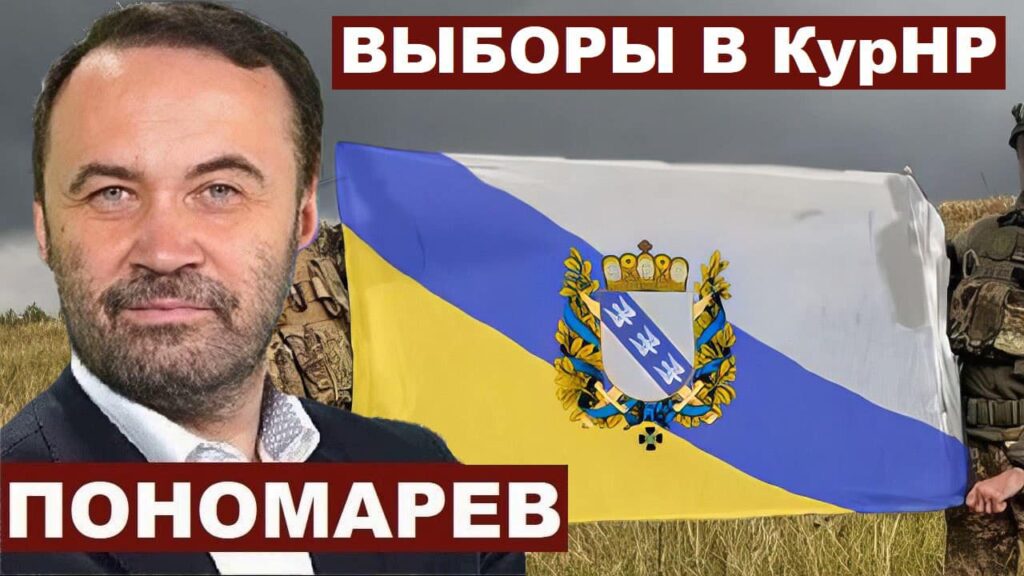
Ilya Ponomarev, Russian opposition politician, former deputy of the Russian State Duma :
I believe that we need to interact not only with representatives of the national republics, but with all opposition forces. There are certainly national movements in Russia. The question is their ability to act, so that any interaction should lead to some meaningful result. And here we can say that there are very strong national movements in Chechnya and Dagestan, both in exile and on the ground. There is someone to work with. The question is whether there should be a single policy towards all of them. I have always advocated a more vertical approach, because it is not possible to count on them growing up and turning into something significant by themselves. A serious increase in protest sentiment will begin when something starts in Moscow, and then ordinary citizens in these republics will understand that something has started. Until then, everything will be in a marginal state. The main task is to bring all these movements out of the state of marginality. And here we need interaction with other states and, of course, first of all, with Ukraine. That is why such a bill is needed.
But the purpose of this document is to support national movements and, as a possible result, the collapse of Russia. Look, when someone from another country tries to make decisions for the citizens of another country, it sounds quite strange. We, our Congress of People’s Deputies, which includes representatives of the Russian opposition, consistently advocate for the peoples of Russia to be able to exercise their right to self-determination, but this should sound like a right, and not that we have already decided for them that they want to be independent. Some republics want to be independent, and some do not. It is one thing when we talk about awakening national consciousness, and this, in my opinion, is the right task. But no task of internal restructuring of Russia will be feasible if we do not interact with Russian forces that want the same thing, but this was not achieved in the aforementioned bill. We have interacted with the working group in preparing this bill and continue to interact, but we have not yet managed to include such a norm in the law, although in personal conversations, the creators of the law say that it is necessary, but it is very scary to write the word “Russians”, they say, colleagues will not understand.
In which republic, in your opinion, could a protest arise to leave the Russian Federation, and what would be needed for this?
I believe that for something to happen there, there is always a need for movement, both from above and below, that is, the desire of the masses and the will of the elites. From this point of view, in my opinion, there are two entities that can be the first to declare independence from Russia – these are Chechnya and Yakutia. We know their elites and we know what is really happening there. In the second echelon of probability are Dagestan and Tatarstan. And all the other national republics are far behind. One could assume that the Caucasian peoples would be ready for this, but the elites there actively do not want this for various reasons. And most of all because they are comfortable being in symbiosis with the federal centre and making money from it. There is also Bashkiria. But there is a very complex national balance there. They have three equal thirds of the population: Bashkirs, Tatars and Russians, and this scares people. They are afraid that a massacre may begin. And this is a deterrent factor. Can it be overcome? Yes, it is possible, but for this to happen, changes must occur in Moscow, which will become the trigger for changes in the regions.
Andriy Kovalenko
Політарена





