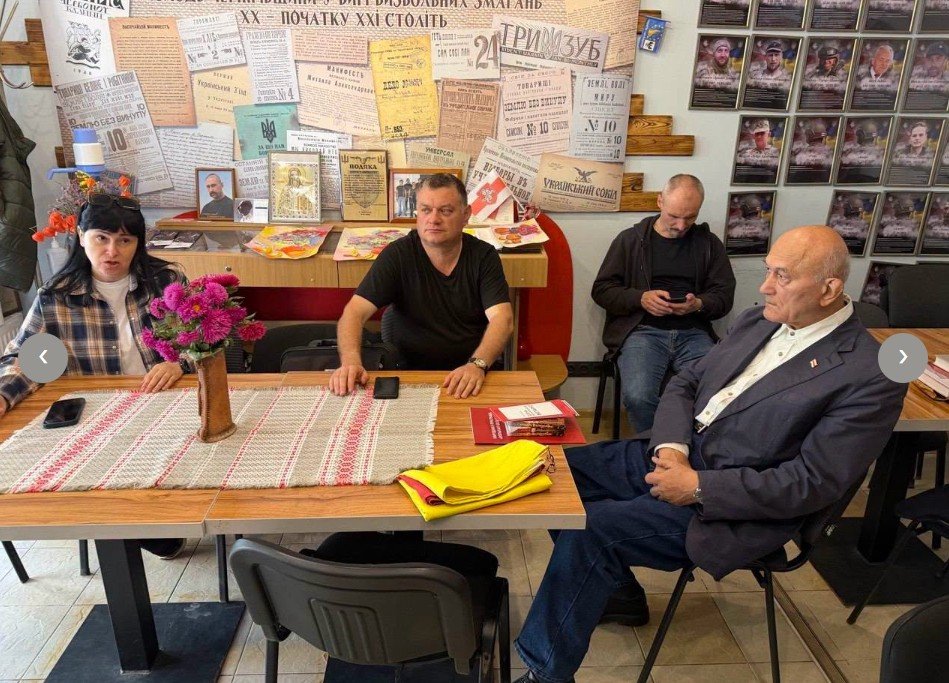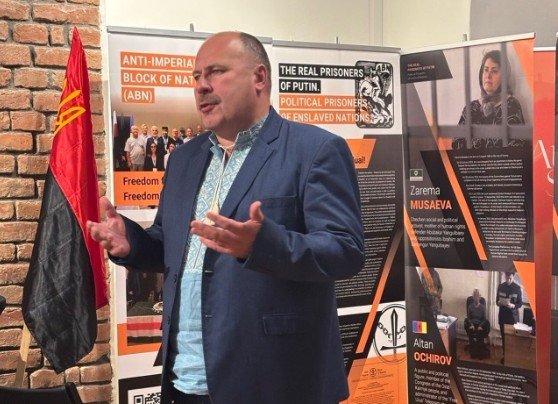
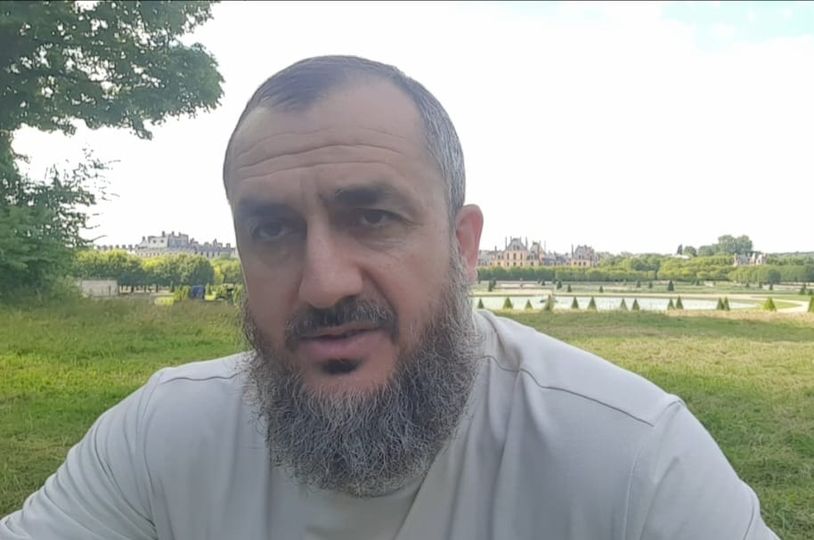
Despite the incredible workload during this period, I attended the entire course at the University of Free Nations in a group of listeners from “United Force” and received a lot of positive emotions from the educational process. I have not studied for a long time and the inspiring breath of science has been forgotten. I have not felt the courage to join the society of knowledge bearers for a long time. I have not experienced satisfying saturation from the diverse information and educational flow for a long time. For all this, I express my gratitude to the university staff.
I wrote my final report in field conditions, practically on my knees, literally before the exam, within a few hours. I think it is raw, the final part is somewhat blurred due to lack of time. Thanks to Galina Zelenko, who examined me, and other teachers who invested their work in us. I am sure it will bear fruit.
Report by Dzhambulat Suleimanov at the University of Free Nations, on the topic:
“Geopolitical transformations under the influence of the Russian-Ukrainian war”
Since the end of World War II, humanity has been living in anticipation of World War III. This psychological state was reflected in the epithets “Cold”, and “Hybrid” which were given to the speculative Third World War, depending on the current geopolitical state of the world. Since the beginning of the full-scale war in Ukraine, they started talking about the beginning of the hot phase of World War III, threatening to develop into a nuclear catastrophe. The anticipation of World War III is not just a fear of a global conflict and the disasters it will bring to humanity. For politicians, it is also an understanding that it will lead to the collapse of the established world order. It is impossible to foresee what combination the kaleidoscope of a new reorganization of the world will build in the fire of World War III.
The world we live in today, its architecture and political and legal norms were formed as a result of the Second World War. Its prerequisites and results dictated the nature and formulated the postulates of current international relations. They remained unshakable during local military conflicts within the framework of the geostrategic confrontation of the bipolar world, such as the Korean, Vietnamese, Caribbean, Arab-Israeli wars, some Latin American and African conflicts, and the war in Afghanistan. As well as during the conflicts of the unipolar world, such as the Iraq-Kuwait war and Operation Desert Storm, the Balkan conflict, two wars in Chechnya, the Kosovo conflict, the war in Iraq and Afghanistan, the war in Georgia, the Arab Spring, the civil wars in Libya and Syria, the confrontation of the countries of the world players in Syria, the annexation of Crimea and the war in Donbas. It is quite obvious that it is precisely as a result of the full-scale war in Ukraine that the World order will undergo radical changes that will affect its moral and legal foundations.
Never before since World War II has a conflict led to a war of such a scale with the inclusion of countries from almost all continents of the world in its orbit. Countries of the region, Eastern European countries, Belarus and Turkey, were inevitably drawn into the military-political confrontation between Ukraine and Russia. But the scale of the war and its likely global consequences did not leave aside world players such as Western European countries, the USA and China. They were followed by countries of ideological opposition to the Collective West, such as Iran and North Korea, and indirectly some other countries of the Global South.
To understand the picture of the emerging geopolitical confrontation of the world, it is necessary to turn a little to theory.
The modern world is Western-centric. Despite all the cultural and political diversity of the world, it functions according to the rules of the so-called Collective West. This cannot suit those who do not consider themselves to be part of it, those peoples and nations that are considered to be part of the Global South. This designation is conditional and practically the entire non-Western world, the countries of Asia, Africa and Latin America, are considered to be part of it. Although Russia, geographically is mostly located in Asia, it also belongs to the Western world culturally, but it does not belong to the political Collective West. It has historically opposed itself to both the East and the West, considering itself the heir of Byzantium and its Orthodox civilization. Here we will turn to the civilizational aspect of the world order. According to Samuel Huntington, the world is divided by confessional features into 8 civilizations: Western, Orthodox-Slavic, Islamic, African, Latin American, Hindu, Confucian and Japanese. Arnold Toynbee, for example, counts 21 civilizations in the world as a cultural environment for human habitation and creative activity. I agree with Toynbee that the world is very diverse in terms of civilizations. Therefore, I distinguish the regional Caucasian civilization from the Islamic confessional civilization. It exists like other Islamic civilizations – the Middle East, Maghreb, Western Asia, Volga, Central Asia, Indo-Iranian and Indonesian Minor. Each civilizational region has its preferences and interests that clash from time to time and lead to military and political conflicts. Sometimes these clashes become global and the world breaks up into two or more blocs, as was the case during the Cold War. These blocs do not always include exclusively civilizational close nations, on the contrary.
The relativity of theoretical constructs is an aspect that can never be discounted when analysing geopolitical contradictions in the world. Thus, Ukraine, culturally related to the Orthodox Slavic civilization, historically mentally opposes Russia. Although the direct causes of the Russian-Ukrainian war are the natural desire of Ukraine to pursue a sovereign policy, to determine the vector of its development on the one hand, and on the other hand, Russia’s ambitions to keep Ukraine in its zone of control, and in the future to return it to its legal field, the conflict affects the interests of three world powers, the dominant – the United States, the outgoing – Russia and the ascending – China. In this trio, the United States controls the situation, China strives to control it, the status quo does not suit only Russia and it initiates its destabilization. Russia understands its lack of competitiveness in world market relations with low demographics in vast territories. This is a condition that cannot be changed. At the same time, Russia does not agree to reconsider its attitude towards itself as a fading reality with a search for a new format of existence, which is connected with the great power mentality of its population. As a result of these reasons, Russia sees its only shaky chance of destabilizing the world order and is pursuing an aggressive policy to incite World War III. Putin quite openly stated: “Why do we need such a world if Russia will not be there?” Russian propagandists often say: “Russia will turn the USA into radioactive ash.”
Ukraine, which seeks a strategic partnership with the West, has found itself at the forefront of this Russian policy. This aspiration of Ukraine is connected not only with the desire for economic prosperity but is the only guarantee in opposing Russia’s aggressive claims. In the full-scale war unleashed by Russia against Ukraine, the interests of the entire world have clashed, or, conventionally speaking, the Collective West and the Global South as Russia’s ally in opposing the West. Let us take a closer look at the ideologies and material capabilities of each of the poles in this geopolitical confrontation, its prehistory and possible development scenarios.
According to the theory of the American Francis Fukuyama, after the Cold War came the “End of History”, which should be understood as the end of geopolitical confrontation in the world and an era of peaceful development. The utopian nature of this theory was obvious from the start, because at the time of its creation, the United States was conducting an unpretentious operation “Desert Storm” in Iraq, and the war in Bosnia began the following year. The first Russian-Chechen war, which began in 1994, was then considered the largest and most destructive war since the end of World War II. However, the United States and the entire Collective West adhered to Fukuyama’s theory in their official foreign policy. There are no wars, there is a world order under US hegemony and regional conflicts that need to be resolved quickly and with little bloodshed, according to Western politicians. And of course, with economic benefits for themselves. Despite the genocide of the Chechen people, Chechnya was left by the Collective West at the mercy of Russia to pacify it after the confrontation in the Cold War and the shock of the collapse of the USSR. It was believed that involvement in the world economy and promoting the development of democratic institutions in Russia would forever end its militaristic policy.
But Russia lost the First War to tiny Chechnya, which only increased the sense of humiliation of Russian great power pride from the collapse of the USSR. The NATO bombing of Belgrade became the starting point of the process of “Russia rising from its knees”, which was marked by the final curtailment of democratic reforms. For the rise of the unknown FSB colonel Vladimir Putin to power, a small victorious war was needed. Where to unleash it if not in Chechnya? But the fears of losing the previous one were still great. Motivation was needed. The FSB blew up houses with its own citizens in Russian cities and blamed the Chechens for this. To make it more convincing, the FSB pulled Chechen volunteers into Dagestan, who succumbed to the requests of the Dagestani rebels for help. The Second Russian-Chechen War began.
Fortune was clearly smiling on Putin. The sharply increased world oil prices increased the financial possibilities of his adventurous policy of ascending to power, and on 11 September untied Putin’s hands for unceremonious reprisals against the Chechens, under the pretext of fighting international terrorism. The long-suffering Chechen people were subjected to another, larger-scale and much more monstrous genocide than during the First Russian-Chechen War. The Chechens did not surrender but found themselves in a zugzwang situation when any counterattack by Chechen sabotage units in response to the tyranny of Russian troops in Chechnya was presented as an act of terrorism. I am not even talking about the obvious attacks by Chechens on civilian targets. The atrocities of the Russians against peaceful Chechens led to such ferocity in this war. Under the pretext of the need for emergency measures, Putin from time to time tightened the screws of power and built up the vertical of his dictatorship, covering up free media, crushing the oligarchs, and transferring the position of elected governors to personal protégés appointed from above in the localities.
The collective West seemed not to notice all this and continued the old game of appeasement. US President George W. Bush “looked into the eyes” of Putin and saw in him “a straightforward and trustworthy person.” However, the good relations between the US and Russia by the end of the Bush administration slid to zero due to open aggression against Georgia. Despite this, the new US President Barack Obama began a reset of relations with Russia in 2009. Then, they continued it, missing the power reshuffle of the Putin-Medvedev tandem in 2012 as an insignificant oversight. And even the brazen and unceremonious annexation of Crimea in 2014 did not lead to a final rupture in relations between the Collective West and Russia. Appetite comes with eating. The occupation of two more regions of Ukraine and a hybrid war for 8 years up to the open military aggression on 24 February 2022. Competing with Western allies in the Syrian conflict and ousting them from several African countries, they turned a blind eye to everything, introducing insignificant and ineffective economic sanctions.
At the instigation of the American geopolitician Henry Kissinger, the United States began to build good relations with China in 1971, as a counterweight to the USSR, based on the contradictions that arose between them. There were moments of deterioration in American-Chinese relations, such as in 1989 after the events in Tiananmen Square. The students failed to destabilize totalitarian China. Despite systematic incidents of technology theft and human rights violations, the partnership and trade volume between China and the United States developed in general on the rise. As a result, China’s economic power steadily grew. In the 21st century, it began to have a significant impact on the world economy, which began to challenge the economic hegemony of the United States.
Another American philosopher, the already mentioned author of the theory of civilizations Samuel Huntington believed that after the Cold War there would come an era of civilizational wars and the 21st century was called the century of confrontation with the Islamic threat. I believe that the Islamic threat did not really exist and was artificially invented, since the enemy was necessary as a factor of internal stabilization for Western society after the collapse of the bipolar world. Rather, there were Arab nationalism and autocracies of the East, sects of religious fanatics who had no real power, but were artificially fuelled and materially supported by various special services. After 11 September 2001, the Islamic threat did not seem far-fetched to the world. The occupation of Iraq and Afghanistan by the troops of the Western Coalition followed. As they say, be afraid of your thoughts, they tend to become reality. As a result of the ten-year occupation period, the far-fetched Islamic threat materialized in ISIS, the “Islamic State of Syria and Iraq” in the form of its life-hating ideology. But ISIS had no real military power and posed no threat to Western dominance in the world. The ideological threat is also questionable, since Muslims themselves, for the most part, do not accept the heresies of the Kharijites and other fanatical sects, although Muslims do reject Western practices that contradict the Islamic religion.
Meanwhile, in the illusions of the “end of history” theory of a unipolar world and the fight against the phantom Islamic threat, the Collective West has overlooked the real challenges of the era. These are the economically and technologically growing China, gradually challenging the global hegemony of the United States and the growing appetites of Putin’s revanchist policy, with which the West has long flirted to appease militaristic Russia, in the hope that Putin’s ambitions would not be backed by the country’s real economic power. As a result of the 30-year policy of appeasement, Russian militarism has challenged the Collective West and the world order that has remained unchanged since the end of World War II, relying on Russian great power extremism and the discontent of the Global South with the hegemony of the Collective West. An economically growing China has become a lifeline for the proceeds of warfare by redirecting Russia’s energy resources from West to East. The technical achievements of some countries of the Global South have helped to make up for the technological elements that Russia lacks.
It is commonly believed that Russia has no ideology. This is a misconception. The ideology of Russia is based on the worldview of Russians. This idea of the racial superiority of Russians over other nations is akin to the ideology of fascism, chauvinism and ultra-nationalism. One of the first to speak about the presence of this worldview in the Russian consciousness and behaviour was the first president of the independent republic of Ichkeria, Dzhokhar Dudayev. He called this worldview Russism, but among Ukrainian politicians, it is customary to call it Rashism. It is impossible to deny the existence of this ideology based on the fact that there is no fundamental theoretical work on it and to perceive Rashism as a one-time phenomenon of modern times. Rashism is a set of deep historical traditions and specific political views carried by the Russian people through the official ideas of “Orthodoxy, autocracy, nationality” under tsarism and through communism in the USSR. The absence of an official ideology in modern Russia does not in any way cancel out this worldview that has taken root in the Russian people and has been carried through the centuries.
Rashism allows Russia to fight, regardless of the poverty of its own people, satisfying their need for great-power chauvinism. Even economically strengthened China does not pose such a militaristic threat to the world as Russia does due to the absence of an ideology similar to Rashism among the Chinese. That is why this ideology, the people and the state that bears it must be severely hampered.
Thus, we can state that Russia with its chauvinistic ideology of Rashism, readiness to unleash another world war in the face of the inevitability of losing geopolitical positions due to the economic viability of its old imperial format is the main destabilizing force of the world order and a threat to its security. The war unleashed by Russia in Ukraine has set in motion tectonic processes that have awakened forces in the countries of the Global South that will manifest themselves in the future. Together, even with chaotic and uncoordinated actions, they can lead to the final destabilization of the world without the start of a new World War, while its threat is also increasing many times over. All this allows us to say with certainty that the world order established after World War II is irrevocably becoming a thing of the past precisely as a result of the large-scale war unleashed by Russia in Ukraine. At the same time, it is difficult to outline even the approximate contours of the new world order. If the situation gets out of control, humanity will have to pay a high bloody price to stabilize it.
The Collective West, due to the euphoria of victory, has made many mistakes since the collapse of the USSR. It is still partly captivated by recent delusions. But still, it has undeniable advantages over the Global South in the upcoming new geostrategic confrontation. First of all, this is the social and institutional stability of the political structures of its countries. Then, this is leadership in technology and developed economies. Thirdly, this is a good organization of political unions and a military bloc. For Russia, the consequences of the war it has unleashed will definitely be fatal, as for all such adventures. Firstly, its goal is to return Russia to the role of the second power without an economic base by intimidation and bluff or in the chaos of a new World War this is unattainable. As there is no real opportunity to do this due to the natural and inexorable processes of development of the imperial essence of the Russian state, it is approaching its natural and inevitable end. And Russia’s unwillingness to recognize this reality and restructure itself will most likely deprive it of state sovereignty altogether, with unpredictable consequences.
20 July 2024