Life Path and Creative Activity
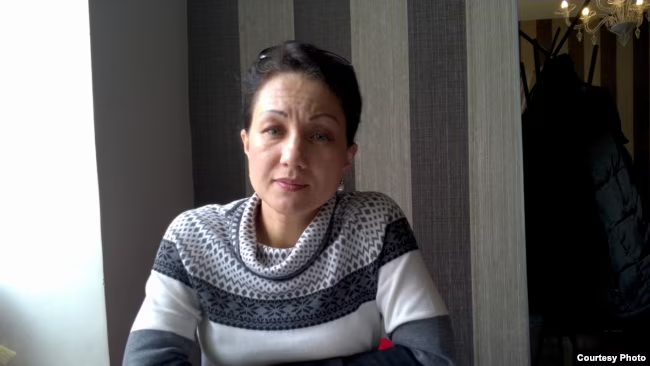
Nataliya Romanenko was born and raised in the Khabarovsk Territory of the Russian Federation. Since childhood, she felt a deep sense of belonging to Ukrainian culture. This identity shaped her future path. In her youth, she moved to Kyiv to study and graduated from the Academy of Culture. After completing her studies, Natalia returned to Khabarovsk and became a key figure in the Ukrainian community of the Russian Far East.[1]
“Yes, I have Ukrainian roots,” she said in an interview[2] with Radio Liberty. “I was born in Khabarovsk and lived there all my life, almost 43 years. My children were born here as well. It turns out that I am a Ukrainian who was born in Russia, already in the second generation. My mother was born in the Baikal region, at that time part of the Buryat ASSR. My grandfather fled from Ukraine to Siberia because he was told there was no Soviet power there. He wanted to reach the Far East, but by the time he arrived in Irkutsk, Soviet power had already extended to the ocean. So he and my grandmother got on a barge and set off up the Angara River. They liked one of the tributaries of the Angara, and they settled there. It was a Buryat village, next to which several Ukrainian families lived on a small farm. My parents told me (I never saw my grandfather) that it was very difficult: two of their children who came with them from Ukraine died. The Buryats helped them survive. Later, there were many transit prisons in those places.”
Natalia was the leader of the Ukrainian community “Krynytsia” and the soloist of the song and dance ensemble “Batkivska Krynytsia”[3], which became an important cultural centre for Ukrainians in Khabarovsk. The group was a participant and laureate of numerous international competitions. In 2013, “Batkivska Krynytsia” performed in Turkey during the Days of Ukrainian Culture in Antalya.
Until 2014, the Krynytsia community regularly organized Days of Ukrainian Culture together with the regional Ministry of Culture. Every year, Natalia participated in organizing the Shevchenko Readings together with the regional scientific library. In 2014, Krynytsia helped the Green Wedge [4] movement hold the Festival of Friendship of Peoples, dedicated to the 200th anniversary of the birth of Taras Shevchenko.[5]
Persecution Due to Ukrainian Identity
Active participation in the life of the Ukrainian community and her openly declared Ukrainian identity led to repression.
At the end of February 2014, right after the Revolution of Dignity, Natalia decided to fly to Kyiv. Upon her return home, she was met at the airport by FSB officers. They knew that she had been on the Maidan and accused her of “betraying the Motherland.” The fact that Romanenko was in Kyiv after the protests had ended did not matter to them. The FSB interrogated her for 14.5 hours, forcing her to record a video condemning the events of the Maidan. As Natalia later said, these words were spoken under duress. And here is her real opinion:
“I won’t give my assessments; I’m not a politician. In your words, it was the Revolution of Dignity. I didn’t see any fascists in Kyiv; I cried throughout my entire trip to Ukraine. I arrived in Kyiv at the end of winter 2014, just 9 days after that terrible massacre of people on the Maidan. I sympathized with those who lost their loved ones.”[6]
Between 2014 and 2016, several criminal cases were initiated against Nataliya Romanenko. Formally, they concerned alleged fraudulent activities — specifically, the receipt of payments that, according to the investigation, were supposedly unjustified. However, Nataliya repeatedly stated that these charges were a direct consequence of her support for Ukraine and her participation in the Ukrainian cultural movement in the Russian Far East. According to her, the criminal prosecution was initiated by FSB officers with the goal of discrediting and isolating her. In the end, these cases were closed, but their very existence became a pretext for further repression and harassment.

In March 2015, in Khabarovsk, Natalia was attacked, punched in the face and stomach, and doused with green paint while the attackers shouted: “This is for Novorossiya, Banderite!”
Despite the horrors she endured, Natalia never renounced her Ukrainian identity. Because of this, she was fired from her job, and the ensemble she led, “Batkivska Krynytsia,” was first refused premises for rent, and then forbidden from rehearsing altogether. Yet Natalia Romanenko did not give up and continued to speak the truth about what was happening in eastern Ukraine. For this, she was attacked again. Windows in her apartment in Khabarovsk were smashed, insults were scrawled on the walls of her building, and she was ambushed by unknown individuals and doused with urine. After that, Natalia was forced to leave the region.
Romanenko appealed to various opposition and human rights organizations in the Russian Federation for assistance in obtaining political asylum in the EU, but the Russian “opposition” refused to help her, citing that they did not see a political context in her case.[7]
The refusal to provide her with assistance and support was explained by the following reasons:
- You recorded a video on Khabarovsk television in which you renounced your beliefs;
- You are not a political figure. You were persecuted because you supported Ukraine, not because you opposed Putin or United Russia;
- You are a former employee of the Ministry of Internal Affairs.
It should be noted that the persecution of Natalia Romanenko should be classified not just as political but primarily as ethnic. This means she needed and still needs protection even more than if she were persecuted solely for political reasons. She is being persecuted simply because she is a Far Eastern Ukrainian who chose to preserve her culture and language.
“The prosecutor’s office is now dealing with us,” she said in a 2016 interview.[8] “I was summoned to the prosecutor’s office two weeks ago, and the first thing they asked was: ‘What literature do you have, what do you have in your own language?’ I replied: ‘We have literature in Ukrainian. If we want to read in Ukrainian, each of us has such literature.’ I was even surprised that the first question was about literature.”
By 2020, it was reported that Natalia Romanenko had to change her profession. She graduated from medical college and worked in a hospital. She even managed to save the Ukrainian choir — it still existed at that time, but in complete isolation and was no longer invited to perform anywhere.[9]
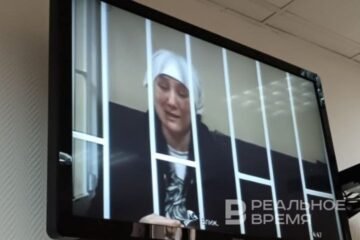
On 5 March 2024, Natalia’s husband, Volodymyr Fetisov, was detained in Tatarstan.[10] Allegedly, 6 explosive devices consisting of TNT and RDX were found in his car, with 16 more charges hidden under the construction of the rear passenger seats. These accusations appear absurd, yet a few days later, Natalia herself was also detained, accused of allegedly acting as a liaison with Ukrainian intelligence services and coordinating her husband’s activities. On 8 March, FSB officers detained her in her hometown and brought her to Kazan for investigative actions. On 9 March, the court placed her in pre-trial detention. They were charged under Part 3 of Article 222.1 of the Criminal Code of the Russian Federation — “Illegal acquisition, transfer, sale, storage, transportation, shipment, or carrying of explosive substances or explosive devices.” Natalia and her husband petitioned for a more lenient pretrial measure due to health problems.
According to[11], the Zelenyi Klyn — My Homeland movement, Natalia is being persecuted precisely because of her Ukrainian national identity. This case highlights the broader issue of the urgent need for a clear definition of ethnically motivated persecution.
Nina Belyaeva
[1] The FSB arrested a resident of Khabarovsk to tell “Russia 24” about the horrors in Ukraine (VIDEO).
[2] [5] [6] ” This is ‘For Novorossia, you Banderivka !’ – in Russia, you are being pursued as the manager of a Ukrainian choir.” Radio Liberty.
[3] [4] The Khabarovsk choir, called “Batkivska Krynytsia”, began its work based on the Ukrainian community organization “Zeleny Klin” in 1992. Natalia Romanenko became its leader in 1995, after which she went to study in Ukraine. A year later, she returned to Khabarovsk Krai, and in 1999, “Krynytsia” separated from “Zeleny Klin” and became an independent public organization, which Romanenko headed.
[7] [11] The former leader of the Ukrainian community in the Far East is accused of planning the bridge explosion and of having ties with the Armed Forces of Ukraine.
[8] In Russia, prosecutions are intensifying “in connection with Ukraine.”
[9] An undesirable nation. How Russia squeezes Ukrainian identity out of its citizens
[10] The ex-head of the Ukrainian community of Khabarovsk was accused of preparing a terrorist attack