

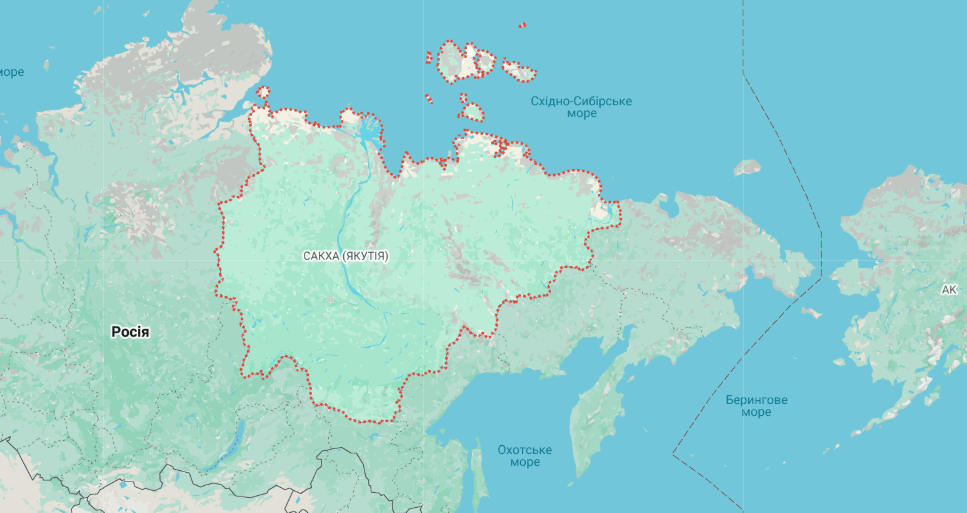
In the heart of icy Siberia, in a territory rich in gold, diamonds and oil, lives one of the oldest nations of the North – the Sakha. Their land is officially called the Republic of Sakha (Yakutia), although the very name “Yakut” is a colonial stigma imposed by the Russians. The real name of this nation is Sakha. Their language, culture and identity were formed over centuries in harsh climates, vast spaces where winters can last nine months, and hundreds of kilometres off-road between villages.
This is a nation that did not submit. And still do not submit. Although today, the Sakha are officially considered “part” of the Russian Federation, their history is a history of resistance, of struggle for self-determination, of preserving their language, land, and dignity. For decades, the Soviet Empire erased its identity, forced the language out of schools, and forced the people to Russify. But in the 1990s, after the collapse of the USSR, the Sakha dared to do more. While Moscow was reeling, voices for independence began to be heard in Yakutia. People went to protests, raised national flags, and held popular protests.
But the Kremlin does not forgive free-thinking. Protest waves were suppressed, and resistance leaders were forced to remain silent or leave their native land. You will not see the history of the Sakha in Russian textbooks. They will not talk about it on federal channels. It is a crack in the empire, which reminds us: the people of Siberia are not part of the “Russian world”, but occupied nations with their own dignity and desire for freedom.
But the resistance has not died down. It has simply changed form. The Sakha Resistance Telegram channel, run by anonymous activists, publishes photos of homemade flags, graffiti, and chronicles of modern resistance. People from small villages, where there are no roads or hospitals, but there is access to mobile Internet, are waging an information war against the empire. There, data appears on the victims — young boys who were mobilized into the Russian army and thrown to slaughter in Ukraine. According to the latest estimates, more than 600 men from the Sakha Republic have died. For a region where sometimes only one family lives several hundred kilometres away, this is a catastrophe.
These deaths are not perceived as “Russian losses.” For the Sakha, this is the kidnapping of their brothers, sons, and husbands. They did not fight for their land — they fought for Putin’s imperial ambitions, which they do not need. They died in a land whose people they never had any questions about. Villages are emptying. Women are left alone with their children. Moscow, instead of returning at least some of the region’s resources, continues to pump out oil, gas, and diamonds, leaving behind poverty and cold.
But the spirit of resistance cannot be broken. Sakha youth are increasingly speaking their native language, organizing cultural initiatives, creating songs, films, and digital content about their history. They no longer want to remain silent. And while official censorship in the region is increasing—this year, Telegram and mobile internet were even shut down, especially after a surge in protest activity—the desire for freedom cannot be turned off like a toggle switch.
Today, Sakha is not just a nation, it is a symbol. A symbol of nations that are tired of being a silent colony, whose wealth feeds the capital. They know that Russia is not their homeland. It is a cage. And the cage is cracking. Slowly but surely.
If the empire collapses, among those who made it possible will be those who held not a machine gun, but only a telephone. Those who painted flags on concrete, who were not afraid to call themselves Sakha – and believed that they deserved their land. Without the Kremlin. Without war. Without fear.
Daniil Kozachok






