Editor’s note
Traditionally, the third week of July will be celebrated by the free world in the sixty-sixth year as Captive Nations Week. Its adoption by the US Congress by Public Law 86-90 was not an accidental event. It is the result of a fundamental legislative victory on 17 July, 1959, when the US Congress adopted the Joint Resolution (Public Law 86-90 Captive Nations Week Resolution). This document, the main ideologist of which was Lev Dobryansky himself, became a legal recognition that the USSR was not a monolithic “Russia” but a “prison of nations” that forcibly held Ukraine, the Baltic countries, Poland, Hungary, Czechoslovakia, and other enslaved nations. The resolution called on the US President to issue proclamations annually regarding this week until freedom was achieved for all these peoples.
This legislative victory did not come easily. American foreign policy in the twentieth century moved from isolationism to an understanding of its leading role with world communism. Communism, but not imperial Russia. It seemed self-evident that communism was just another phase and form of Moscow imperialism, but this has not been the case for a long time (and, let’s be honest, it is not a constant for North American diplomacy.
As V. Golovchenko notes [1], with the beginning of the Cold War, the US approaches to the Ukrainian issue, as before, were determined by situationality: it was interpreted not through the prism of the existence of a stateless people in the centre of Europe, which needed support, but from the point of view of possible complications in global international relations. Not wanting to create additional problems in relations with the Kremlin and balancing between the policy of isolationism and interventionism, the White House posed this issue in an ideological rather than a political aspect. The analysis provided by the US Government was based on a Sovietological approach, where, due to the quite logical identification of the USSR and Russia, an equation was also put between the “Soviet people” and the “Russian people”. Such a vague vector of foreign policy was also contributed to by the pro-Russian “liberal” fifth column, which, having access to academic departments and radio broadcasts, preferred to talk about “Russians enslaved by the Bolsheviks” rather than about the peoples enslaved by Moscow.
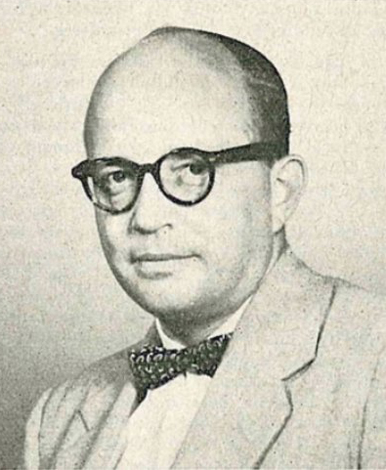
The Soviet-centric approach of the American administrations was broken (and is still being broken) thanks to the proactive position of the Ukrainian Congressional Committee of America (UCCA). Since 1949, the UCCA has introduced the practice of sending delegates to the national conferences of the Republicans and Democrats. And already in 1959, the long-time president of the UCCA, Professor of Economics at Georgetown University Lev Dobryansky, became vice-president of the Republican Program Committee on National Security and Peace [2].
It was his tireless work, including as an advisor to US President D. Eisenhower, that led to the adoption of the law. In June 1959, L. Dobryansky submitted the draft law (in the form of a resolution) on captive nations prepared by him to Democratic Senator from Illinois P. Douglas and Republican Senator from New York J. Javits. The resolution was almost unanimously adopted by both houses of Congress, and after being signed by US President D. Eisenhower on 17 July, 1959, it became Public Law 86-90 on the annual celebration of the “week of 46 captive nations” in the third week of July (Public Law 86-90 Captive Nations Week Resolution) [3].
It is in the adoption of this Congressional resolution that we see a fundamental shift in the worldview of the American establishment. This is not just a declarative act – it is a rethinking of the very nature of the Cold War confrontation, where non-Russian peoples cease to be just a passive object, but appear as independent, strategically significant factors in the global order. By recognising these peoples as hostages of the Russian communist regime, official Washington at the highest executive level has actually legitimised their liberation struggle.
This law became an unprecedented triumph of Ukrainian political thought in exile. For the first time, the Ukrainian diaspora, thanks to the consistent and professional work of its representatives, managed to achieve a productive influence on the doctrinal change of American foreign policy. Ukraine ceased to be a “white spot” on the map of US interests, turning into an effective tool: from now on, global policies are formed not only in the offices of great powers but also with the active intellectual and political involvement of those who seek to win their own statehood. The “Week of Captive Nations ” for the Kremlin, in the words of Lev Dobryansky, was a “red nightmare”: Khrushchev and his successors were furious, because this resolution undermined their main myth of a “voluntary union” and “liberation of the working people.”
For decades, the “Captive Nations’ Week” was much more than a protocol event. It was a movement. The week included mass rallies in Washington and other major cities, prayers in churches for the liberation of the enslaved, academic symposia at universities exposing the mechanisms of Soviet colonialism, and constant lobbying campaigns in Congress. The Anti-Bolshevik Bloc of Nations (ABN) played a key role in this, uniting the diasporas of enslaved nations into a united front. These actions demonstrated that the free world remembered its brothers behind the “Iron Curtain” and did not recognise the legitimacy of communist rule.
As we noted, Public Law 86-90 obliges US presidents to issue proclamations on Captive Nations Week regarding enslaved peoples until their final liberation. The first was Dwight Eisenhower. Each subsequent President continued to issue these documents every year, making them part of official American policy. Ronald Reagan, who correctly understood the language of power, gave these proclamations a new meaning, using them to exert ideological pressure on the “Evil Empire”. This tradition has not been interrupted in the 21st century. Modern US Presidents continue to support this institutional practice, although they often turn into a formality devoid of the fighting spirit that Lev Dobryansky laid down.
This spirit is well represented in his article “Traditional Week of Captive Nations: Red Nightmare, Hope of Freedom,” which can be considered an analytical summary of seven years of experience in applying Public Law 86-90. But at the same time, his article was an attempt to awaken the Western world from “sweet dreams” of détente and peaceful coexistence with an aggressor who knows no other rules than the law of force. Dobryansky warned: “containment” is the Maginot Line, which does not stop expansion, but only gives the aggressor time to regroup. Unfortunately, modern US foreign policy often suffers from the same ailment — the fear of “escalation” and destabilisation of Russia. We are again seeing attempts to “build bridges” with a regime that is building camps for enslaved peoples. When Ukraine is fighting not only for its land, but for its right to exist as a nation, Western capitals often respond with caution that only encourages the aggressor.
Therefore, this article is not about the past; it is about us and the present. At a time when the world order is once again tottering under the pressure of imperial revanchism, the intellectual legacy of Professor Lev Dobryansky — the architect of American policy towards enslaved nations — acquires the significance not just of a historical document, but of a strategic compass.
As Dobryansky noted, freedom is not a gift, it is the result of an exhausting struggle. Today, when the “prison of nations” is again being tried to “stabilise” at the expense of Ukrainian lives, we must return to the concept of an active policy of liberation. This is not just our duty to our descendants – it is the only way to ensure security for the entire free world.
Vice President of the ABN, Head of the University of Free Nations
Leontiy Shypilov
[1] V. Holovchenko. The Ukrainian Question in US Policy during the Cold War // https://americanstudies.history.knu.ua/wp-content/uploads/2018/08/4-Golovchenko-V..pdf
[2] Halyna Shchyhelska. The Ukrainian issue in US policy in the context of the celebration of the “week of enslaved nations” // https://doi.org/10.31861/hj2019.49.109-115
[3] V. Holovchenko. The Ukrainian Question in US Policy during the Cold War // https://americanstudies.history.knu.ua/wp-content/uploads/2018/08/4-Golovchenko-V..pdf
THE TRADITIONAL CAPTIVE NATIONS WEEK