

Executive Summary:
- The Bashkirs are increasingly hearkening back to their heritage of resistance to the central government, leading other non-Russian ethnic minorities to view Moscow, rather than their local leaders, as the problem.
- Some observers are describing the events in Bashkortostan as a new “Black January,” a reference to the Soviet use of force in Azerbaijan in 1990 that many see as one of the triggers for the fall of the Soviet Union less than two years later.
- Bashkir and other non-Russian elites are growing increasingly offended by Vladimir Putin’s policy of Russification despite limited coverage in domestic media. Should Moscow continue on this course, these elites may join forces with the activists.
Most narratives about the end of the Soviet Union focus on Baltic, Georgian, and Ukrainian activism. A powerful case can be made, however, that the Soviet Union died on the streets of Baku in January 1990 when Moscow dispatched the Soviet military to put down Azerbaijani aspirations of freedom and independence. That use of force, known in Baku as “Black January,” is still commemorated and has been recognized by others as “Gorbachev’s greatest mistake” (Window on Eurasia, January 19, 2015; Window on Eurasia, January 22, 2020). Like the Bourbons, nevertheless, the Vladimir Putin regime has learned nothing from that mistake. They are confident that repression will always be enough, and some commentators say they are now creating a new “Black January” in Bashkortostan (Idel.Realii, January 23).
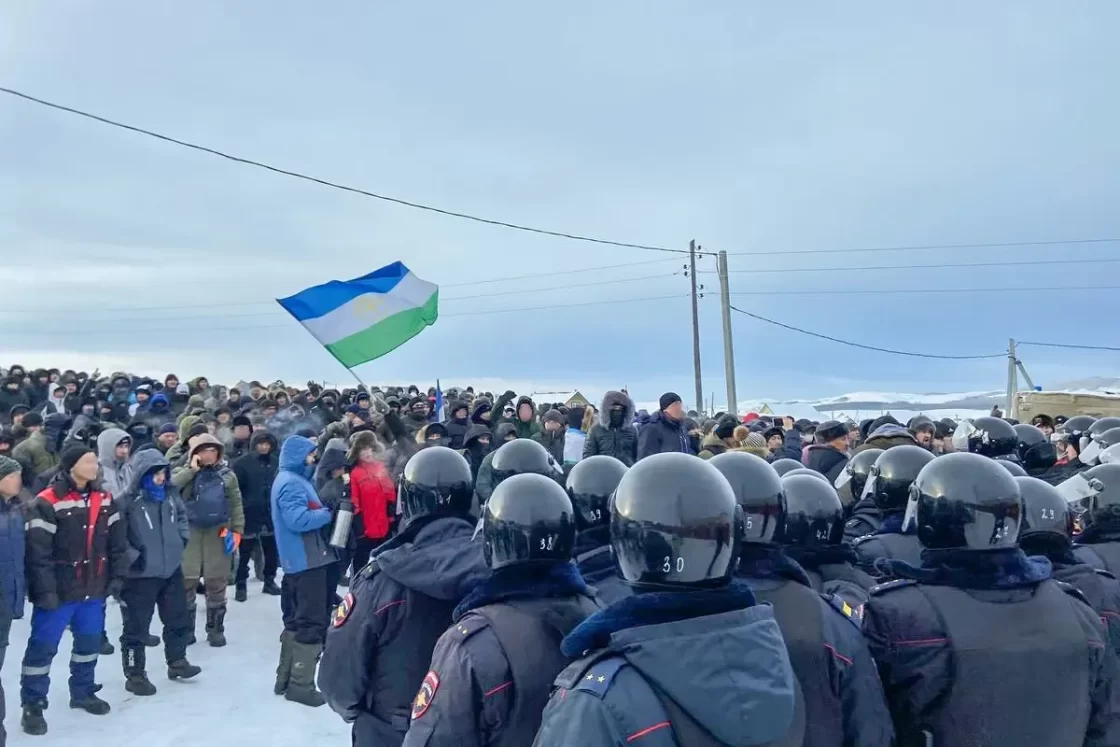
For many observers, the mass protests five weeks ago in Bashkortostan over the sentencing of an environmental and ethnic activist came out of nowhere. Reporting on those events has disappeared from the Russian media just as quickly as it had appeared, as the government deployed police forces and seemed to have driven the genie of protest back into the bottle (see EDM, February 8). The demonstrations in the Middle Volga republic last month, similar to the January 1990 events in Baku, have radicalized the Bashkirs, who are simply waiting for a time when they can take more action (Idel.Realii, February 2). The streets and squares of Bashkortostan’s cities and towns are largely free of protesters, which is more likely because of increasingly cold weather than police actions. These actions are leading other non-Russians to rethink relations with their republic leaders on whom, up to now, they have placed the primary blame. They increasingly see Moscow as their primary problem (see EDM, January 23; Charter 97.org, February 2; TRT na Russkom, February 10).
Bashkortostan has seldom attracted the same kind of attention that the restive North Caucasus has received. Even in the Middle Volga, Tatarstan has typically overshadowed the Baskir republic. Tatar leaders have sought to pursue their interests by taking a more cooperative approach with Moscow. For more than 300 years, however, Bashkortostan has been a centre of resistance to Russian power. In the eighteenth century, its people took part in the Pugachev rebellion under the leadership of Salavat Yulayev, a figure celebrated to this day with monuments in many Bashkortostan cities (Takie Dela, February 26).
One Moscow historian has even labelled the Bashkirs as “the most rebellious” of the tsarist empire’s nations, though actions by others have almost always garnered more attention (Kasparov, January 29). In the wake of the 1917 revolution, Bashkortostan pursued independence under Zaki Velidi Togan, who was later driven into exile. His memorial statue in Ufa was recently taken down “for repairs” (Takie Dela, February 26). In 2012, Bashkortostan was the first republic outside of the North Caucasus to which the Russian government sent troops to suppress internal unrest (see EDM, December 10). More recently, environmental protests in the republic were so intense that even the Kremlin had to back down on some issues while increasing repressions (Idel.Realii, January 31; TRT na Russkom, February 10).
Moscow was initially pleased with how the Bashkortostan government suppressed the protests. Increasingly, however, Russian analysts and Bashkir activists have concluded that Ufa’s actions have made the situation worse for the authorities. Their repressive actions have enflamed the tensions of their nemesis and limited Moscow’s options (Versia, January 29; Takie dela, February 26). The Bashkirs no longer see a change in the republic’s leadership as enough, all but ensuring that Bashkir nationalism will continue to grow and influence nationalist movements elsewhere until it resurfaces with a vengeance (Forbes.ru, January 19; Window on Eurasia, January 21; Idel.Realii, February 2; Takie Dela, February 26; Versia, February 27).
Moscow and Ufa have good reason to be concerned. Some public protests continue despite increased arrests and convictions, including, most recently, incidents of “telephone terrorism” in Bashkortostan cities (Idel.Realii, February 24 [1], [2], 26; Telegram.me/utvufa, February 26). The Bashkirs have started transforming the funerals of those who have died while in detention and while fighting in Ukraine into occasions for national protest (Idel.realii, February 9, 15, 24). They are using social media to keep in touch with one another and activists in other republics, a tactic that authorities have not found a way to stop (Takie Dela, February 26). As a result, the situation has deteriorated to the point that the Ufa leadership has changed its tune. If the republic described the January protesters as “traitors” previously, it now says it wants to work with the opposition. It’s a transparent attempt to win back support, but it is unlikely to be effective given that arrests for the January 17–19 events and trials of those charged continue (Idel.Realii, February 9). At the same time, there are indications that the authorities, both Bashkir and Russian, are seeking to subvert the opposition by inserting provocateurs, something that activists fear will cause many to become suspicious of each other and thus upset the movement, at least in the short term (Takie Dela, February 26).
One Russian analyst, Igor Eidman, explains why the Kremlin may not understand these developments and why mounting tensions in other parts of Russia, like those in Bashkortostan, will likely explode in the future (Idel.Real, February 23). According to Eidman, Bashkir and other non-Russian elites are not loyal to Putin, though the Kremlin leader believes otherwise. These elites recognize that the only way to get ahead under the current Kremlin leader is to proclaim their complete loyalty. Beneath such declarations, however, the analyst says, the elites in Bashkortostan and elsewhere are increasingly offended by Putin’s policy of “pure Russification.” When they have the chance, they will ally themselves with the nationalist protesters, just like at the end of Soviet times. If Eidman is correct, these elites, in alliance with activists, will threaten the survival of the Russian Federation.






