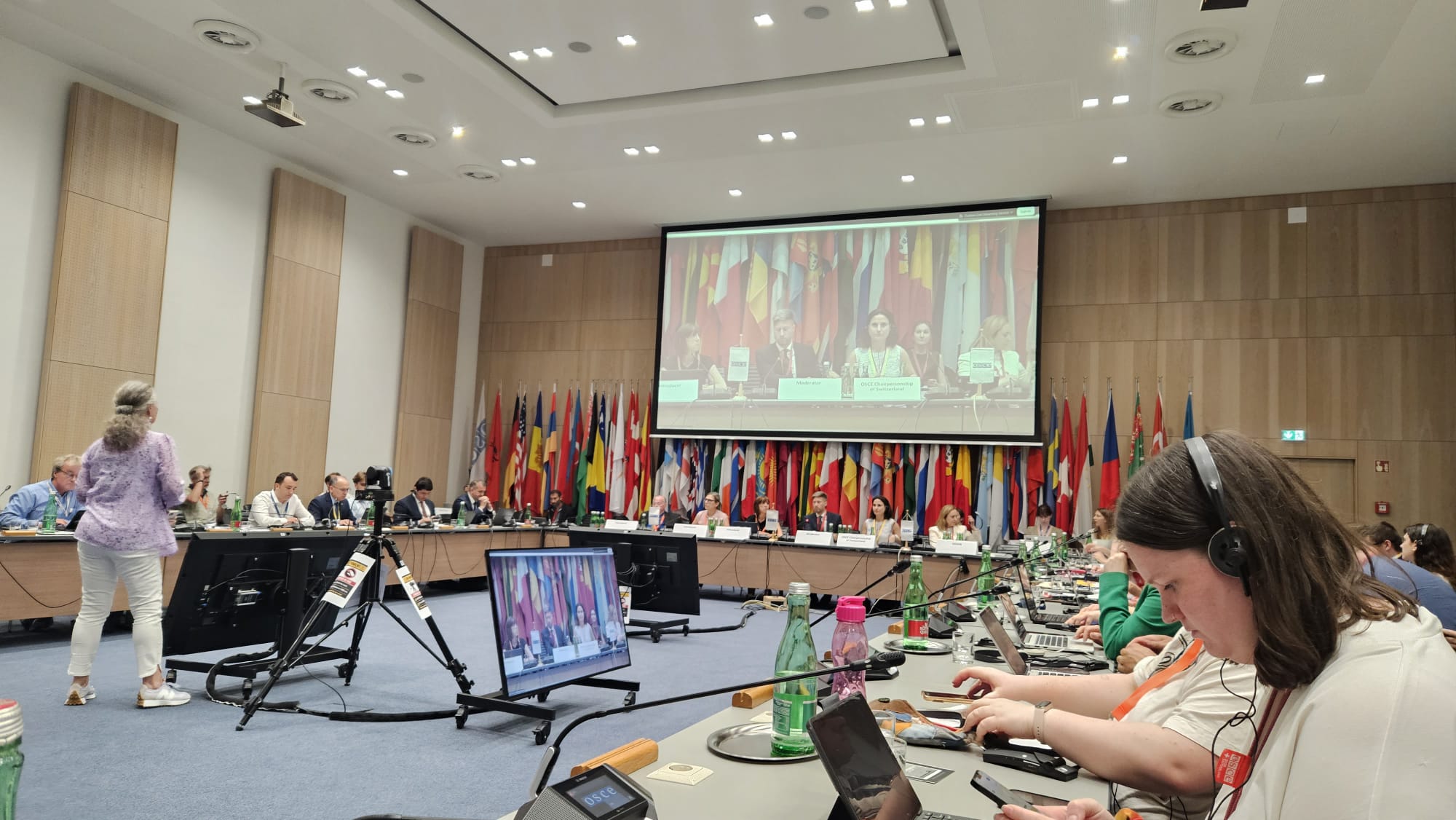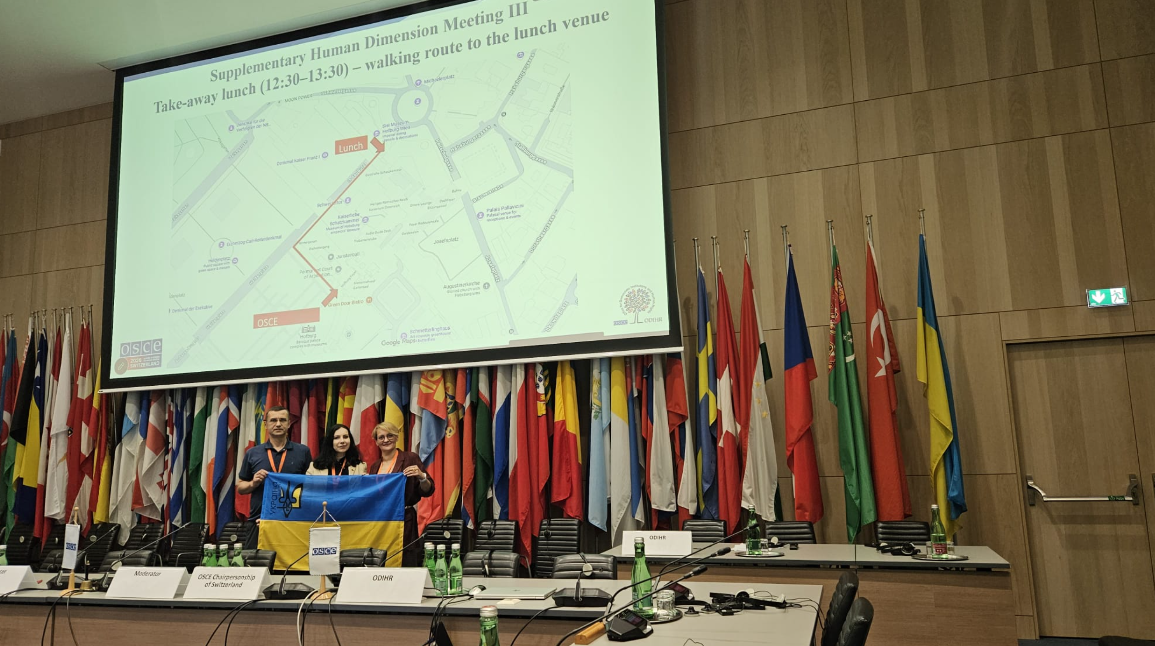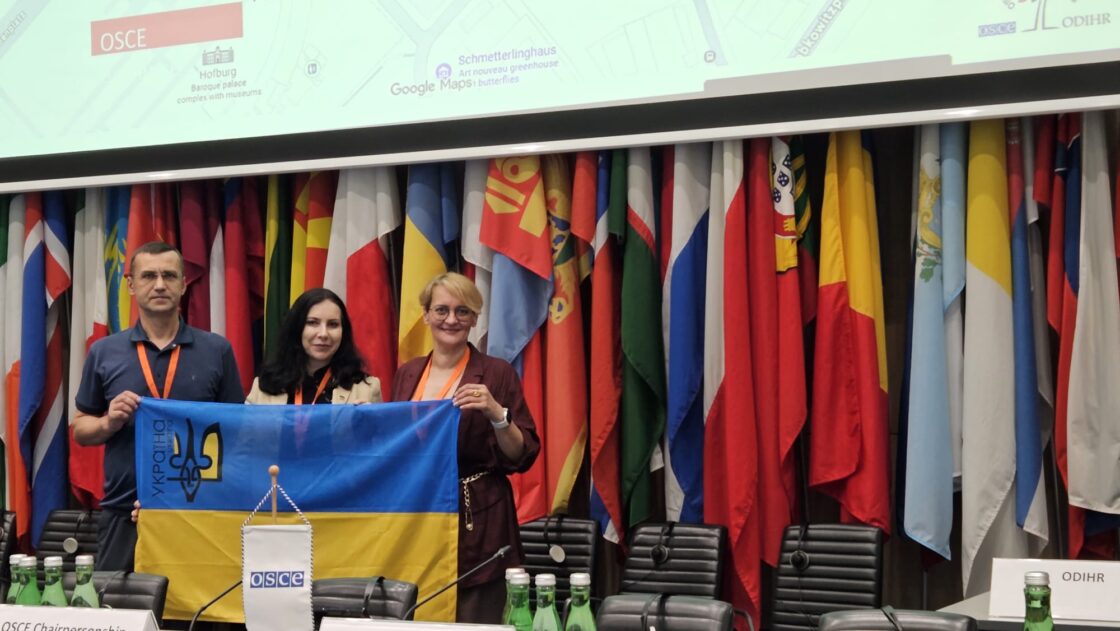
The conference brought together representatives of OSCE participating States, international organisations, national human rights institutions, and civil society. Discussions focused on preventing torture, combating impunity, protecting victims, and strengthening international human rights monitoring mechanisms.
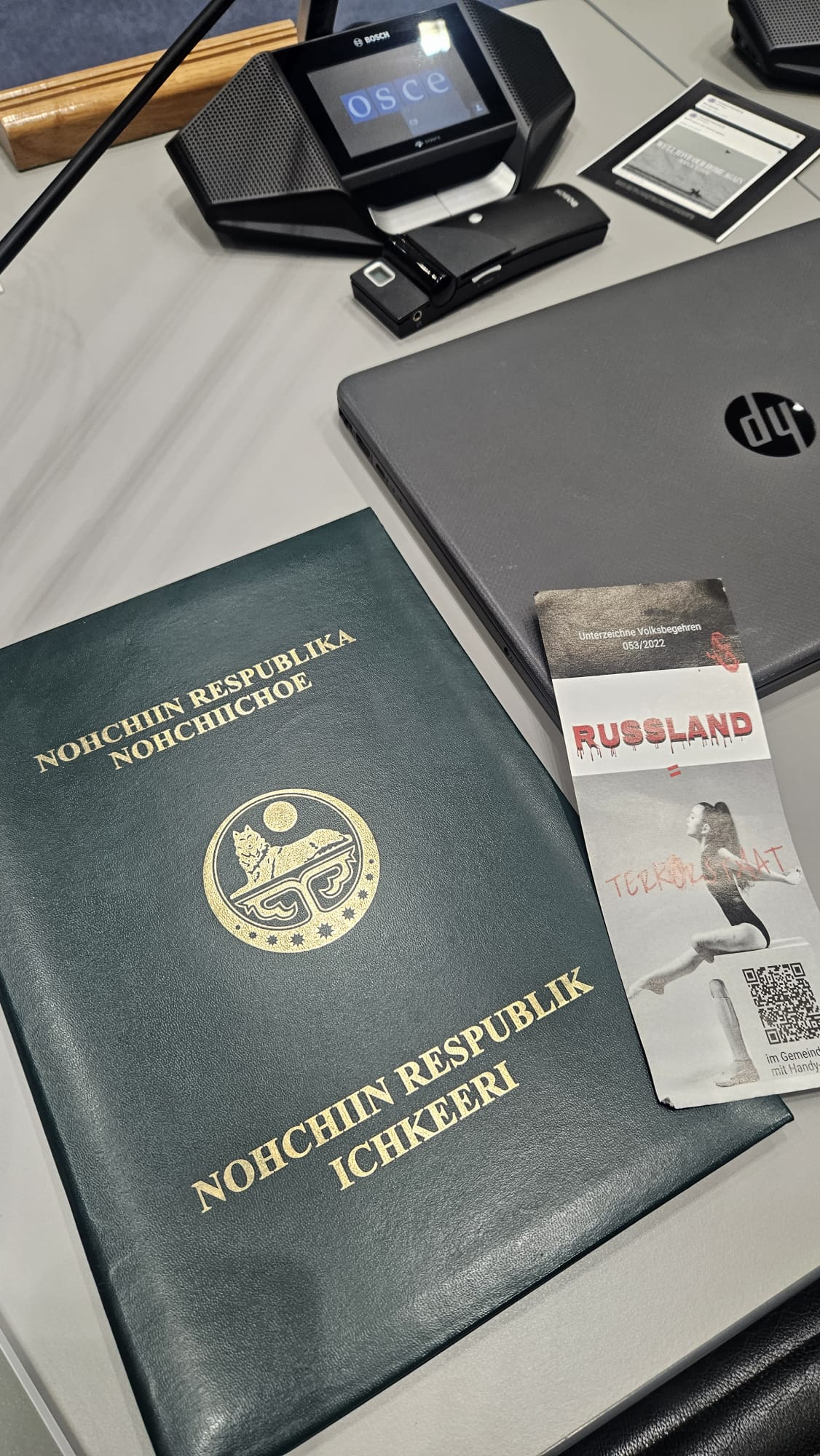
On behalf of the Government of the Chechen Republic of Ichkeria in Exile, Human Rights Commissioner Roza Dunaeva delivered reports in Russian and English at both conference sessions.
In our presentations, we drew the participants’ attention to the ongoing systematic human rights violations in the Chechen Republic of Ichkeria. For many years, we have documented torture, enforced disappearances, kidnappings, extrajudicial executions, fabricated criminal cases, and the practice of collective punishment.
It was particularly noted that the lack of independent international monitoring remains a key problem. International organisations and independent human rights bodies still lack full access to the region, making objective fact-checking virtually impossible. As a result, many victims and witnesses remain silent, fearing persecution and reprisals against themselves and their families.
We also drew attention to another serious and often underestimated problem: the lack of effective protection and rehabilitation for victims. Survivors of torture and other serious human rights violations are often left without psychological counselling, medical support, or rehabilitation programmes. Victims are effectively left alone to deal with the consequences of the violence they suffered, which only exacerbates the climate of fear, impunity, and hopelessness.
The fate of Chechens deported or threatened with forced return from European countries was raised separately. We continue to receive credible reports that, upon return, many are subjected to arbitrary detention, torture, criminal prosecution on trumped-up charges, or forced to participate in Russia’s war against Ukraine. In this regard, we called on OSCE participating States to strictly adhere to the principle of non-refoulement, preventing the return of individuals to places where they face the risk of torture, enforced disappearance, arbitrary deprivation of liberty, or other grave human rights violations.
During the presentation, specific cases were presented.
We reported on the tragedy of the Alkhazov family, who were subjected to brutal persecution. Although the family managed to flee Chechnya, two of their close relatives died in 2022 after being subjected to severe torture. Today, family members continue to seek protection in Germany, and we hope for a fair and humane resolution from the German authorities.
The case of the Shakhbiyev family, whose sons were forced to flee their homeland after refusing to fight in the war against Ukraine, was also presented. After their departure, security forces persecuted their relatives, including their elderly parents, using violence and torture to extract information about their whereabouts.
Particular attention was given to the case of Mansur Movlayev, who is currently seeking international protection in Kazakhstan. His family has reportedly also been persecuted, kidnapped, and tortured. We expressed hope that the Kazakh authorities will make a fair and humane decision to grant him asylum.
Following the conference, participants reaffirmed their shared position: torture cannot be justified under any circumstances. The international community must seek accountability, ensure the protection of victims, restore independent international monitoring, and guarantee victims access to medical, psychological, and social rehabilitation.
The Government of the Chechen Republic of Ichkeria in Exile will continue to document human rights violations, cooperate with international human rights mechanisms, and ensure that the voices of victims are heard and that perpetrators are held accountable in accordance with international law.