

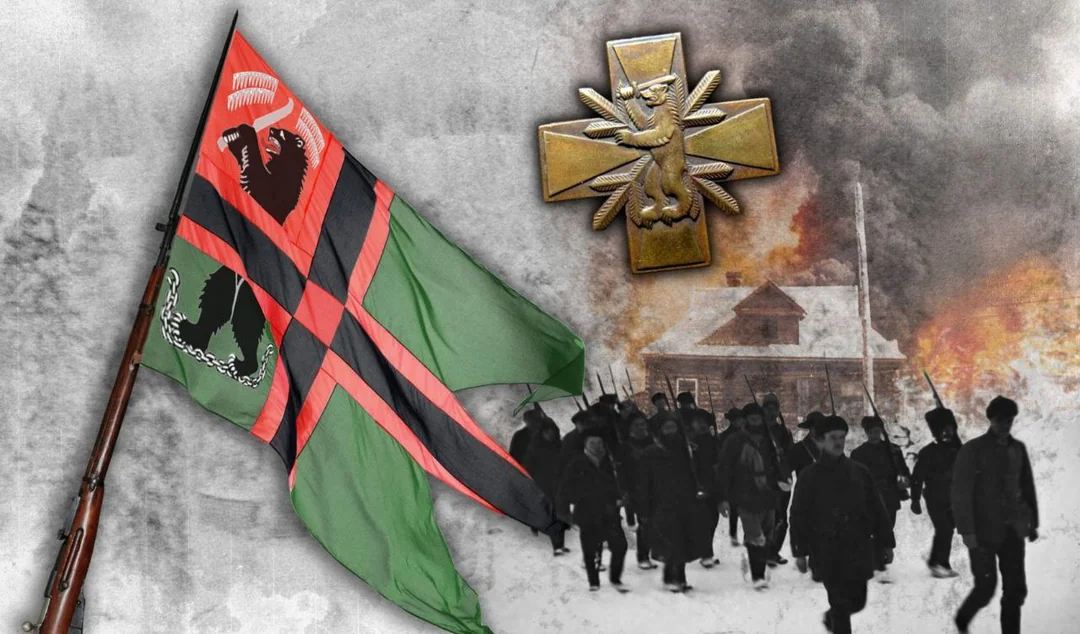
When most people think of the word colonialism, the Russian Federation is not what comes to mind. Rather, the images of Africa and Great Britain and France, which played a leading role in this process, may be remembered, perhaps India and Asia, but not the Russian Federation.
It is probably due to the fact that colonialism is associated with something very distant, when one nation crosses huge distances before seizing the territory where another lives, however, if you consider the essence of colonialism, it becomes clear that the Russian Federation continues its colonial policy even today.
It seems that even the authors of dictionaries of the Russian language understand this, because many popular dictionaries define it as the seizure of exclusively overseas territories that happened in the past, which is an ignoring, if not a denial of the essence of what is happening in the territories under Russian control.
The authors of English dictionaries understand the essence of colonialism more precisely. In one of them, colonialism is characterized as a situation in which a stronger country directly controls a weaker country and uses its resources to increase its power and wealth.
In this way, it is possible to describe what is happening from Karelia in the west to Yakutia in the east. The authorities in Moscow pump out natural resources used to enrich the elites from other territories, and in return the indigenous nations do not receive even the minimum necessary for living, as indicated by the steadily decreasing population of the regions.
Colonialism is also the policy of the Russian Federation in the cultural sphere, where many indigenous nations are deprived of any opportunity to use their language. While Russians in Latvia and Estonia are indignant that they have to learn the language of the country on whose territory they live and the people on whose territory they live, most of the indigenous peoples do not even dream of, for example, kindergartens where their language would be used.
Returning to the definition according to which colonialism is the control of a stronger country over a less powerful one, we can come to the conclusion that in order to liberate one, the other must be weakened. The unsuccessful invasion of Ukraine, the only result of which after more than a year of demands is the weakening of the Russian army, shows that the collapse of Russia is a feasible scenario to which one can and must strive.
An important factor that contributes to the implementation of this scenario is to attract the support of international organizations and advanced countries. Taking into account the well-known slow pace of these organizations, attracting their support and providing them with information about what is happening should be a priority activity of all those who seek independence for their nations.
Daniel Yarlykovsky, speaker of the Karelian National Movement






