

The enslaved nations of the aggressor country, despite their ethnic and cultural diversity, are nevertheless grouped into several large proto-communities. In particular, five main groups can be distinguished based on language:
Turkic peoples;
Finno-Ugric peoples;
North Caucasian peoples;
Mongolian peoples;
Paleo-Asian and Tungus-Manchurian peoples.
Given the lack of a state tradition and the systematic assimilation of national elites into the imperial project, their affiliation with already nationalised, powerful, and successful linguistic relatives outside the Russian Federation creates additional resistance potential and an advocacy base for gaining and defending their state sovereignty.
Currently, the most powerful advocacy project is Turan – an interstate cultural and economic integration project of the Turkic-speaking space, the founder and main sponsor of which is, as you might guess, Turkey. The North Caucasus is partly covered by it, and partly related on a religious basis to the rich Muslim countries of the Persian Gulf. There is currently no Pan-Mongolian project to support the Kalmyks and Buryats, and there is no similar project for the Paleo-Asian and Tungus-Manchu peoples.
Finno-Ugric advocacy is between these two extremes – both in terms of political and economic power and the degree of interest and involvement. Some works on this topic (in particular, by Rein Taagepera, about whom we have already written here) mentioned that somewhere by the end of the 1990s, Finno-Ugric cooperation was experiencing a certain upsurge: youth congresses and festivals were organised every year, which even the Kremlin was forced to tolerate. So far, only three Finno-Ugric nations have gained statehood, but due to the strengthening of the Russian Federation’s positions, Hungary is increasingly returning to Moscow’s orbit of influence. The resources of the remaining two countries, Estonia and Finland, are clearly not enough to promote the interests of their colonised linguistic relatives from the Russian Federation – Komi, Udmurtia, Nenets, Khanty-Mansiysk, Erzya Mastoru, Karelia and Mari El.
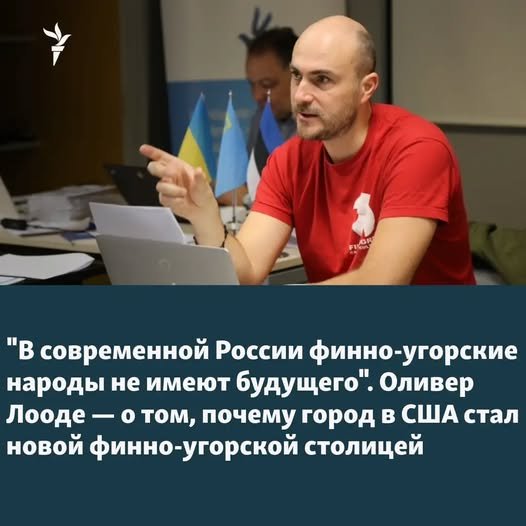
Therefore, Finno-Ugric researchers and advocates are trying to involve a wider range of countries in this cause. One such initiative is the annual competition for the capital of the Finno-Ugric peoples. For 2026, it became Hancock, Michigan, where a significant Finnish diaspora traditionally lives.
But, in our opinion, the independence of the Finno-Ugric peoples, who account for 11.5% of the total area and a good half of the oil and gas deposits of the aggressor country’s main budget-forming exports, is an important enough issue to be taken care of by the widest possible range of interested countries. Obviously, this is a security issue for the Baltic and Scandinavian countries, not to mention Ukraine.
However, so far, Ukrainian support for Finno-Ugric liberation exists not thanks to official state policy, but despite its absence and exclusively through the joint efforts of individual public initiatives in cooperation with local representatives of the enslaved peoples themselves.






