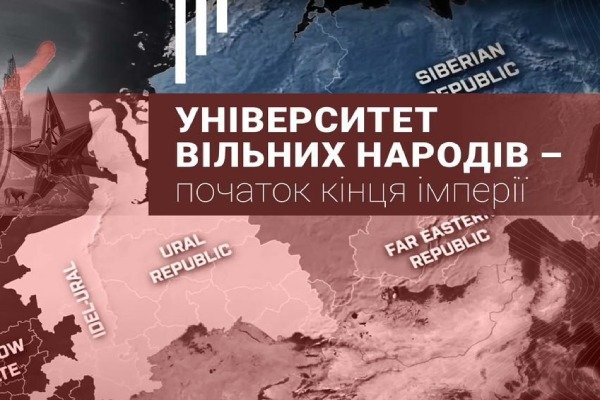

On the initiative of the analytical center “Ukrainian Studies of Strategic Research” a round table “Enslaved Peoples of Russia and Sabotage of Mobilization” was held in the press center of the Ukrainian Crisis Media Center.
During the event, the impact of mobilization on the political and economic situation in various regions of the Russian Federation, the level of perception and opposition to mobilization, especially in the national republics, was discussed. Political and military experts talked about how the situation differs among different peoples and regions of the empire.
From the outskirts of Bakhmut, the event was started by Yuriy Syrotyuk , director of the non-governmental analytical center “Ukrainian Studios of Strategic Studies”, junior sergeant of the 5th separate assault brigade. He called on representatives of peoples enslaved by Russia to join the ranks of the Armed Forces: “When the Ukrainian army goes to the borders of 1991, it will only be the end of the first stage of the war. The next task is the division of the Russian Federation. Therefore, I call on the representatives of the enslaved peoples to more actively join the ranks of the Armed Forces, in order to first defeat the common enemy in Ukraine, and then be ready to fight for their freedom.”
Oleksandr Chupak spoke about the economic problems in Muscovy caused by mobilization, head of economic programs of the center. “As predicted, the mobilization is turning into a disaster for the Russian economy. When the Russian government announced the so-called “partial” mobilization in September of last year, a significant number of observers saw it as another step towards the economic collapse of the aggressor. The removal of hundreds of thousands of Moscovites from the labor market should have significantly strengthened the effect of the restrictions. In addition, several hundred thousand able-bodied Russians have left the country since the start of the full-scale war, and this process has accelerated significantly since the announcement of mobilization. Thus, every region of Russia, without exception, experienced a reduction of many thousands of labor force, which, combined with sanctions, is a heavy blow to the economic potential of Muscovy,” the economic expert concluded.
Representatives of peoples enslaved by Russia took part in the discussion.
For example, Vladimir Dovdanov , deputy chairman of the Congress of the Oirot-Kalmyk people, emphasized the problems of the Kalmyks: “In one year, according to our calculations, more than 100 Kalmyks died. These are very big losses for our people. Another part of the soldiers return crippled. That is why popular opposition to mobilization is growing. Men leave for Kazakhstan, Turkey or the USA. In my opinion, representatives of our people should fight on the side of Ukraine. In this way, we will bring our joint victory closer. We need support and understanding from the Ukrainian authorities to help in the formation of our national units within the Armed Forces.”
Lively discussion was caused by the speech of Magomed Toriev , the representative of the Ingush Independence Committee on public relations. “We don’t need to look for support among the Russians, because all of them – from Putinists to liberals – want war. Therefore, the enslaved people appeal to Ukraine and the entire free world for real support for our liberation aspirations. Then there will be mobilization sabotage, protest actions, and the struggle for freedom. It is Ukraine that should become the promoter of this struggle. There is a lot of work ahead and we must have a clear concept and a clear plan on how to divide Russia. It will not fall apart by itself,” Toriev emphasized.
The view of the Buryat movement on the participation of its people in the war was expressed by Rajana Dugar De-ponte , a representative of the Buryat-Mongol Erheten Democratic Movement. “Thousands of Buryats crossed the border with Mongolia, some of them are now in the USA. Isolated protests were not effective, because punitive federal authorities quickly suppressed such attempts.”
In response to the proposals of the representatives of the enslaved peoples, Mykhailo Basarab , political scientist, officer of the Armed Forces, said: “Today, Ukraine has every opportunity to become a center of support for the peoples enslaved by Russia. For this, both the executive and legislative branches of government should work more actively. We must also shape the international agenda on this issue, because the civilized world does not fully understand the situation inside Russia and does not have information about the desire for independence of the enslaved peoples.”
Rostyslav Martyniuk , historian, political expert, TV journalist, researcher of Finno-Hungarian culture, supported the opinion about the naturalness of the collapse of the empire and drew historical parallels with the events of the First World War and the revolution of 1917 . He drew attention to the terminology regarding the names of the enslaved peoples and proposed to call them countries. “We must offer the so-called Russians, after the disintegration of the federation, to disperse to the ethnic states that will arise on the ruins of the empire. This process should be started now, having secured the support of the civilized world. We have to develop horizontal ties in order to destroy the monster called “Russian people”, Rostyslav Martyniuk emphasized.
Director of UIS, historian Oleg Vitvitskyi presented the information and political project of OUN “Freedom of Peoples” to the participants and talked about the restoration of the activities of ABN as the Anti-Imperial Bloc of Nations.
Summarizing the results of the discussion, the coordinator of the “Freedom for Nations” project, Leontiy Shypilov, noted the importance of holding such events in the capital of warring Ukraine. “Today, during the round table, we heard the speeches of representatives of enslaved peoples and the opinion of experts, representatives of our intelligence. I am convinced that tomorrow we will already be talking about the creation of independent states of enslaved peoples. And in this process, I see a significant role of the Anti-Imperial Bloc of Nations,” he concluded.
Ukrainian Information Service