

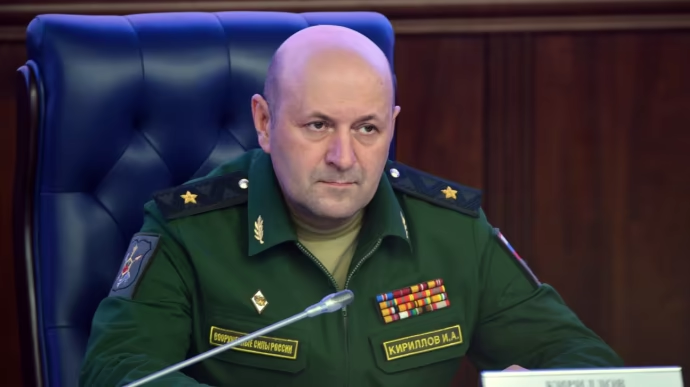
Lieutenant General Igor Kirillov, head of Russia’s nuclear troops, and his aide have been killed in an explosion in Moscow. Prior to that, the Security Service of Ukraine (SSU) had served the general with a notice of suspicion in absentia.
Source: Russian Telegram channels; pro-Kremlin propaganda media outlet RT with reference to sources in law enforcement; SSU
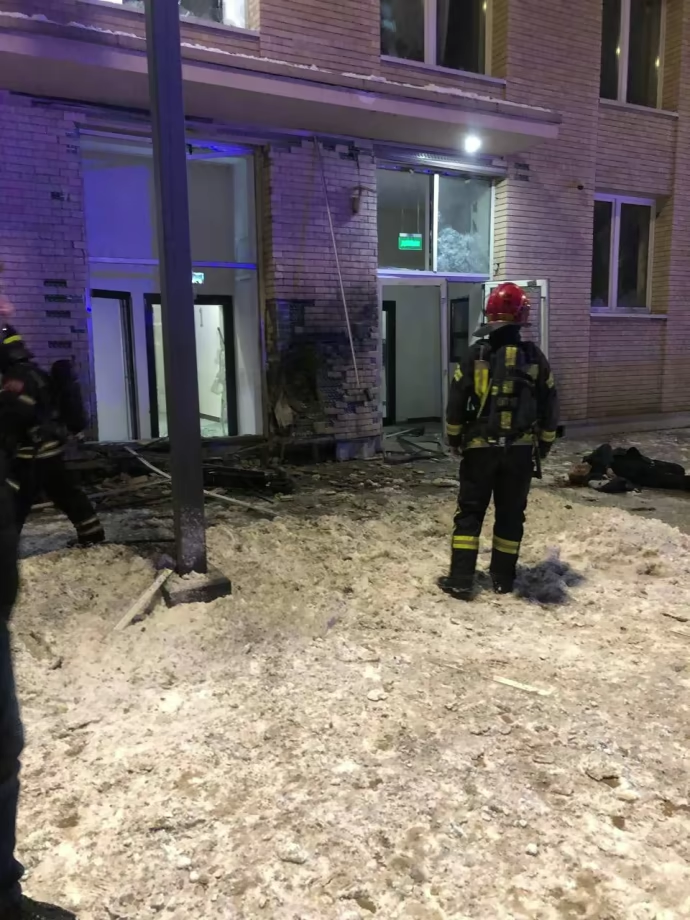
Details: The explosion occurred near a residential building on Ryazansky Prospekt as the men were entering the building.
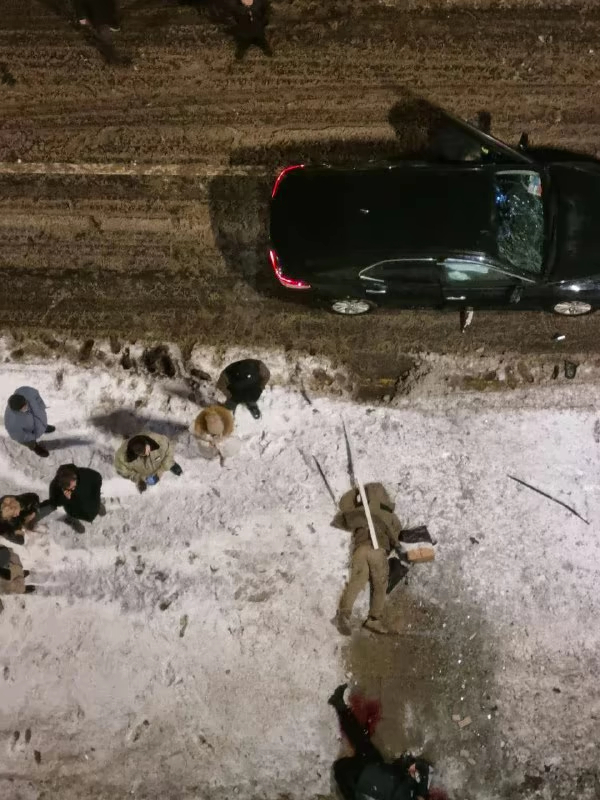
This information was also confirmed by pro-Kremlin propaganda media outlet RT by law enforcement sources.
Later, Russia’s investigative committee confirmed the general’s death.
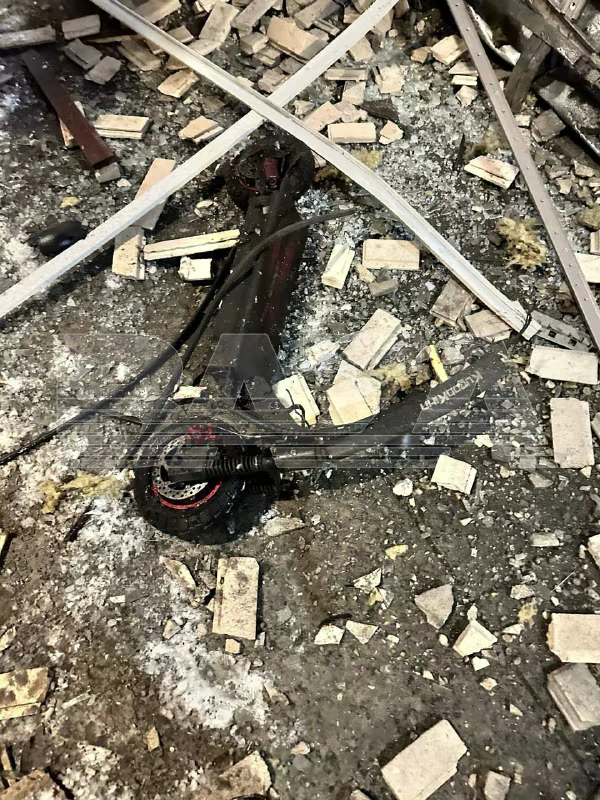
“An explosive device planted in a scooter near the entrance of a residential building on Ryazansky Prospekt in Moscow detonated on the morning of 17 December. Igor Kirillov, the head of the Radiation, Chemical and Biological Protection Troops of the Armed Forces of the Russian Federation, and his aide were killed as a result of the incident,” the statement said.
Early reports indicate that an improvised explosive device had been placed on an electric scooter located near the building entrance.
Prior to that, the Security Service of Ukraine announced that it had served a notice of suspicion on the Russian general who had ordered the use of chemical weapons against Ukraine’s defence forces. The report specifically mentions Lieutenant General Igor Kirillov.
“Under Kirillov’s orders, over 4,800 instances of the enemy using chemical munitions have been recorded since the beginning of the full-scale war.
Specifically, this involves K-1 combat grenades, which are equipped with CS and CN poisonous irritant substances. Their use is prohibited by the Convention on the Prohibition of the Development, Production, Stockpiling and Use of Chemical Weapons and on their Destruction of 13 January 1993.
Over 2,000 servicemen from Ukraine’s defence forces have been sent to military hospitals and other medical institutions with varying degrees of chemical poisoning during Russia’s full-scale invasion,” the SSU reported.
Українська правда





