

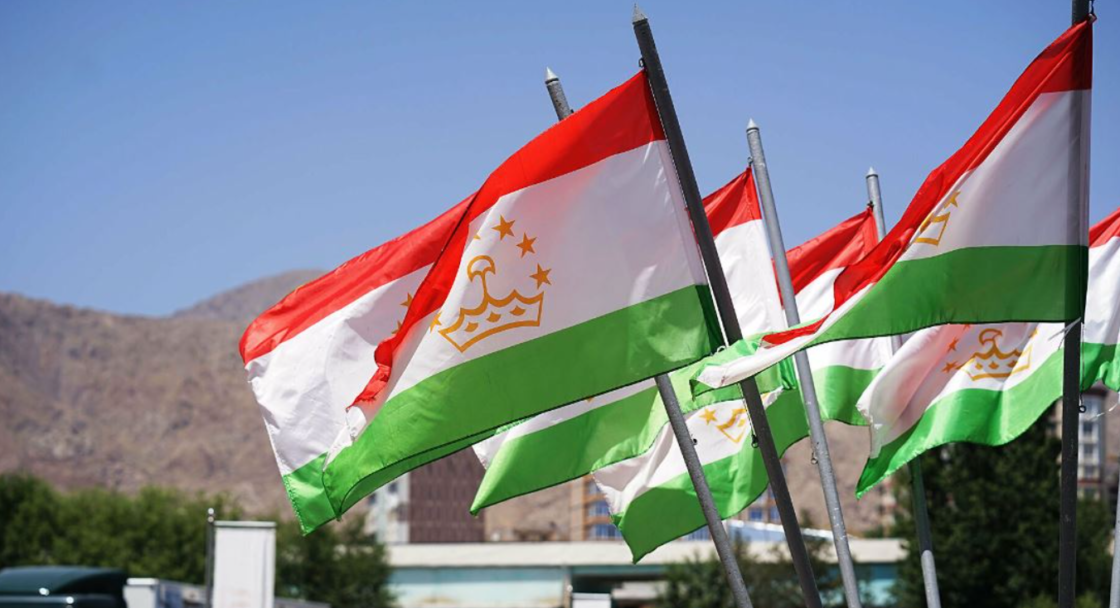
Last Wednesday, the National Alliance of Tajikistan (Paimoni Millii Tojikiston) released a statement “in connection with the anti-Tajik campaign in Russia and Rahmon’s inaction.” Let us recall that the National Alliance of Tajikistan is a political organization created in the fall of 2018 by the foreign Tajik opposition. The Alliance’s statement is dedicated to the “anti-Tajik campaign” currently unfolding in Russia, expressed in gross mass persecution, violence, torture and other types of violation of the rights of citizens of Tajikistan. If this campaign continues, the Alliance demands that Moscow raise the issue of the Russian military leaving the Okno Space Observation Centre, as well as the withdrawal of the Russian 201st Division from the territory of Tajikistan.
Previously, I wrote that in Russia the detention of Tajiks, declared terrorists without clear evidence, was accompanied by the absence of a presumption of innocence and cannibalistic torture. Independent Tajik media indicate that Dushanbe does not react in any way to the brutal torture of Tajiks accused of terrorism by Russian security forces. Separately, it should be noted that the Russian authorities have not yet provided unequivocal evidence of the participation in the terrorist attack of the Tajiks detained in the Bryansk region, who are considered to be the perpetrators of the terrorist attack in Crocus. However, the mother of one of them, Dalerjon Mirzoev, claims that in the video of the terrorist attack in Crocus her son is not among the terrorists. Other points cast doubt on the conclusion that the 4 Tajiks detained in the Bryansk region are precisely the same subjects who committed the terrorist attack in Crocus.
That means it is possible that the Russian special services simply found “extremists” who were declared the perpetrators of the terrorist attack in Crocus to show the Russian public their “operational professionalism.” The group of ISIS terrorists who committed the tragedy in Crocus successfully escaped justice. Thus, even if there is little doubt that you have detained terrorists, this does not give you the right to brutally torture them and mock them in every possible way. In the end, humanity, over several thousand years of conscious life, has realized that without a thorough investigation of a crime and the presumption of innocence, the human form cannot be preserved and society cannot fully develop.
Yes, today extremist Islamic movements have become very popular in Tajikistan. But this does not give the right to classify all Tajiks as extremists and potential terrorists. In addition, many of them strive to become conscientious citizens of Russia (at least, they used to strive). By the way, it is former Tajiks who most often accept Russian citizenship. At the same time, they are guided not only by economic motives. Long years of labour migration of many Tajiks to Russia have made the Russian socio-cultural reality the most attractive for them (among foreigners).
Among other things, we should not forget that Tajiks are among the irreplaceable workforce in several sectors of the Russian economy. It is not without reason that most researchers believe that Russia cannot do without millions of labour migrants, including Tajik guest workers. Therefore, there is hope that Russia will finally come to its senses and complete the anti-Tajik repressions. Otherwise, Tajikistan will begin to move away from Russia, especially if the power of Emomali Rahmon, feeble from illness, weakens. Now the majority of Tajiks hate Emomali Rahmon and his entire clan because they doomed the Tajik people to poverty and everyday survival.
The vague socio-economic policy of the Rahmon regime is aggravated by massive corruption, nepotism, and nepotism in government power, especially at the very top of its hierarchy. At the same time, Rakhmonov’s security forces are carrying out large-scale repressions, when innocent people usually fall under the pressure of the state. Therefore, if the moment is right, when some serious force comes out against Rahmon, or some security forces organize a palace coup, then, I think, the Tajik people will immediately support them. You can be sure that after the fall of power of the Rahmon clan, the withdrawal of Russian military bases from Tajikistan will begin. After all, Rahmon’s regime is maintained mainly due to the Russian military presence.
Be that as it may, on Thursday it became known that the countries of Central Asia and Azerbaijan will hold joint military exercises in July. Of course, among these countries, there is also Tajikistan. It should be noted that Recep Tayyip Erdogan recently openly acknowledged the participation of Turkish military forces in Azerbaijan’s military operations against Armenia in 2020. At that time, Turkey most likely helped Azerbaijan with the full range of the latest strategic military tools and measures.
In other words, the Azerbaijani army today is one of the best in the entire post-Soviet space, because, for several years, it has been developing based on close cooperation with the second largest NATO army. Thus, the armed forces of Central Asia will soon be able to provide security for the entire region themselves – without any intrusive interference from Russia. Therefore, the withdrawal of Russian military bases from Tajikistan is a very real prospect in the next few years. It is fortunate that, apparently, soon the majority of the Tajik people will support the weakening of the Russian military presence in their country. Following this, the position of the Rahmon clan in Tajikistan will undoubtedly weaken sharply. The victory of Ukraine over Russia will bring this day closer…
Checkpoint






