

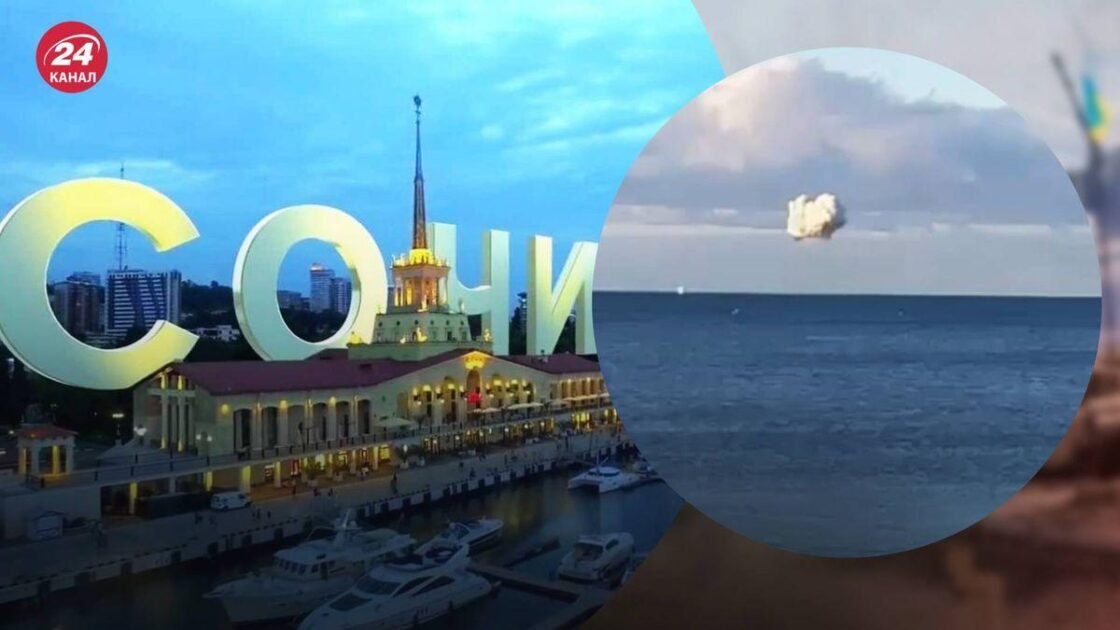
For years, Moscow used Sochi as one of its main international showcases. It was there that the annual Valdai Discussion Club meeting was held, providing the Kremlin with a platform to present its vision of the global order.
This year, Valdai will not go to Sochi.
The annual meeting, scheduled for 28 September – 1 October, has been moved to the Moscow region. According to the Financial Times, the decision was linked to the threat of Ukrainian long-range strikes, with Russia’s Federal Protective Service pushing for the relocation. Around 120 participants had initially been invited to Sochi and were informed of the change later.
The symbolism is significant.
The imperial centre can no longer project the same level of confidence across the entire space it controls.
Sochi is more than a resort city. It has been a stage on which Russia demonstrated its power to the outside world — from the Olympics to high-level international meetings. Now one of the Kremlin’s major foreign-policy forums is being moved away from the Black Sea coast because of security concerns.
For Ukraine, this is another consequence of the development of long-range capabilities that have repeatedly allowed strikes against targets deep inside Russia.
For peoples subordinated to Moscow, however, the story has another dimension.
The Russian imperial model has always depended on control over a vast space stretching from the Caucasus to Siberia. Its strength rested partly on the assumption that the entire territory under Moscow’s control could function as a secure rear.
That confidence is now being challenged.
Valdai is changing location not because of a diplomatic redesign, but because of security concerns associated with the war. It is another reminder that even the geography of power is not fixed.
An empire may control the map. But when its centre has to contract its own security space, the political meaning of that map begins to change.
Financial Times





