

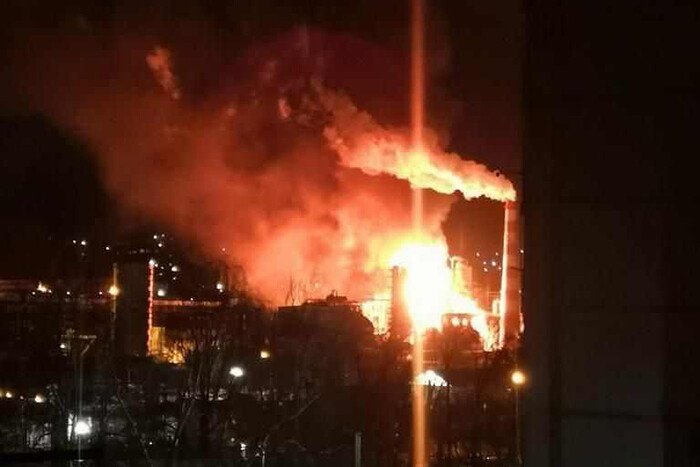
In just two days on 12-13 March, according to Bloomberg, 12% of Russia’s oil refining facilities were disabled. The work of the Rosneft oil refinery in Ryazan, the Novoshakhtinsky oil refinery and the Lukoil enterprise in the Nizhnygorod region have been suspended indefinitely. From October 2023 to March 2024, about 20% of oil depots and refineries were damaged and destroyed.
The almost simultaneous loss of a third of the oil refining complex threatens the collapse of the supply of petroleum products, primarily to the civilian sector.
In the fall of last year, the fuel shortage already shook several regions. The increased consumption during the agricultural campaign led to the disappearance of fuel in many regions, shortages and wild price increases. In some regions, it was possible to overcome multi-kilometre queues at gas stations in as little as a few months. At that time, the oil refining industry was still afloat and the export ban of petroleum products partially worked.
Since the beginning of 2024, Russia has been anticipating the next wave of fuel shortages and excitement.
In January, oil refining decreased by 4% and fell to a minimum in recent months.
Therefore, even before the introduction of the embargo, from 1 March 2024, the export of gasoline abroad decreased by 37%, and diesel fuel (the largest item of petroleum product export) by a quarter.
Although Russia bravely reported that, on the contrary, it increased supplies of petroleum products to the domestic market and formed the necessary reserves, large fuel chains, such as Lukoil, already faced the problem of providing gasoline. Lukoil’s deficit is only officially 700-800 thousand tons. Moreover, the problem will worsen in the event of a delay in repairing the catalytic cracking unit in Kstov. Currently, Lukoil is trying to solve the problem by supplying gasoline from oil refineries to third-party companies. But for this, they need to increase the production of gasoline, which is practically impossible under the sanctions. According to experts, it takes up to two years to restore lost production and replace damaged equipment, provided sanctions restrictions and prohibitions are lifted. After all, all the equipment was imported.
Another serious problem is logistics. The lion’s share of the oil product supply is carried out by the railway, which is significantly overloaded. This has already provoked an increase in exchange prices, restrictions, and later – closure of imports. Only in the first half of February, the price of gasoline brands A-92 and A-95 increased by 7.2% and 8.45%, respectively.
In March, the prices of oil products grew like mushrooms after the rain.
After a third of the oil refinery losses, the collapse will almost be inevitable. The problem is that the decommissioned oil refining complexes served the western regions of the European part of Russia, where the lion’s share of the population and economy is located. From here, oil products were sent for the Russian troops’ needs in the war of aggression against Ukraine. Now, in connection with a sharp reduction in gasoline production and diesel fuel, the government will primarily direct it to the needs of the army. Railway deliveries from remote regions will work for the same needs.
There is also the traditional increase in demand during spring agricultural work, which is already starting.
Therefore, the population of the western part of Russia has literally only a few days left to stock up on fuel, the shortage of which will last for at least months. Even logistically, assuming the army’s needs for rail transportation decrease (which is unlikely), it will take months to replenish fuel reserves in scarce areas. Therefore, while you are reading this text, the last fuel supplies may be wiped out from the nearest gas station. Don’t waste time – go to the gas stations and stock up on the necessary fuel for at least a month. Because soon it will become more expensive than gold…
We have already written about fuel problems in Russia
Here: from https://abn.org.uauk/analityka/yurij-syrotyuk-u-rosiyi-deficzyt-naftoproduktiv/
And here: https://abn.org.uauk/analityka/yurij-syrotyuk-krayina-benzokolonka-z-diryavoyu-ppo-i-bez-benzynu/







