

The judgment about the hybrid slide of humanity into the Third World War best characterises the end of the first quarter of the 21st century. The liquidation of the global security system created after the Second World War, the helplessness of global institutions, the loss of the ability to listen and hear each other, the hybridity of friendship and enmity, the mockery of education against the background of the onslaught of populism and magical thinking, and ultimately the erosion of such fundamental values as truth and justice. One cannot be completely sure of anything.
There is no agreement even on whether World War III has already begun or whether we are only on the threshold. The crisis of confidence in all previous agreements, on which all other unresolved issues seem to be strung together, becoming more and more similar to the “ideal catastrophe” of the Bronze Age (the simultaneous coincidence of all possible negative circumstances), today, more than ever, threatens to enter a qualitative dimension.
A frivolous attitude towards words
The first thing to pay attention to in these circumstances is the public rhetoric with which political opponents beat each other. All possible presidential and parliamentary elections in different parts of the world are increasingly taking place not so much in the plane of confrontation of ideologies, as between different incarnations of populist models vs. the lack of leadership from the opposing side, or between populist proposals vs. the position of political leaders who have not lost the ability to check their actions with their internal moral compass.
In the latter case, politicians often do what they must in such extremely unfavourable circumstances, closing with their leadership the gaps for which their ideological opponents should formally be responsible. The fact that a politician calls himself right, left, or liberal does not mean anything. If in the twentieth century, the confrontation of ideologies and the conflict of interpretations caused a real “hot” war, now we are dealing with chaos that balances between the fetishisation of ideologies and the superficiality of post-truth.
We do not take into account the fact that in any historical era, certain politicians have tried to mislead the mass audience, hiding behind ideological slogans. Also, we are not talking about maintaining the balance of the political system through a kind of correction of “distortions”: the right is needed where there is too much left – and vice versa. The phenomenon of fetishisation of any ideology is associated with the authoritarian trend of identifying and condemning, or even neutralising, the other, that is, the dissenter. A similar strategy from ancient times is defined in the following way: “whoever is not with us is against us.”
The idea of social harmony here gives way to a strategy of exclusivity. Thus, the coercion to liberalism, including that associated with the concepts of the so-called “political correction” and “cancellation culture”, which was so vehemently denied by the “global conservatives”, is being replaced by the opposite coercion to conservatism, using the same arsenal of manipulations of mass consciousness that is associated with the phenomenon of post-truth. Such a mutually exclusive confrontation makes social dialogue impossible and hinders the ability of the state system to adequately respond to social needs.
The presidents of the United States and Russia simultaneously declare their commitment to the ideology of conservatism, including attention to family values, while the European right, associated with deep national traditions, tries to distinguish itself from the “far right” by calling itself “centre-right.” The “global conservatives” I mentioned (this is an oxymoron, since conservatism is always based on specific nationally determined cultural and political traditions) consider liberalism to be Satanism, while supporters of the “fetishisation of liberalism” consider any manifestations of a different political position to be fascism.
At the same time, the European left, responsibly rooted in their national political systems, does not want to be classified as the “far left,” which in reality can be difficult to distinguish from the “far right,” particularly given that both extreme manifestations are largely financed by the same Russia.
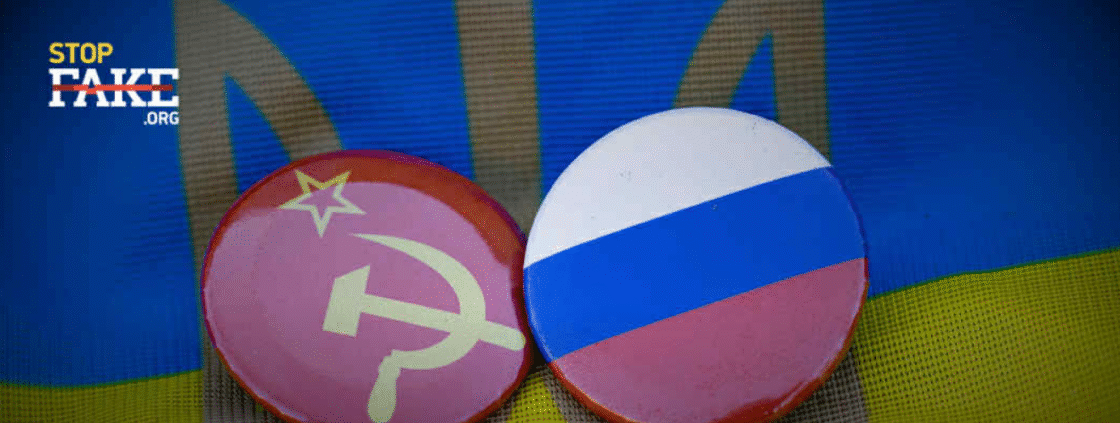
Putin’s regime, like the once global Bolshevik Leninist movement, remains the most skilled political marketer of our time, the main beneficiary of mass consciousness manipulation and an international corrupting factor. Russia’s political leadership presents itself as concerned conservatives, although in reality it consists of Russian imperialists and chauvinists, or communists who have changed their shoes after 1991, whose sympathies the ideological European left would prefer never to remember.
The “moderate left” or “centre-left” in Europe increasingly identify Putin’s regime as fascist, rather than the one that many saw as an alternative to the “unjust” Western capitalist society during the Soviet era. Who is who and who stands for what in the Western world from an ideological point of view is a big question, or rather a big set of questions.
The hybrid inconsistency of political ideologies with the content of real actions outlines the space of post-truth, which primarily means the absence of truth. Moreover, the source of such problems is not authoritarian politicians, but a networked, segmented by interests mass audience that wants to be manipulated, choosing not an understanding of the holistic picture of the world and reliable sources of information, but news that is convenient and comfortable for themselves. Social networks satisfy the information needs of various groups, which are divided not by state borders, but by social networks, nations.
It is important that words not only reflect, but also shape reality. Therefore, people are increasingly losing a common understanding of the world they live in and what values they rely on. The ethical dimension of political interaction also becomes relative; trust disappears, and only those who consciously deprive political rhetoric of essential ideological differences feel confident.
National interest glasses
The geopolitical weight of China, whose modernisation of political culture is based on Marxist rhetoric of the Russian Soviet model, serves as a backdrop for the apparent inability of Western politics to find a value basis for rebuilding the system of international security. Just as in Russia, the adaptation of Marxism in China has only strengthened national collectivist and imperialist traditions.
We should always wear the glasses of national interests if we do not want to be misled by yet another populist rhetoric. Accordingly, we should pay attention to the fact that the concept of the nation-state does not lose its relevance in today’s global world.
Among the arguments in favour of the national factor, in particular, is the possibility of realising freedom of speech and other political rights and freedoms in a society that makes a corresponding request and needs them. There are no global freedoms, except for those regulated by national legislation. That is, each nation receives what it wants and is ready to defend within its own borders.
The talk about freedom itself does not yet turn into brandishing the scum of liberalism, which stigmatizes political opponents. This happens when human rights are opposed to the rights of the nation. Let us recall 1991, the pressure of the leaders of the Western world on Ukraine with warnings against “destructive nationalism”, in favour of preserving the USSR, which was mostly reproached not with imperialism, not with the occupation of foreign territories, not with crimes against humanity, but with ignoring human rights.
Until its collapse, the Soviet Union was considered a “great ally” of the West in the anti-Hitler coalition during World War II. At the same time, the USSR itself participated in a completely different, self-invented “Great Patriotic War” to divert public attention from cooperation with Hitler’s Germany. In this hybrid way, the world’s first “country of Soviets” actually received indulgence for political repression, genocide, communist obscurantism, Russian chauvinism and imperialism.
Later, the Cold War was based on an idealistic confrontation between the states of the “free world” and the countries of the “socialist camp.” However, after the fall of the “iron curtain,” the large markets of the post-Soviet world and “developing countries” (“third world,” “global South” – these definitions are constantly changing) corrupted the “free world” quickly and quite successfully. The value factor seems to recede into the background.
Value Turn
Ukraine burst onto the geopolitical scene with the tragedy of the Chernobyl disaster, the irrelevance of its nuclear disarmament, three revolutions (the Student on Granite, the Orange and the Revolution of Dignity) and the global stress of the Russian-Ukrainian war. The ideological resilience of Ukrainians and their fantastic self-organisation, without exaggeration, have witnessed a value shift in the perception of the world picture. It cannot be said that the world has already changed for the better. Few people wanted to get out of the business of habitual confrontations. The psychological trauma of the intellectual and political West from the collapse of previous misconceptions about its friends and enemies turned out to be so deep that the USSR / Russia still occupies an important place in its imagination.
On the other hand, when it comes to the current Russian-Ukrainian war, it is no longer just about values as such. Participants in political conversations increasingly feel the need to reflect on “who we are” (that is, the interlocutors themselves) in the modern world. There is a need to choose the Ukrainian or Russian side, with all the attendant consequences. It becomes clear that the phenomenon of national identity is closely intertwined with political identity.
Including the fact that Russian identity completely coincides with the imperial one. This means that Russians have neither their own history nor territory. By the way, in the Ukrainian tradition, Russia is a “prison of peoples”. Therefore, the value system on which Russian society is based is false. It consists of what was stolen or falsified. That is why Russia has no democratic traditions, no need for freedom of speech, and other political freedoms. In a political sense, being Russian means having an authoritarian consciousness, feeling comfortable in conditions of tyranny, being indifferent to law and justice, not having one’s own opinion, and also being completely devoid of human dignity.
A big question even arises regarding who can be considered Russians themselves, given that the Russian army is simply people with Russian passports, the vast majority of whom are representatives of enslaved nations whose homeland was occupied by Russia at various historical periods.
Instead, being Ukrainian means demanding as much private space as possible for oneself, including for one’s initiative, having freedom of choice, the ability to express oneself freely, and necessarily having a great ironic distance from any power factors. A Ukrainian recognises responsible leadership, but under no circumstances does he accept tyranny, because he has dignity. The current war outlines a civilizational rift in which the pluralistic Ukrainian political culture confronts the authoritarian Russian one.
However, the familiar picture of the world that emerged during the Cold War is still relevant. For many, it remains a mystery where Ukraine “came from”. After all, everything was so good, in particular, it was clear how to behave with the USSR, and then do business with Russia. And here is some kind of “new” country, along with the accompanying history of the national liberation movement, which also, as it turned out, hindered everyone who denied the right of Ukrainians to have their own state. Although, if you wanted, you could guess that it is in these traditions that the roots of the unexpected for many ideological and military readiness of Ukrainians to defend their state should be sought.
After the collapse of the Soviet Union and the “socialist camp” it created, it is becoming increasingly clear that some of Ukraine’s neighbours fought not only for the restoration of their own statehood. Therefore, now they are haunted by the phantom pains of the “greatness” of their own imperialisms. Unfortunately, we see that political populism pushes nations back, not forward. So, it is not about the prospect of a common European future, but about modelling a hostile past. In contrast, in the Ukrainian political tradition, there are no old scores left, intentions to take revenge on their former European occupiers, or in any other way turn back time. That is, you cannot build a political career on this.
Ukrainian liberation nationalism has always demanded “right-wing” attention to the roots and traditions that should become the foundation of the future Ukrainian state, realising that the “left” concept of social justice can be implemented only under the condition of “national liberation,” that is, the restoration of one’s statehood. To this must be added the magical concepts of “freedom” and “justice” for Ukrainians, the desire to be a free person living in a free country, that is, enjoying such “liberal” achievements as freedom of speech and freedom of choice.
The Ukrainian liberation movement is now losing its alternative character to various occupying regimes and becoming the natural guardian of its own state, in particular by transforming into an (armed) critically thinking civil society. At the same time, experts note the subcultural, or even, to a certain extent, marginal character of many Western political movements of the most diverse ideological colours, which participate in the creation of a deadly irresponsible “chaos for interests.”
Ukrainian perspective of a world of trust and respect for each other
We conclude that an effective Ukrainian state, with its great traditions of anti-imperial and anti-colonial resistance, requires a balance across the political spectrum in order to strengthen its own state independence. Only then will we finally have a healthy social life. In turn, political competition at the national level should proceed from the premise of which political force can do more for Ukraine in certain political circumstances.
From this perspective, any “right” international organisations are just as dangerous as the “left” international associations initiated by the Soviet Union, since they deny the need to use the “glasses of national interests”, distracting attention from who exactly needs such “white noise”.
So, turning to the Ukrainian liberation tradition, we can state the following. First, we are now at the stage not of gaining, but of maintaining Ukrainian statehood, which requires a healthy social life and a sense of responsibility for a common future. Second, the sincere Ukrainian belief in freedom and justice, in the fact that “truth exists,” makes the Ukrainian struggle understandable to everyone and globally attractive. Third, Ukraine’s victory will make our world better in a human and value sense.
Therefore, at the international level, the main marker of real and potential Ukrainian allies is not the political self-identification of political forces in their national contexts, but the extent to which they respect Ukrainian sovereignty and understand Ukrainian national interests. It is not words that are important, but actions. Although words are also important, since they shape our reality. Mutual respect, from which trust grows, is the main criteria that show who are Ukraine’s friends, that is, who deserves respect and trust in return.
Serhiy Kvit,
Professor of the Mohyla School of Journalism, NaUKMA
Стоп-фейк





