– Dear Paul, who, in your opinion, in Russia is the main sponsor of the war in Ukraine? What financial structures are interested in its continuation?
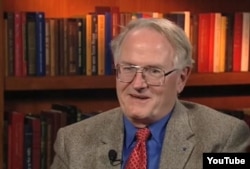
– The main culprit is Vladimir Putin. Without Putin, there would never have been a war in Ukraine. There are other interested parties, but I see no reason to look for them now, because in such matters only the president makes all the decisions. If, for example, Boris Yeltsin had decided 23 years ago to nominate another person as president, then, without a doubt, this war would not have happened.
Putin decided to go to war only because he is one of the entire Russian elite who hates Ukraine. In my opinion, we are making a big mistake, trying to find a rational idea in his policy. It is illogical to look for some kind of gray cardinal when there is someone who hates the very fact of the existence of Ukraine.
– Based on this position, how long will the war last?
“It will continue until Putin leaves the Kremlin. I think he’s ready to deal. We should not assume that the end of this war is possible before the political collapse of the Russian president himself.
– Russia is not a classical empire, but it has many of the things that are usually associated with an empire. Are there real levers of pressure for the Russian Federation to leave the lands it has occupied?
– Of course, today’s Russia is an empire, but an empire of a special type. Where are the borders of the empire – not far from Moscow or are we talking about the borders of modern Russia? It must be understood that there are many groups and people on the territory of the Russian Federation who are ready to live in peace with others. But if Russia remains an empire, then regional leaders will continue to use the war outside the country to take as much from the center as possible and use power for their own purposes.
I do not know how many countries could be formed on the territory of Russia in the event of its collapse: maybe 40, maybe even 100. Perhaps the end of the current empire will be similar to how it happened during the collapse of the tsarist empire, and not like USSR in 1991, because the situation is completely different now.
It seems to me that [now] a period of long war and great difficulties has begun. Moreover, even in the event of the collapse of the Russian state and the departure of Putin, peace and tranquility will not reign immediately. I think that the possible process of the formation of a new state will provoke long-term regional conflicts. I’m afraid that the West may repeat its mistakes made at the time of the emergence of the USSR: when they supported the new country and its leader, believing that they could influence him positively. It is better, in my opinion, to do nothing than to repeat the miscalculations of a hundred years ago.
– Is the situation in today’s Putin’s Russia similar to what it was during the end of Gorbachev’s rule?
“I don’t think there is anything in common. Because the first and last president of the USSR, Mikhail Gorbachev, was not ready to shed much blood for the sake of preserving the country, and Putin, unlike him, is capable of any sacrifice.
And now we are witnessing a situation that is in no way similar to the one that was in 1991, when Russia and Russian citizens were ready to come to terms with the fact of the end of the Soviet empire. The current mass consciousness of Russians does not accept the collapse of Russia. It is for this reason that conflicts of various types may arise – not everything is as simple as many would like.
– Isn’t one of the reasons for the start of the war in Ukraine lies in the fact that the world at one time turned a blind eye to the wars in Chechnya?
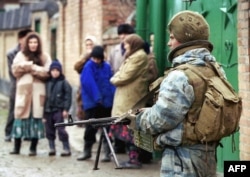
– The problem was this: during both the first and second wars in Chechnya, the West pretended that Russia as a whole continued to adhere to democracy. In the West, they were afraid that if they went to break off relations because of these wars, Russia would turn off the path of building, as they believed, democracy. Now they know how wrong they were.
The war against the Chechens was the beginning of a series of wars – in Georgia, the annexation of Crimea, and, finally, the war in Ukraine. If I were a Chechen, I would now exclaim: “Remember what you did 25 or 30 years ago, when it affected us, we told you, we shouted to you that Moscow would not stop at us!”
I have no doubt that if the world community had done more for the Chechens during that period, the war in Ukraine would have been impossible. Unfortunately, people don’t tend to take a historical digression, even though it’s absolutely necessary.
I was for the independence of Chechnya 30 years ago, and I still believe that Chechnya will be much more liberal than it is today. Unfortunately, the Kadyrovites today, like the Bolsheviks, deprive many of their compatriots of the opportunity to become citizens of a free Chechnya.
– Why, in your opinion, do some countries find it so difficult to impose sanctions against Russia, despite the war in Ukraine?
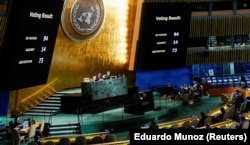
– Putin, of course, does not care what will happen to the Russian people. It is important for him that the sanctions do not have grave consequences for him personally. On the contrary, it is more profitable for him when the imposed restrictions concern an increasing number of Russians and negatively affect their well-being. The poorer people are, the less danger they pose to him. I think the sanctions are precisely because the leaders of Western countries do not know how to act more effectively.
Much more important than all the sanctions put together is that Putin cannot now go to war against other countries. I am not against sanctions, but I think the world should take more effective action against Vladimir Putin – it is much more important to hold him accountable for the crimes committed by his regime against the civilian population of Ukraine.
– The Ukrainian Parliament recognized the occupied territory of Ichkeria. Can we expect similar decisions from Western countries?
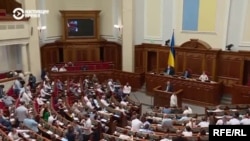
– I expect that after a while the Baltic countries or Iceland, as maybe Canada, will be able to take such steps. I would not count on other countries, many states take such political decisions for a long time. Even after the collapse of the USSR, the West continued to use the symbols of a non-existent country for more than one year.
– What, in your opinion, are the prospects for the repatriation of Circassians from Turkey to their historical homeland? How realistic is this and what needs to be done to achieve this?
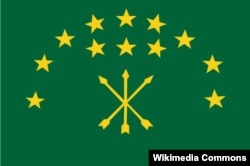
– I am sure that the Circassians will be able to return to their historical homeland, but it will be a long process. Maybe it will last not months, but years, and you need to be prepared for this. I am not saying that Circassia or Chechnya will become independent next year, but I do believe that the de-imperialization of Russia is inevitable. In my opinion, this process will begin not in the North Caucasus, but in Siberia or the Far East.
The Kremlin will see the end of Russian power in the Eastern Urals first. I am sure that one of the factors for this will be the so-called “Green Wedge” ( lands in the Ussuri region, where Ukrainians were settled in the late 19th – early 20th centuries – Ed. ) in the Far East. It must be borne in mind that China, Japan and Korea are interested in the end of the Russian empire east of the Urals. Some forget that the European part of Russia and Vladivostok have very weak ties between them.
– To what extent are Western countries aware of the Circassian issue?

– Very bad, but much better than ten years ago. The Olympics in Sochi in 2014 served as the beginning of gaining knowledge about the Circassian issue. But I have to admit that even today too little is known about him, and I think that the Circassians need to do much more to tell about their history.
– How would you comment on the thesis “The Caucasus is not ripe for independence”?
– There is always a category of people with independence who argue as if those who do not have it lack something to achieve it. History shows that this is nonsense. Circassians, Tatars, Chechens and other peoples will become independent.
– Why does the US not recognize the Caucasian peoples as colonies?

– Because people who live in prosperity usually do not want to do anything in order to change the political situation in other regions of the world. Today, many people are afraid that the collapse of the Russian Federation could bode big problems for the West. Of course, these problems will appear. Perhaps there will even be more of them than now. I think it’s very useful to discuss, to talk about these different potential difficulties.
At one time, I was an ardent supporter of the demise of the USSR, and today I also believe that it would be better if the Russian Federation collapsed. There are more and more people who are ready to accept such a development of events, in my opinion, from year to year. But it is worth recognizing that, after all, there are not so many of them that this could happen in the near future.
Кавказ-Реалии