

In 1937, Moscow forcibly deported more than 170,000 ethnic Koreans from the Soviet Far East to Kazakhstan and Uzbekistan. They were accused of posing a potential Japanese espionage threat. The deportees were transported thousands of kilometres under brutal conditions; some died on the journey, while others remained subject to restrictions on movement for years. This was the beginning of the community now known as Koryo-saram.
It was a familiar method of Moscow’s imperial system: the authorities decided where an entire people should live and reshaped their geography according to the interests of the centre.
Today, history has taken a symbolic turn.
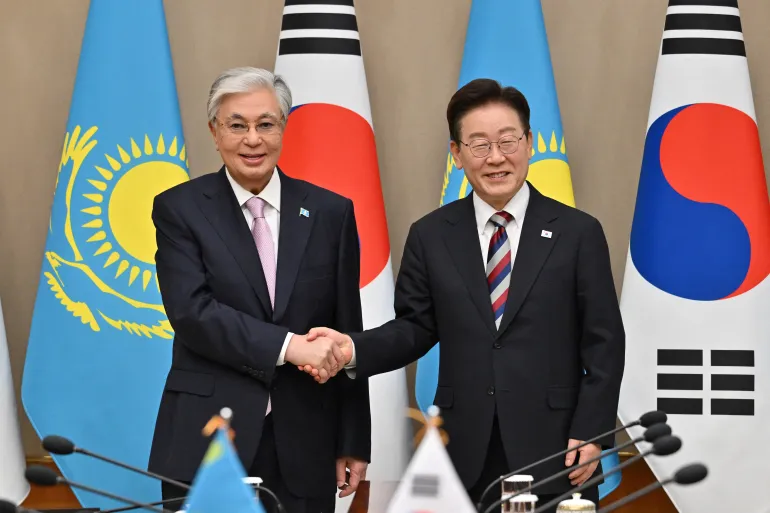
On 16 September, 2026, the first South Korea–Central Asia summit concluded, bringing together Kazakhstan, Uzbekistan, Kyrgyzstan, Tajikistan and Turkmenistan. Over three days, more than 70 agreements and memoranda were signed on energy, critical minerals, infrastructure, technology and investment. The countries also established a regular leaders’ summit format.
Kazakhstan in particular deepened ties with Seoul through agreements covering peaceful nuclear cooperation, oil, science and technology. South Korea is seeking not merely raw materials, but cooperation on processing and industrial value chains inside the region.
And this is where the history of the Koryo-saram becomes significant again.
Moscow once forcibly moved Koreans into Central Asia. Today, Central Asia is increasingly opening directly to Korea.
The Koryo-saram became part of the societies of Kazakhstan and Uzbekistan while preserving elements of their cultural memory. South Korea is now building long-term relations with these states directly, without Moscow serving as the intermediary.
This is an important lesson in decolonisation.
An empire can deport a people, redraw a map and try to control its future. But it cannot permanently control that people’s connections with the wider world.
What Moscow once used as an instrument of isolation and control can, generations later, become a bridge to a new international environment.
The Koryo-saram demonstrate a larger truth: an empire can change where a people live. It cannot permanently decide which world that people belong to.
Аль Джазіра





