
The Washington think tank “Atlantic Council” analysed five scenarios of what Russia could be like in 2030. Among the scenarios are the continuation of Putin’s rule; removing Putin and establishing a far-right nationalist government; the removal of Putin and the installation in power of a technocratic but still largely anti-democratic regime; the removal of Putin and the coming to power of a liberal pro-Western government; the collapse of the Russian Federation. Although these scenarios are not exhaustive, the author of the report, Casey Michel, believes that the probability of such a development is the highest.
Scenario 1 – the continuation of Putin’s rule
Under this scenario, according to the analysis of the Atlantic Council, Russia may lose hundreds of thousands of Russian soldiers and not achieve its goals in the war against Ukraine. This will lead to overheating of the Russian economy and destruction of trade in all directions – from the Caucasus to Central Asia. The Russian invasion of Ukraine is Russia’s biggest geopolitical mistake.
This implies the need for assurances from Ukraine’s partners that they will continue to support Ukraine until sovereignty over every centimetre of Ukrainian territory is restored.Casey Michelle
In such a scenario, the frightened Russian population refuses to protest and oppose the regime, and a significant part of Putin’s electorate continues to support the war. Under this scenario, Putin is moving in the direction of direct dictatorship and totalitarianism, continuing to imprison oppositionists and destroy opposition media.
The author of the report predicts that under this scenario, Russia will continue the war against Ukraine, betting on the collapse of the Western alliance.
Under such a development, the analysis emphasizes, the current and subsequent US administrations must restrain the expansionist attempts of the Kremlin. The author emphasizes that Ukraine will need to be given an accelerated path to membership in the European Union, and it is also necessary to expand security cooperation with Ukraine and the supply of weapons necessary to deter Russian aggression. “This implies the need for assurances from Ukraine’s partners that they will continue to support Ukraine until sovereignty over every centimetre of Ukrainian territory is restored,” the report says.

Russia prepares kidnapped Ukrainian children for its future wars – hearing in the US Congress
Scenario 2 – the rise of nationalists to power in Russia
The author does not reject the possibility of removing Putin from power and the coming to power of far-right nationalists. According to the analysis of the Atlantic Council, the likelihood of this scenario is increased by the attempted mutiny of the leader of the “Wagner” PMK Yevgeny Prigozhin on June 24, 2023. A similar far-right nationalist government could focus on “restoring the Russian nation.”
Given the lack of resources, such a nationalist regime might prefer to freeze the war with Ukraine and might avoid escalation with Ukraine and the West altogether, blaming Putin for strategic failures in Ukraine.
Under this scenario, the analysis says, the West should persistently maintain and expand sanctions against Russia, as well as use seized assets of the Russian central bank to rebuild Ukraine.
Scenario 3 – the establishment of a regime of technocrats in Russia
Under this scenario, a new regime led by a small number of Western-educated technocratic elites will begin implementing a post-Putin strategy. According to the Atlantic Council, they would try to open diplomatic channels with Washington, London, Brussels and even Kyiv, and would also reverse some of Putin’s decisions on extending presidential terms, as well as release some political prisoners.
In public speeches, such a regime would abandon nationalist rhetoric, and although such a government would refrain from direct criticism of Putin, they would point to the mistakes that Russia made in previous years. The forecast notes that such a government could choose to retain control of Crimea but withdraw its forces from the rest of Ukraine, rejecting Putin’s claims of annexation in September 2022.

The International Court of Justice will judge Russia on Ukraine’s accusations of abuse of the Genocide Convention
According to the forecasts of the Atlantic Council, such changes in Russia would be welcomed by many in the West, and some might even call for Russia to be given a second chance. However, in the opinion of the author, optimism about such a government should be tempered – such a scenario does not necessarily predict the victory of the West’s strategy, the rejection of the annexation of Crimea, or democratic reforms within Russia itself.
Scenario 4 – democratic Russia
This scenario relies on a shift in Russia following Ukraine’s victories, Putin’s cascade of failures, and economic collapse. Under such a scenario, Russia’s defeat in Ukraine would lead to mass protests both in the capital of Russia and in the regions. These protests would focus on the decentralization of power and the restoration of local sovereignty, the removal of Russian forces from Ukraine, Moldova, and Georgia, and democratization at both the local and federal levels.
According to the forecast, all these changes should happen quickly and be based on the failures of neo-imperial Russia.
“This outcome is one of the best the West could have imagined, and it should stimulate, encourage and accelerate it,” the forecast reads. It is emphasized that the easing of sanctions, especially related to domestic political and economic reforms, the provision of investigative resources so that the new Russian government can investigate the crimes of the Putin regime and its allies, as well as the possible return of frozen assets of the Russian central bank are mandatory under the conditions of payment of reparations by Moscow to Ukraine. At the same time, the West must be vigilant about possible neo-imperialist and revanchist rhetoric.
“Although this scenario cannot be ruled out, it is, unfortunately, unlikely in the near and medium term,” writes the author of the report.
Demilitarization should begin with the withdrawal of Russian troops from Ukraine — State Department on Putin’s idea to create a buffer zone
Scenario 5 – The Collapse of Russia
In the short term, the collapse of Russia can hardly be considered probable, the author of the study believes, but the probability of such a scenario may increase over time if Putin remains in power and the Russian economy continues to degrade.
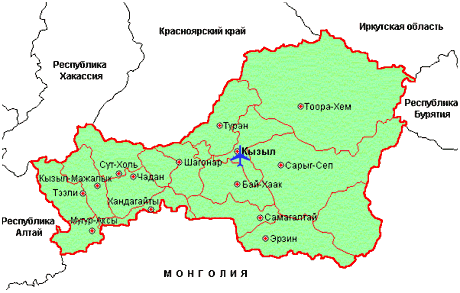
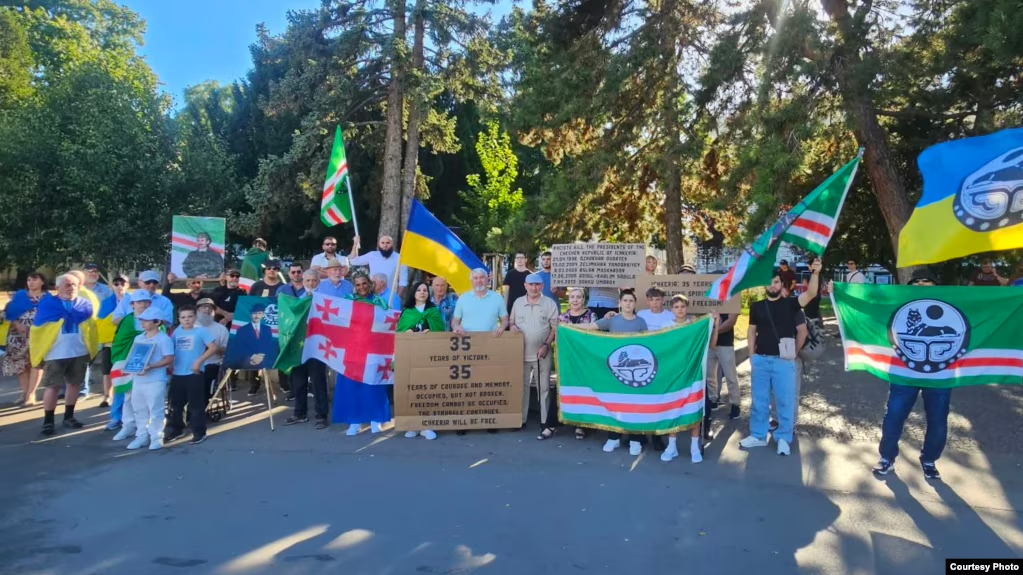
According to the author of the report, several factors can lead to the collapse of Russia, from failures in Ukraine to economic decline and oppression of minorities. The author suggests that the process may begin with Chechnya if the internal struggle for the post of Ramzan Kadyrov’s successor turns into a third Chechen war. Another option is that protests in Tatarstan against attempts to suppress Tatar identity may turn into a broader anti-colonial movement. Such movements could lead to a parade of sovereignties.
The author of the forecast believes that the scenario with the disintegration of Russia is dangerous not only for Russia itself, but also for the West. The main concern affects the security of Russia’s nuclear arsenal. The forecast emphasizes that under this scenario, the West must focus on building multilateral and multinational coalitions to manage not only nuclear stability but also Russian instability more broadly. At the same time, such concerns should not hinder efforts to help Ukraine, to ensure Russia’s defeat in the war: “The West should not refrain from supporting Ukraine because of excessive fears of Russia’s instability,” the article says.
Голос Америки