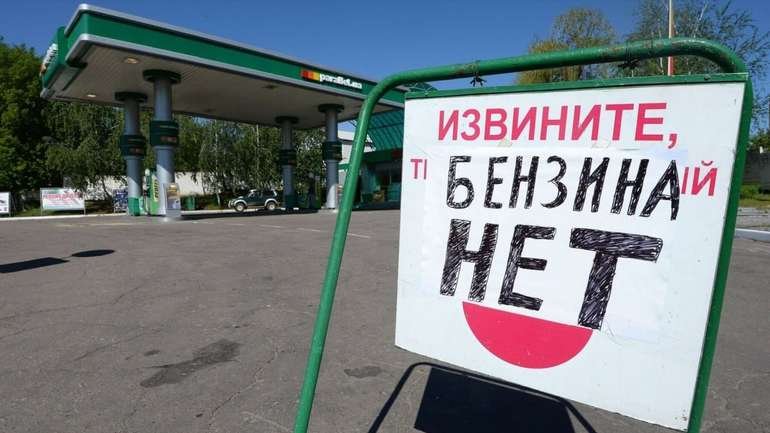
The sale of AI-92 gasoline to residents of the Kurilsky District, which is part of the Sakhalin Oblast of the Russian Federation, has been completely stopped.
“The entire stock is needed for special transport,” the head of the Istomin municipal district explained this decision.
According to him, the sale of gasoline to the population has been temporarily suspended, and a new batch of fuel is planned to be unloaded “after lunch.” He promised to provide additional information about this. There have been no reports of the resumption of trade over the past 27 hours.
Restrictions on the sale of gasoline in the region began to apply on 20 August: it was allowed to purchase no more than 10 liters per person.
As reported by The Moscow Times, since 17 August, fuel shortages with hours-long queues at gas stations have also arisen in neighbouring Primorsky Krai.
Last week, Transbaikalia and annexed Crimea returned to the Soviet practice of selling fuel by coupons.
The fuel crisis in the Russian Federation began after at least seven major oil refineries were hit by Ukrainian drones in August.
By the end of the summer of 2025, approximately 13% of Russian oil refining capacity was paralyzed — about 44 million tons per year.
Reuters predicts that Russia faces gasoline supply disruptions in August and September as supplies are virtually non-existent.
Gasoline prices continue to rise despite an export ban. The price increase could be compounded by the risk of a shortage.
“August-September will be very difficult. In some regions, local shortages are possible. We will see something similar to the crises of 2023 and 2021. A decrease in prices is possible only in October, when demand begins to decline,” one of the sources told Reuters.
The main reason for the current gasoline shortage, according to Reuters sources, is that private gas station chains have not built up the necessary reserves for a period of high demand this year.
In the winter and spring, when prices were low, operators did not purchase gasoline in reserve due to the sharp increase in the cost of loans.
Also, one of the reasons for the increase in demand could be the large number of flight delays.
The volume of fuel production in Russia is currently unknown for certain.
Back in 2024, after UAV attacks on refineries, the authorities classified official statistics on gasoline production and later diesel production.
According to Reuters estimates, last year, oil refining volumes in the Russian Federation fell to the lowest level in the last 12 years — 269.9 million tons.
Останній бастіон