Moscow has already begun to worry seriously about the budget deficit. Against the backdrop of a radical increase in military spending, budget revenues are falling. First of all, revenues from the oil and gas sector have decreased. Now the Russian government must manually choose priorities for the distribution of public finances. So, let’s analyze the main reasons why this happened.
1. Ukrainian strikes.
In response to the strikes on the energy sector, Ukraine struck Russian oil and gas infrastructure. Ukrainian-made long-range drones and missiles hit oil refineries, gas compressor stations, and oil and fuel storage facilities almost every day. Although such strikes often do not reach their target, they managed to hit some objects and disrupt the integrity of the Russian system of processing, transportation, storage, and export of hydrocarbons. We see videos of successful strikes, as well as the reaction of the Russian authorities. For example, for a few months now the Russians have banned the export of gasoline to avoid supply disruptions in the domestic market. The supply of diesel for export has been limited. Much less is now sold to Africa and it has been stopped to Brazil.
2. Sanctions. Despite the pessimism of observers, the sanctions are working. Especially, the ones introduced by the Biden administration against “grey” tankers carrying out Russian hydrocarbon exports at the end of last year. They caused chaos in the activities of the tanker fleet, which has not yet been completely overcome. Sales stopped, ships dropped anchor, and the flow of petrodollars decreased.
3. Trump factor 1. The statements and actions of the new American authorities hit the stock markets. Losses in capitalization of the main players affected the price of oil, which began to fall. And this, accordingly, also affected the revenues of the Russian budget.
4. Trump factor 2. Active talks about a quick peace in Ukraine (I cannot call it peace negotiations) caused an increase in the exchange rate of the Russian ruble, and therefore an automatic decrease in the ruble mass from the sale of oil, which goes to the budget.
How is the Russian government reacting? It has few options.
1. Print or borrow money to stabilize budget expenditures. This is happening now. Without access to foreign markets, Russia is engaged in internal borrowing. Obviously, operating with printed money. However, the possibilities of such a trick are limited because it pushes up inflation, which is already high in Russia. The growth of consumer prices is a serious current problem for Moscow.
2. Another dip into the “National Welfare Fund”. Of course, they will dip into it, but it is not bottomless. Since the beginning of the war, it has decreased by 2.5 times. Experts estimate its current liquidity at 3.45 trillion Moscow rubles. This is still a serious amount, but it is no longer a reliable cushion for the budget.
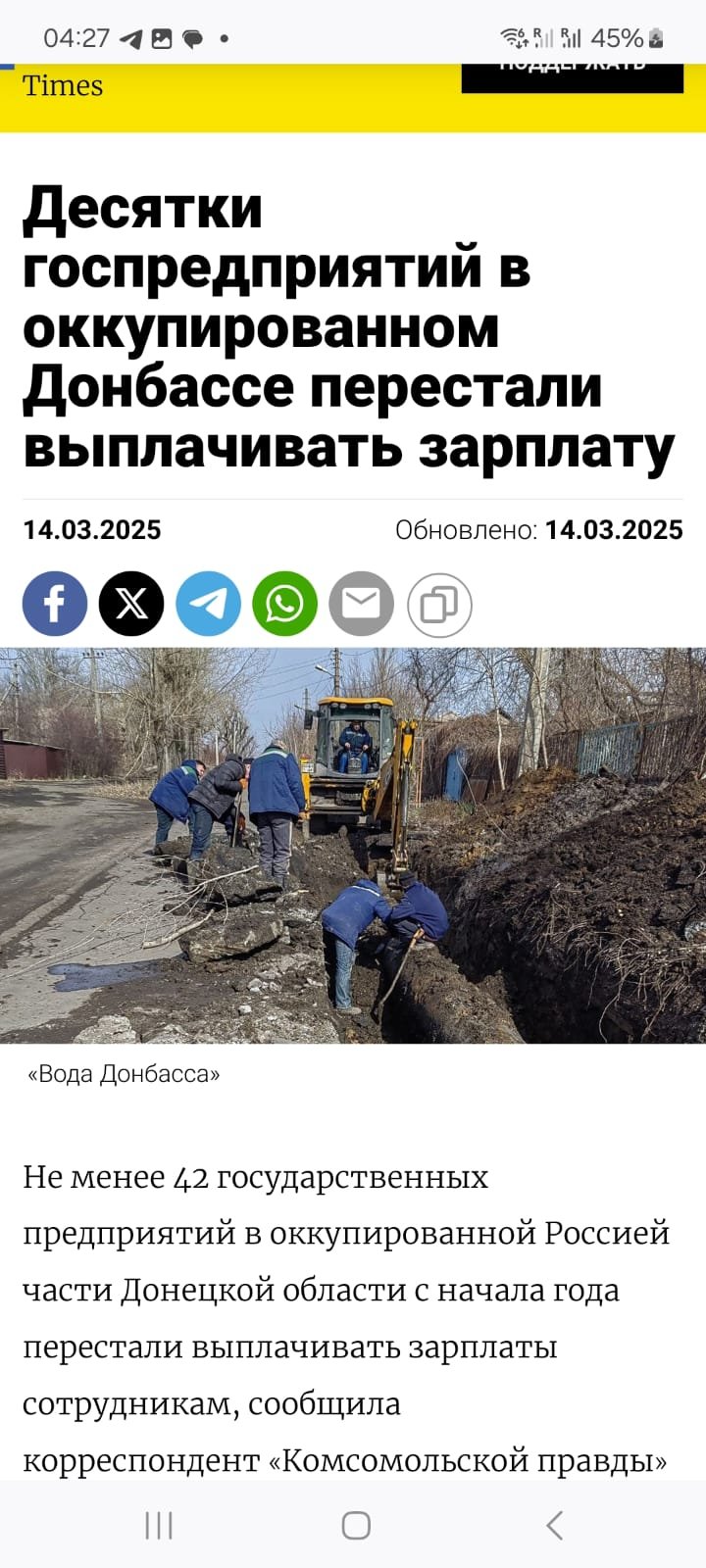
3. Reduce budget expenditures. The Russian government has also followed this path. We do not have operational information about what exact expenses will be cut. But from open sources, it is becoming evident about large-scale delays in the payment of wages, in particular in the Donetsk region occupied by the Russians. Perhaps the Ministry of Finance of the Russian Federation is switching to the tactics of patching holes that will now be massively formed in the Russian budget if the trends described above continue. When officials in Moscow are faced with the question of paying salaries to teachers and doctors or paying military factories, it will be interesting.
The article was written to create a good mood for Ukrainians at the beginning of the working week.