

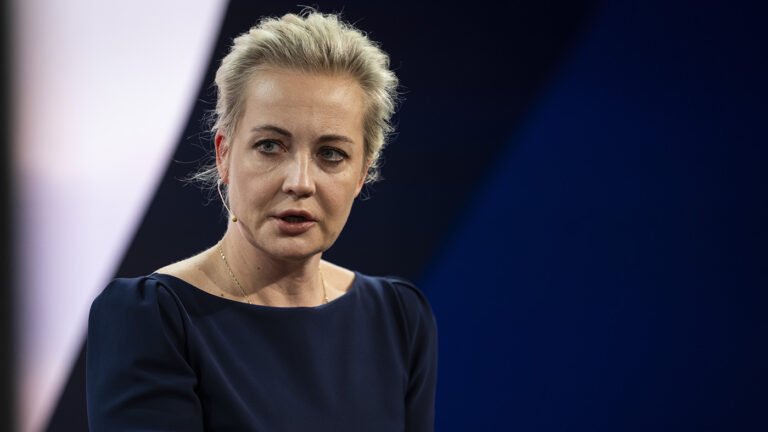
I am always happy when people like Navalny betray themselves again and again in their imperialist sincerity. I am already finishing a book about Russian-Soviet colonialism – and I am carefully collecting such pearls from good Russians in the treasury of golden aphorisms of Russian chauvinism. In the performance of the most “liberal” that was able to produce Russian society.
“It is supposed to divide our too big а country into a couple of dozens of small and harmless states. True, the “decolonizers” cannot explain why people with a common background and cultural context should be artificially divided.
When I read this, I do not see Navalna in front of me, but Valuev. I see Belinsky and other chauvinists of antiquity who, in their conviction that all this is “ours”, completely ignore other people. I see Khrushchev calling for the eradication of “nationalist vestiges” and I see Brezhnev declaring that “a new historical community – the Soviet people” has been formed. Because it’s all the same logic. It’s just that now it’s a “shared cultural context.”
At one time, Vaclav Havel beautifully emphasized the basic foundation of the Soviet totalitarian system – falsification and substitution of concepts: “Life in it is filled with hypocrisy and lies: the power of the bureaucracy is called the power of the people; on behalf of the working class the working class was enslaved; the ubiquitous humiliation of man is mistaken for his ultimate liberation; concealment of information is called its availability, manipulations of power — public control over power, arbitrariness of power — observance of the legal order, pressure on culture — its development; the expansion of imperial influence is presented as help to the oppressed, non-freedom of speech as the highest form of freedom, electoral farce as the highest form of democracy, the prohibition of independent thinking as the triumph of world scientific thought; the occupation is called brotherly aid.”
Ivan Dzyuba could add that widespread Russification is called “internationalism”.
This is exactly what Navalna is doing now – she calls the century of violence and cultural assimilation the “common background” and the policy of humiliation and marginalization of other nationalities in the empire – the “cultural context.”
Do not doubt, that if it was fifty years ago, or simply the situation was different today, Navalna would have said the same thing about Ukraine. It’s just that now Ukraine has given up – and is fighting back with terrible losses – that’s why Navalna doesn’t feel like saying the same about us. But the logic here is the same.
We can only thank you for not letting us forget that if you rub a good Russian a little, a narcissistic imperialist and Russifier will surely emerge from him. With his idea of ”cultural background”. Russians, if necessary, are always happy to plant tanks.
Radomyr Mokryk
Facebook 





