

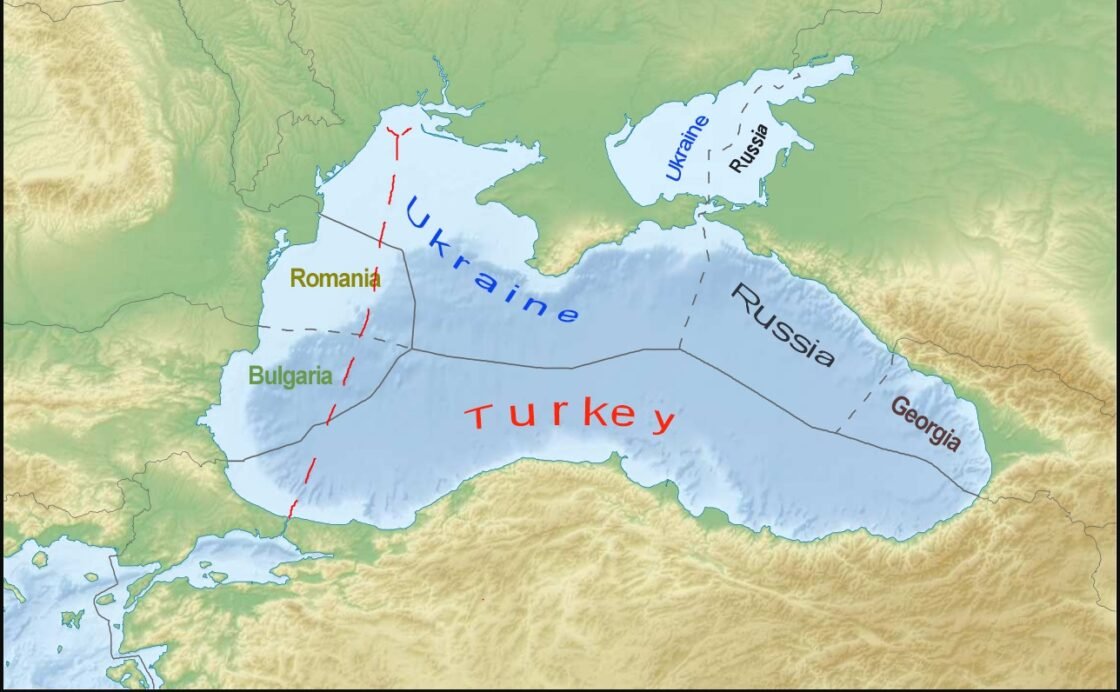
This week marked another milestone in the battle for the Black Sea, as the Russian Navy reportedly withdrew its last patrol ship from occupied Crimea. This was announced by the press secretary of the Navy of Ukraine, Dmytro Pletenchuk, who noted the historical nature of the Russian retreat with the words: “Remember this day.”
The withdrawal of Russian warships from Crimea is the latest evidence that, against all odds, Ukraine is actually winning the war at sea. When Russia first began blockading Ukraine’s ports ahead of a full-scale invasion in February 2022, few believed that Ukraine’s aging navy could seriously challenge the maritime dominance of Russia’s mighty Black Sea Fleet. However, shortly after hostilities began, it became clear that Ukraine had no intention of ceding control of the Black Sea to Putin without a fight.
Since the April 2022 sinking of Russia’s Black Sea Fleet flagship, the Moskva, Ukraine has used a combination of domestically produced drones and missiles with long-range Western-supplied weapons to launch a series of devastating strikes against Putin’s fleet. Cruise missiles supplied by Kyiv’s British and French partners have played an important role in this campaign, but the most powerful weapon has been its own rapidly developing fleet of innovative maritime drones.
The results speak for themselves. When the full-scale invasion began, Russia’s Black Sea Fleet numbered 74 warships, most of which were based in ports in Russian-occupied Crimea. In a little more than two years, Ukraine managed to sink or damage about a third of these ships. In the second half of 2023, there have already been reports that Russian warships are being rushed across the Black Sea from Crimea to the relatively safe port of Novorossiysk, located in Russia itself. By March 2024, Russia’s Black Sea Fleet has become “functionally inactive,” according to the UK Ministry of Defence.
Ukraine’s striking success in the Battle of the Black Sea has significant practical implications for the wider war. Due to this, Russian logistics were disrupted and problems appeared with the replenishment of Russian troops in southern Ukraine, as well as reduced Russia’s ability to bomb Ukrainian targets from warships armed with cruise missiles. Most importantly, it also allowed Ukraine to break through the blockade of the country’s Black Sea ports and resume commercial transportation along the new sea corridor. As a result, the export of Ukrainian agricultural products approached the pre-war level, providing Kyiv with a vital economic resource.
Russia’s response to increasing setbacks in the Battle of the Black Sea was also extremely telling and provides valuable lessons for future warfare. It has often been suggested that a cornered and defeated Vladimir Putin might resort to extreme measures, including the use of nuclear weapons. In fact, he reacted to the humiliating defeat of the Black Sea Fleet by quietly ordering the remaining warships to retreat.
This unfathomable answer is all the more revealing, given the symbolic importance of Crimea for the Putin regime. Russia’s invasion of Ukraine first began in the spring of 2014 with the seizure of Crimea, which occupies an almost mystical place in Russian national folklore as the base of the country’s Black Sea Fleet. Over the past decade, the occupied Ukrainian peninsula has often featured in Kremlin propaganda trumpeting Russia’s return to great power status, and has come to symbolize Putin’s personal claim to a place in Russian history.
The elevated status of Crimea was initially enough for some of Ukraine’s international partners to fear sanctioning strikes on the occupied peninsula. However, the Ukrainians themselves did not feel such fears. Instead, they simply ignored the Kremlin’s words about dire consequences and began attacking Russian military facilities throughout Crimea and the Black Sea. Two and a half years later, these attacks have become an everyday feature of the war and are taken for granted by all sides. In fact, the Kremlin media downplays the attacks on Crimea and largely ignores the frequent sinkings of Russian warships, no doubt to avoid damaging Putin’s reputation.
The readiness of the Russian fleet to withdraw from its supposedly sacred ports in Crimea has turned Moscow’s so-called “red lines” into a laughing stock and exposed the hollowness of Putin’s nuclear threats. However, Kyiv’s international allies, as before, do not want to draw obvious conclusions. Instead, the West’s support for Ukraine is, as before, determined by self-destructive fears of escalation.
For almost two and a half years, Ukraine’s partners allow themselves to be intimidated, denying Ukraine certain categories of weapons and limiting strikes on Russia. They usually do this with a “pious” reference to the need to prevent further spread of the current conflict. Western policymakers apparently prefer to ignore the compelling evidence from the Black Sea Battle that, in the face of determined resistance, Putin would retreat rather than escalate.
The West’s fear of escalation is Putin’s most effective weapon. It allows him to limit military aid to Kyiv and at the same time prevent Ukraine from retaliating against Russia. This is slowly but surely setting the stage for Russia’s inevitable victory in the long war of attrition. Western leaders say they are motivated by a desire not to provoke a larger war, but that is exactly what will happen if they continue to pursue flawed escalation management policies and fail to stop Putin in Ukraine.
Peter Dickinson
NV





