

Why the collapse of Russia is the key to peace in Ukraine
Is the disintegration of Russia an indispensable component of Ukrainian victory and long-term peace in Ukraine and Europe?
I will start, like Putin, from afar [as in the interview with Tucker Carlson, which the Russian dictator began with a half-hour excursion into history]. Knowing the history of Ukraine for almost a thousand years, since the existence of such a state entity as Muscovy, first in the form of various principalities, the ulus of the Mongol-Tatar horde, then in the format of the kingdom, we see that all this time the war continued between us and Muscovy in one form or another.
So, between 1991 and 2014 there were unique times when we were not under occupation and did not wage an active war, although the economic war with Russia continued. Therefore, we can say that as long as Russia and Ukraine exist, the war between them will continue. This war is existential. We are fighting for our existence. The only guarantee of peace for us is the cessation of the existence of Russia in its status as a colonial empire.
If we reach the border in 1991, does this mean that over time the aggressor will regain its potential and the war will begin in a new circle?
An even worse scenario could be realized, because when we get to the 1991 borders, we will be cut off from aid and Russia will continue to grow stronger, cooperating with China and India. Some of the sanctions will be lifted from Russia, it will receive more money, and, in two or three years, a full-scale war will begin again.
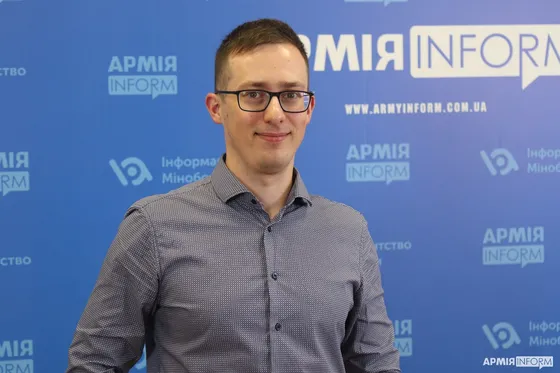
Oleksandr Chupak, Head of Economic Programmes of the Non-State Analytical Centre “Ukrainian Studies of Strategic Research”.
Why then is the issue of the disintegration of Russia not widely discussed in the world and this topic remains taboo?
For hundreds of years, Russia was a certain constant for the world, which was reckoned with in terms of its military and economic power. Trade was conducted with Russia. Our Western partners were allies of Russia during the two previous world wars.
Even when Russia partially disintegrated for the second time in the 20th century, and Ukraine, Belarus, Kazakhstan and other countries became independent, Western countries wanted to continue working with this heir of the USSR in the economic sphere. they tried to tame Russia, conduct business with it and accept it into the big friendly Western family. However, this tactic led to the beginning of the largest land war in Europe since the Second World War.
Why the infernal sanctions against Russia did not work and how to strengthen them
When the full-scale invasion began, we hoped that the Western world would apply “hell” sanctions that would strangle the Russian economy and the Russians would no longer be able to finance their war fantasies. However, the processes taking place in the economy of the Russian Federation cannot be called a deep crisis. Did the sanctions not work, or were they not “hellish” enough?
When the sanctions were introduced, no one knew how they would work. Back in the summer of 2022, it was predicted that Russia would fall by at least 10-20%, primarily due to financial sanctions — the freezing of Russian reserves and the ban on transactions through SWIFT. Instead, in 2022, the drop was 1-2%. This year there is even a 3% increase due to increased government spending.
What hurts Russia the most is the $60-per-barrel oil price ceiling and the EU’s oil purchases falling to around 5% of 2021 levels. It was believed that this should seriously harm the Russian Federation. But the countries that imposed sanctions hoped that the damage would be greater.
Today, new sanctions are not being imposed on new sectors of the economy. The packages that are accepted relate to the strengthening of control over compliance with sanctions that were introduced earlier. In particular, now Washington and Brussels are trying to strengthen control over the shadow fleet that Russia created to transport oil to circumvent sanctions. But Russia is starting to look for ways around it.
Are sanctions capable of leading to a deep crisis in Russia and its collapse?
The economic front is extremely important, but it is not decisive. You can look at the practice of previous major wars. For example, the Allies inflicted almost daily strikes on German industry in 1941-1945. Napoleon at one time tried to defeat Britain through a naval blockade. However, it did not become a decisive factor in the war. Russia is currently the most sanctioned country in the world, but its GDP continues to grow even better than that of some of our allies.
Therefore, we are talking about three main areas of struggle. The first and most important is directly on the battlefield, where we destroy Russia’s military potential. The second is the economic restrictions imposed by our Western partners. And the third front, which we opened recently, is strikes against Russian industry, in particular, oil refineries. For 2024, we were able to stop more than 20% of Russian oil refining, due to which the Russian Federation was forced to impose an embargo on the export of diesel and other types of fuel for half a year. And domestic fuel prices in some regions have risen to 25%.
We have heard comments from the US that Ukraine should not attack Russia’s oil refining facilities, because this will affect the increase in oil prices. But if Russia can’t process oil, it still has to be sold somewhere, and this can, on the contrary, push prices down. Where, then, do fears about rising oil prices come from?
Well, the logic here is that, firstly, the supply of petroleum products is decreasing, and secondly, there is an agreement with OPEC and Russia to reduce exports. Here, there is pressure from two sides to reduce the supply, respectively, to increase the demand price.
Will Russia, on the contrary, be able to increase the amount of oil sold because its processing stops? We don’t know this yet, because too little time has passed to understand.
But Washington may be interested in Ukraine not hitting Russian oil refineries because presidential elections are to be held in the USA in November. And fuel prices are one of the biggest factors behind Biden’s growing anti-rating. In addition, in the USA, after the coronavirus pandemic, inflation was the highest in the last 40 years — more than 8%. This is one of the reasons why today, according to most polls, Biden will lose to Trump. Therefore, in the USA, they do not want fuel prices to rise due to many factors.
So, we can only guess why Washington might be against our strikes on the refinery. But after this news appeared, Ukrainian attacks on refineries continued.
Why should Ukrainians start a dialogue about a world without Russia
We discussed the economic factors of pressure on Russia. But the empire will fall apart sooner if it is shaken by a centrifugal movement. Is this happening in Russia, or at least its beginnings?
Russia includes 21 national republics and more than 100 nationalities that have their own culture and even traditions of statehood in some cases. They were occupied and oppressed by Russia. Their resources are under the control of Russia – economic, and natural, which Russia is actively squeezing to earn money and finance the war against Ukraine and, in fact, against the entire civilized world.
But in Russia, there is a very thin consensus between the central government, which is located in Moscow and is personified by Putin, and the elites who control the ground. This consensus is based on cash flows. On the one hand, the province supplies Moscow with resources. On the other hand, some revenues provide the needs of local elites so that they can control the situation.
From the data provided by the Russian official statistics, more than half of the Russian regions are subsidized, and those, that are distinguished by pronounced national affiliation, are subsidized by a large share. In particular, Chechnya, Ingushetia, and Dagestan — Caucasian nationalities that have a high potential to leave the imperial entity called the Russian Federation — are subsidized by more than 50%. We have already seen how Chechnya made such efforts in the 1990s and 2000s. Today, the situation there is somewhat different, but the potential exists.
The task of Ukraine today, in order to ensure victory primarily for itself, is to work with the enslaved nations of Russia. There are several directions here. The first is to work with governments-in-exile that are being formed so that these countries have representation. The second direction, which is being actively developed today, is the creation of armed formations within the Armed Forces under the flags of the nations enslaved by Russia. And the third direction, which, unfortunately, has not yet been sufficiently worked out is local assistance to activists who are trying to fight against the Russian Empire.
 The task of Ukraine today, in order to ensure victory primarily for itself, is to work with the enslaved nations of Russia. There are several directions here. The first is to work with governments-in-exile that are being formed so that these countries have representation. The second direction, which is being actively developed today, is the creation of armed formations within the Armed Forces under the flags of the nations enslaved by Russia. And the third direction, which, unfortunately, has not yet been sufficiently worked out is local assistance to activists who are trying to fight against the Russian Empire.
The problem of the enslaved nations of Russia is that, even though a certain part of their nations strives for liberation, the efforts of various republics and nationalities are not coordinated and do not have support from the outside. Therefore, today Ukraine’s task is to remind the civilized world how it once opposed the colonial empires of Britain, France, and Germany. As a result, they were destroyed and Africa and the countries of Southeast Asia gained freedom.
Why then does such injustice continue in Russia? Many occupied nations continue to be under undisguised oppression. After all, high rates of mobilization for the Russian armed forces are observed precisely where the enslaved people of Russia live.
So, the task of Ukraine is to show these nations by example that Ukrainians were able to liberate themselves, created a relatively rich country, no matter what anyone says about our level of well-being, and organize the world to promote the liberation of these nations.
So, we, Ukrainians, should initiate a dialogue about a world without Russia. What can be done for this and what is already being done?
This researcher is respected and popular in Western circles, including the American government. He was, for example, a participant in one of the events organized by our think tank in February 2024.
We also joined the efforts to spread the word about the dismemberment of Russia and published a book called “The Liquidation of the Russian Empire.” There, from the Ukrainian point of view, we explained why Russia should be destroyed and why this is the key to our victory. After all, we, as a Ukrainian structure, understand that the war is not only on land, in the air and at sea, but also in people’s heads.
Ukrainians should understand that our victory is not just an exit to the borders of 1991, but an end to the existence of the Russian empire. Meanwhile, the civilized world should realize that as long as Russia exists, there will be no peace in Ukraine and the whole world. The third audience is Russian because representatives of the indigenous nations of Russia often no longer know who they are, what their culture is, and what their task is as a separate nation.
Therefore, although we have not yet heard official statements from the presidents, work is underway. That means, the presidents, although they do not talk about it, know exactly what problems Russia has. We hope that they will be able to be convinced that war with Russia and doing business with it at the same time is not a very profitable activity. It will be much better to do business with those free countries that will appear on the territory of Russia.
Since the analytical work is already underway, surely there is an idea about the possible format of the world without Russia?
Of course, we cannot predict how this will happen, because today there are fears from the West that in the event of the collapse of Russia, China will take over a significant part of it. To avoid this, this process must not be chaotic, as is now being said in the West, but controlled. The above-mentioned Janusz Bugajski writes that scenario planning centres should be created at the level of the highest international structures, according to which the territory on the territory of Russia will be organized and there will be cooperation with those people who will take power in these state entities. On the one hand, some governments are being formed today in exile, such as the government of Ichkeria, Ingushetia, etc. On the other hand, contacts should be established with people who today inside Russia will lead the enslaved nations to liberation.
Perhaps the biggest fears in connection with the collapse of Russia are related to nuclear weapons.
Yes, Russia has the largest stockpile of nuclear warheads, although they are outdated, and it is not known what the effect will be if they try to use them. However, in truth, nuclear weapons are the biggest issue holding back the US and the entire collective West from taking decisive action against Russia.
Therefore, this question will definitely be put before the leaders of the nations who will assume power on the territory of a collapsed Russia. I assume that one of the conditions of the agreements on the support of these countries will be a clause on the transfer of nuclear weapons or some other format for dealing with them.
Here, the collapse of the USSR is mentioned, which seemed possible to await for decades, but the events unfolded like lightning. Can the same thing happen to Russia?
The page






