Almost 80 years ago, on 16 April 1946, the First Congress of the Anti-Bolshevik Bloc of Nations was held in Munich. As part of this event, the ABN Declaration was adopted, which became the programme manifesto of the organization for decades of struggle for the freedom of enslaved nations. The document clearly outlined the main directions of the ABN’s activities in the confrontation with Bolshevism and other manifestations of Moscow imperialism. The declaration recognized a legal right to the struggle for independence and statehood of all enslaved nations at that time: Ukrainians, Belarusians, Lithuanians, Georgians, Kalmyks, Tatars, Bashkortostans, Chechens, and others.
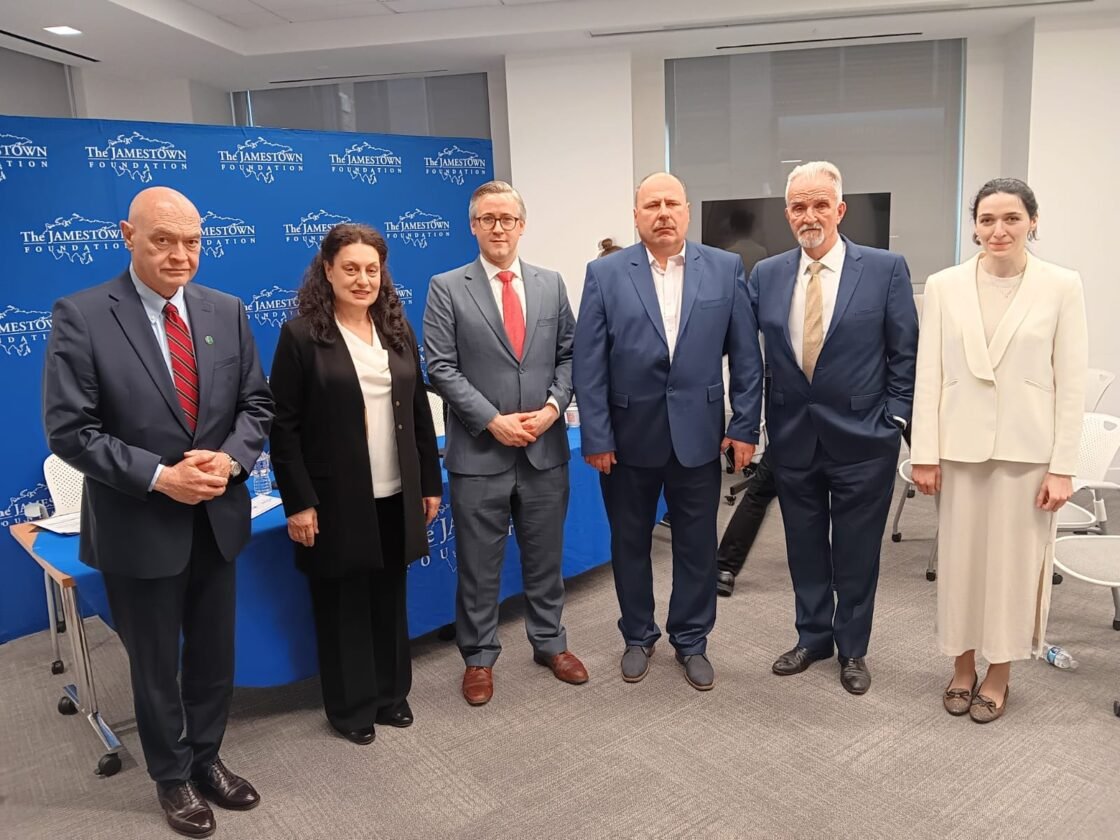
On 16 April 2024, the 10th Forum of Free Nations of Post-Russia was held in Washington on the topic: “The collapse of Russia and the politics of the West.” Forum participants called on the USA and its allies to support Ukraine in its struggle against the “Russian genocidal war” until the complete victory of Ukraine and the de-occupation of all Ukrainian territories.
At the end of the Forum, the “Washington Declaration” was adopted, in which representatives of the enslaved nations who live on the territory of Russia and consider their lands “occupied by the Kremlin” emphasized that only a complete victory of Ukraine would be able to bring freedom to all enslaved nations. “Therefore, all forms of assistance – military, financial, diplomatic, informational and material – should be provided to Ukraine in the struggle for international law, peace and freedom, not only in full but also without delays and interruptions caused by bureaucratic procedures, which directly contribute to the continuation of Moscow’s militarism and imperial expansion “, says the adopted Declaration.
Although more than half a century has passed between the adopted documents and they reflect the challenges of their eras, the announced Declarations have a lot in common, because, globally, neither the challenges nor the enemy have changed – Moscow imperialism, which has only changed the Bolshevik camouflage to z- racist
The collapse of the Bolshevik “prison of nations” in 1991 brought independence to Ukrainians, Lithuanians, Estonians, Armenians, Georgians, Azerbaijanis, and Kazakhs, but left more than a hundred freedom-loving nations under the Kremlin’s oppression. Today, representatives of these nations look to Ukraine and its allies as a reliable support in the struggle for freedom. As far back as 1946, the creators and leaders of the ABN meaningfully projected this special role of Ukraine, outlining in the Munich Declaration the framework of the future block of free nations, which would act according to the model of the modern European Union, one of the key founders of which should be a free Ukraine, being a guarantor of equality and justice and security.
Another important Ukrainian factor was determined by the experience of the national liberation struggle of the Ukrainian people led by the OUN and UPA. This experience remains relevant eight decades later because the participants of the Forum in Washington actively discussed the issue of liberating their nations from Russian colonial rule. They believe various methods are suitable for achieving this goal – from peaceful protests to armed struggle. The leaders of the liberation movements of enslaved nations called on all supporters of freedom and independence to establish the closest possible ties with each other, to create public unions and organizations, as well as partisan associations, to liberate from the rule of the Moscow empire such territories as Bashkortostan, Sakha (Yakutia), Ingria (Leningrad region), Cherkessia, Chuvashia, Oirat-Kalmykia, Siberia, Buryatia, Karelia, Ingushetia, Kuban, Altai, Pskov, Tuva, Pomorie, Don and others.
In the Declaration of the 1st Congress of the ABN, it was emphasized that “the ABN considers the revolutionary political organizations of the enslaved nations and the revolutionary insurgent armies of these nations to be a factor of political and military power and the vanguard of the liberation revolution of these nations.” Today, the core of these liberation armed forces is being formed precisely in the composition of the Ukrainian army: the battalion named after Dzhokhar Dudayev, the battalion named after Sheikh Mansur, the regiment named after Kastusya Kalinovskyi, and the Siberian Battalion. All these military units are the prototypes of future rebel armies of Chechens, Ingush, Belarusians, Yakuts, Buryats, etc.
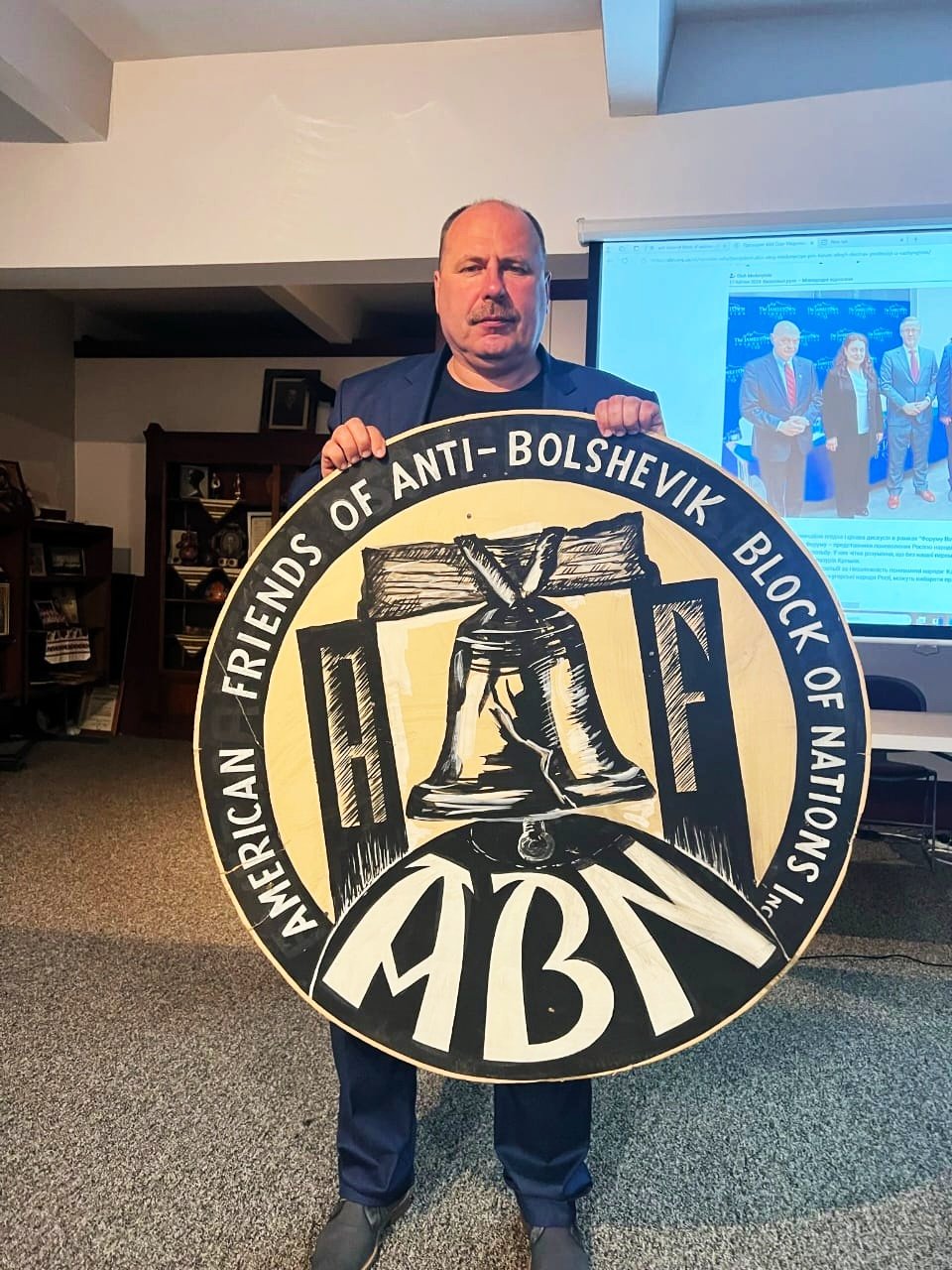
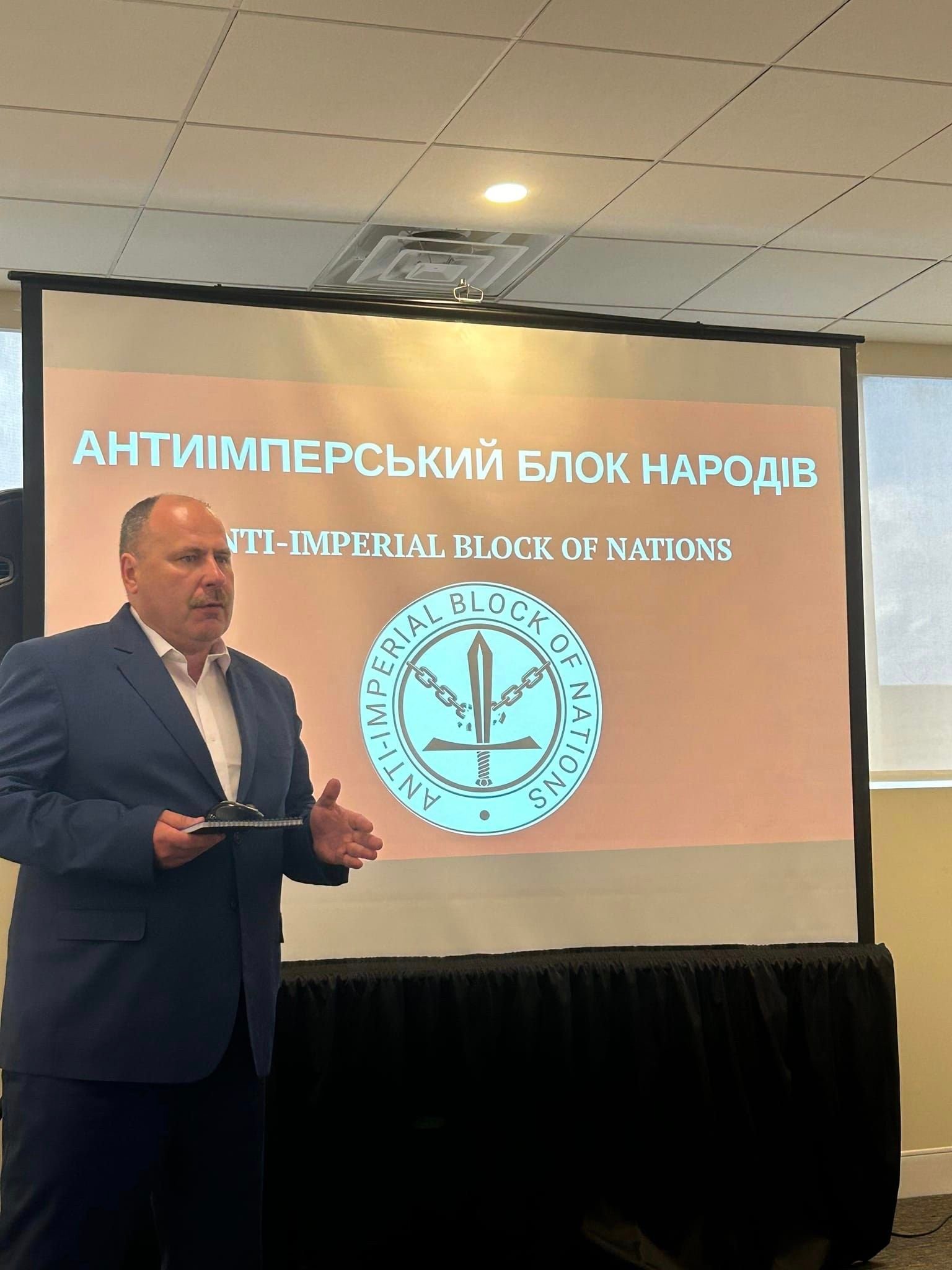
It is symbolic that the leading figures of the ABN, which in 2023 resumed its activities in the format of the Anti-Imperial Block of Nations, became participants in the 10th Post-Soviet Free Nations Forum in Washington. In particular, the Forum was visited by the head of the Organization of Ukrainian Nationalists (Banderites) and the President of ABN, Oleh Medunytsya, who at the time was on a working visit to America, the main part of which included building an anti-imperialist front.
It was very important, at the current stage of the struggle, not only to establish horizontal communications between the participants of the anti-Kremlin movement but also to compare their plans with the guidelines of their predecessors. It can be stated that the final documents of both conferences from 16 April: in Munich in 1946 and in Washington in 2024 were created on the same basis, and the principle “Freedom to nations! Freedom for man” remains decisive on the way to the final liquidation of the “Empire of Evil”.