

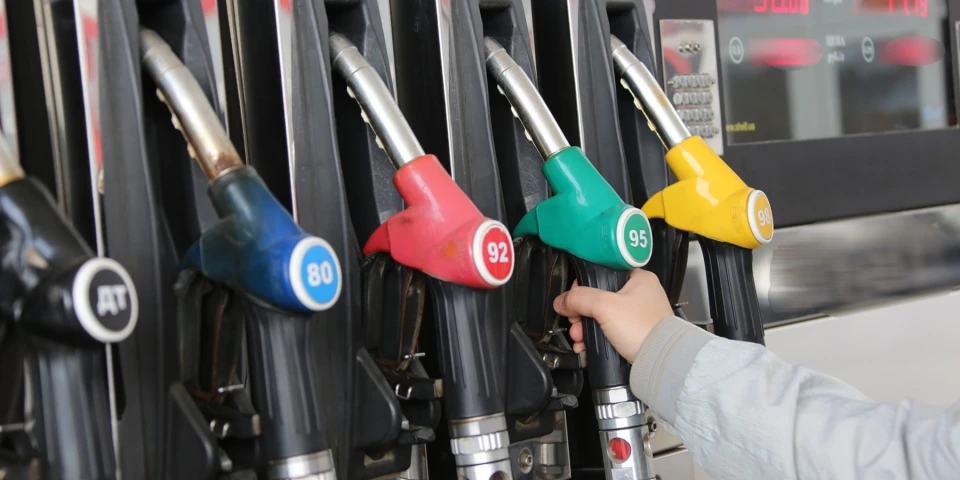
From 1 March 2024, Russia banned the export of gasoline. Although the government emphasizes that this is a temporary measure for six months, it seems that Russia’s oil refining industry is entering a deep peak. In 2023 Russia already had to resort to similar measures, banning fuel export from September 2023. At that time, such measures were explained by “saturating the domestic market with fuel and reducing prices”, and the reason was given as “scheduled repairs” at Russian oil refineries. The ban on the export of gasoline was adopted after a two-week continuous increase in stock exchange quotations of gasoline and diesel fuel.
But the real cause of the fuel crisis, which is just unfolding, is the planned work of the Ukrainian defence forces on Russian oil depots and oil refineries.
Over the past six months, almost 20 oil depots and oil refineries have caught fire as a result of unmanned aircraft strikes in Russia and the occupied territories.
In October-December 2023, the defence forces of Ukraine purposefully destroyed oil depots in the occupied territories: the base in Feodosia was struck twice, and the bases in Donetsk, Luhansk and Makiivka were hit. As a result of the attacks, the logistical capabilities of the Russian Federation to supply the occupying forces were seriously complicated and limited.
Last fall, oil depots in the cities of Oryol and Sochi on the territory of Russia and the Afipsky oil refinery were also seriously damaged. At the end of the year, as a result of the strike, a fire damaged the Rosneft oil depot in Voronezh.
Since the beginning of 2024, the depth of strikes of the Ukrainian defence forces has increased significantly. Nine oil depots and refineries on the territory of Russia were attacked and damaged.
In January, the Orelnefteproduct oil depot was attacked. On 18 January Ukrainian drones, having covered more than a thousand kilometres, attacked the St. Petersburg oil terminal – the largest Russian oil product transshipment terminal in the Baltic region.
On 19 January, the oil depot in Klintsi was damaged. 21 January – the gas condensate processing plant in Ust-Luga port. On 25 January – the Rosneft oil refinery in Tuapse was attacked. The plant, which focused on motor oil and diesel fuel production, was stopped at least until spring.
On 29 January, one of Russia’s largest oil refineries in Yaroslavl – “Slavneft” – was attacked.
On 3 February, as a result of a drone attack, the Lukoil refinery in Volgograd was damaged, which led to a halt in the production cycle.
On 9 February, two oil refineries in the Krasnodar region were attacked at once – Ilsky and again Afipsky.
The Russians already felt the results of the attacks at the beginning of February. In January, oil refining decreased by 4% and fell to a minimum in recent months.
Therefore, even before the introduction of the embargo in January 2024, the export of gasoline abroad decreased by 37%, and diesel fuel (the largest item of petroleum product export) by a quarter.
Although Russia boldly reports that, on the contrary, it has increased supplies of petroleum products to the domestic market and formed the necessary reserves, large fuel chains, such as Lukoil, have already faced the problem of providing gasoline. Lukoil’s deficit is only officially 700-800 thousand tons. Moreover, the problem will worsen in the event of a delay in the repair of the catalytic cracking unit in Kstov. Currently, Lukoil is trying to solve the problem by supplying gasoline from oil refineries of third-party companies. But for this, they need to increase the production of gasoline, which is practically impossible under the sanctions. Another serious problem is logistics. The lion’s share of the supply of oil products is carried out by the railway, which is significantly overloaded with the logistics of military equipment.
This provoked the growth of exchange prices, restrictions, and later – the closure of imports. Only in the first half of February, the price of A-92 and A-95 gasoline increased by 7.2% and 8.45%, respectively. This has already hit the pockets of the Russians painfully. The government responded traditionally by opening criminal cases against fuel companies. But there was no more gasoline as a result.
However, the Russians’ problems will only grow. Damaged oil refineries are unlikely to be repaired in time. Sanctions on key products and technologies for the industry and software will lead to the degradation of oil refining, and therefore to the growth of the deficit. It is unlikely to solve the shortage problem by supplying from other plants from the depths of Russia, due to the aforementioned logistical problems. Russians have to get used to long periods of fuel shortages at gas stations, huge queues, and speculative prices.
But the main problems are further. So far, the government has not banned the export of diesel fuel, because it is the largest source of income for oil refining enterprises, but the approaching crop will certainly provoke a crisis in the diesel fuel market and the need to significantly limit or stop exports.
Further, in addition to ordinary people and oligarchs – owners of oil refining companies, the consequences will be felt by the army and the state. Although the export of crude oil, even with a large discount, continues to bring Russia tens of billions of dollars for the war (only India, which increased its oil purchases more than 13 times compared to the pre-war situation, brought more than 37 billion dollars for the war), neither dollars nor crude oil will enable you to refuel tanks or planes. However, parallel sanctions are beginning to be signalled this year. Oil exports are falling and this process will increase. Obtaining real funds in convertible currency is also a problem. A reduction in oil exports and the inability to increase its processing within the country will lead to a decrease and degradation of production. It is practically impossible to restore this in the absence of access to technology. The degradation of the oil and gas industry will mean the collapse of the Russian economy and a sharp drop in the standard of living. The war already takes almost half of the state budget. Falling access to oil and gas dollars will mean the ruin and collapse of Russia.
Ukraine, it seems, has found a needle in the egg of the Russian Kashchei and is methodically giving a master class in asymmetric warfare…







