The tentacles of Russian imperialism are emerging in the most unexpected places, especially near churches. In recent years, the media has been actively circulating information about the celebration of the Three Thanksgiving Celebrations in August.
Yes, on 6 August in Ukraine, the OCU and the UGCC celebrate the Transfiguration of the Lord, but some also call it the Apple Thanksgiving, and they also claim that the Honey Thanksgiving is celebrated on 1 August, and the Walnut Thanksgiving on 19 August.
I dug into ethnographic literature and was surprised: 19th-century scholars didn’t know anything about such holidays – they wrote about the holiday of the Maccabees (1 August) – the church honours the holy martyrs of the Maccabees, the holiday of Thanksgiving – 6 August, and no Nutcracker!!!
Where did all these Thanksgivings come from?
As for the Thanksgiving on 1 August, it came to us from Zalissy — the future Muscovy. On 1 August 1164, the future blasphemer of Kyiv and the thief of the Vyshgorod icon, which in Muscovy turned into the Vladimir icon, Prince Andrei Bogolyubsky, during a plundering campaign, defeated in battle the army of neighbouring Volga Bulgaria — the ancestors of modern Chuvashs and Kazan Tatars, whose leadership was Muslim.
By creating a new state, the Principality of Vladimir, from which Muscovy would emerge, he was also creating a new ideology that required new victories. The defeat of the Bulgars fit perfectly into this framework. However, it was by no means a decisive victory; 50 years later, the Bulgars attacked and burned Veliky Ustyug, forcing the future Muscovites to make peace on their own terms.
The holiday became part of the Russian Church feast days, and Prince Andrei, a cruel tyrant of that time, became a saint of the Russian Orthodox Church!
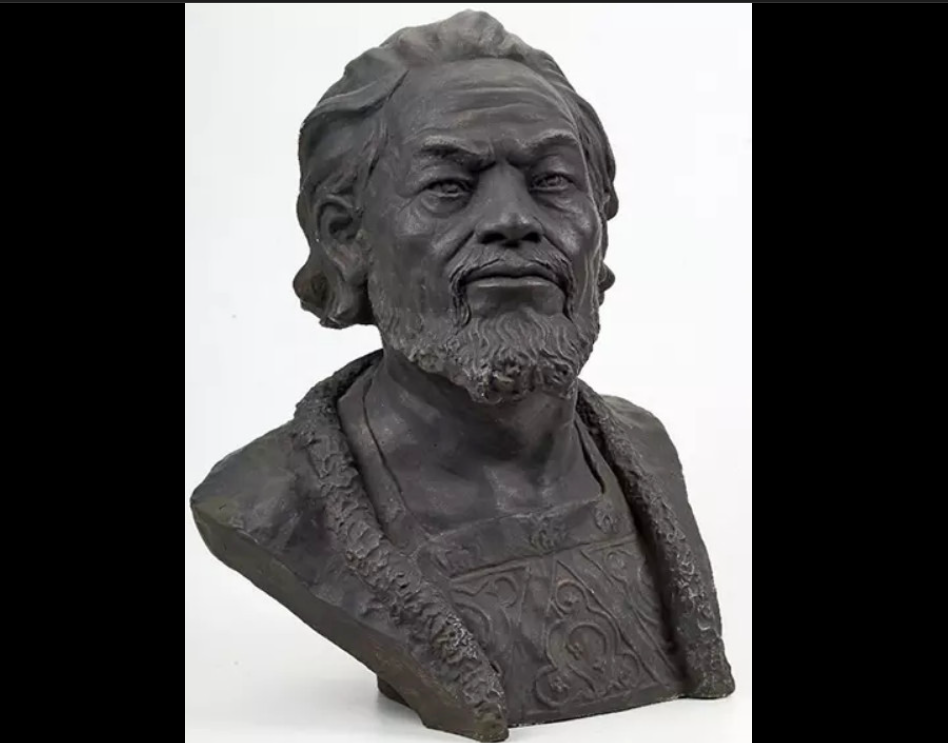
Below is a reconstruction of his face made by Academician Gerasimov.
Valentina Borysenko, a famous ethnographer, writes the following about the Thanksgivings: “In the 1990s, having familiarised themselves with ethnographic literature, without reading what was described in it, amateurs of ethnography came up with several Thanksgivings — nut, apple, honey. But this is from the category of fantasies. The people had one Thanksgiving — 6 August. Only very locally, sometimes the feast of Makovia on 1 August was called the small Thanksgiving.” Celebrating the “nut Thanksgiving, “Thanksgiving on a canvas”, “bread Thanksgiving” (16 August) with various rituals is a Russian, not a Ukrainian tradition. Neither V. Skuratovsky nor O. Voropai mention any Ukrainian rituals on this day, only the name “after the feast of the Assumption”.
Oleksandr Yasenchuk
Facebook