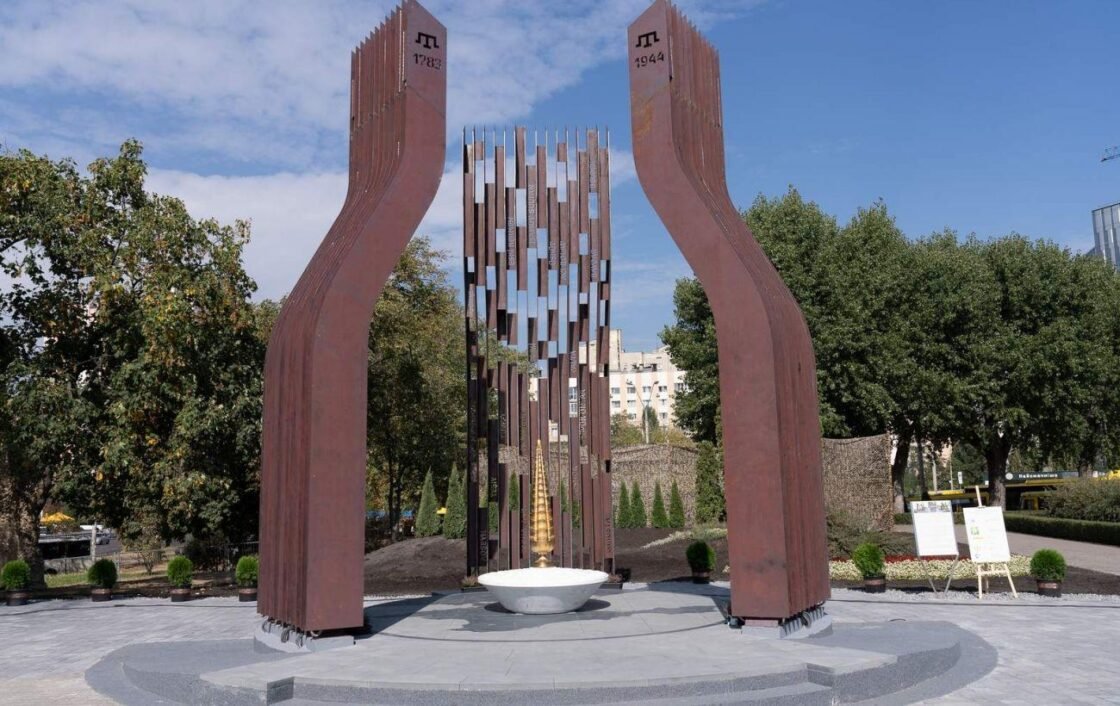
Every year on May 21, the Adyghe-Abkhaz peoples celebrate the day of memory and mourning for the victims of the Caucasian War. During the hostilities, the Russian army destroyed the Adyghe villages, burned crops and drove away livestock in order to force the highlanders to leave their native land and go to the plain. More than 90% of the population of the Caucasian region of Kabarda were killed. In addition, the tsarist government in 1864 began a forced deportation to the Ottoman Empire – 600 thousand Circassians became Muhajirs, that is, forced migrants. Many of them died from starvation, typhoid and malaria, and 200 thousand in Turkey were sold into slavery.
In an article about how Russia seized the North Caucasian coast and destroyed the Adyghe nationalities, Doctor of Historical Sciences Dmitry Levchik tells how the colonialists managed to defeat Imam Shamil, who controlled all of Chechnya and Dagestan, why Europe never recognized the independent state of the Shapsugs, Ubykhs and Abadzekhs, and also how Russia’s strategic mistake led to the tragedy of Muhajirism and the genocide of the peoples of the North Caucasus.
The second “cleansing” of the North Caucasus. Defeat of the Murids and Shamil
In 1838, on the eve of the third Russian campaign to India through Herat, the Russian government took care of rear army communications and decided to finally “pacify”, “cleanse” the North Caucasus, where the first sprouts of Muridism and the movement under the leadership of Imam Shamil were noticed.
Shamil was born in 1798 in the Avar village of Gimry (now the Untsukulsky district of Dagestan). Graduated from the madrasahin the village of Untsukul, then studied with various teachers. He knew five languages, fenced well, wrote poetry. Under the influence of his teachers, Shamil became a supporter of the Murid movement, an Islamic radical egalitarian, anti-slavery, anti-colonial, cosmopolitan movement of the 19th century, which came to the Caucasus from Central Asia and was adapted to the Caucasian realities by Mohammed Yaragi, a sheikh of one of the Sufi semi-mystical orders. The murids’ calls for social justice, the abolition of slavery for Muslims, modesty, observance of Sharia law, the fight against colonialists in the form of ghazavat, holy war, the supremacy of the power of religious authorities as opposed to the power of tribal leaders, the supranational nature of the agitation of the murids – all this attracted Muslims to muridism. Perhaps, in some ways, Muridism is similar to the modern Taliban movement.
The first imam of Chechnya and Dagestan, a supporter of the Murids, was Gazi-Mukhammed, a fellow villager and, possibly, a relative of Shamil. He tried to form a detachment to resist the Russian colonialists, in 1828 he declared gazavat Russian and was defeated by General Alexei Velyaminov in the battle near the village of Gimry in 1832. Shamil participated in this battle and with difficulty left the Cossacks pursuing him. The baton of Muridism was taken over by the imam of Chechnya and Dagestan Gamzat-bek. In 1834, he also declared a gazavat to the Russians and captured the Avar Khanate (now the Khunzakh region of Dagestan), where he was defeated in the same year by Russian troops.
After the death of Gamzat-bek, Shamil, who had gained religious authority by that time, became the imam of Dagestan. He supported the idea of a gazavat and in 1834 defeated a Russian detachment near the village of Gimry. However, Shamil was not as straightforward as his predecessors. Along with knowledge of Islam, he had a subtle instinct for a commander, and therefore did not hold a tactically uncomfortable position, but retreated to the mountains, making the village of Ashilta (now the Untsukulsky district of Dagestan) his residence, and began to look for allies among the religious Chechen leaders, and also to call for gazavatu adjacent Dagestan regions. His appeals contributed to the Cuban uprising in 1837-1839.
Then the Russian authorities saw the danger from Shamil, and Russian troops in 1837 stormed Ashilta. In 1838, Shamil retreated to the village of Akhulgo (now the Untsukulsky district of Dagestan), and with the approach of Russian troops in 1840, he retreated to the village of Dargo (on the border of Chechnya and Dagestan). It might seem that he chose the passive tactics of retreat and “sitting out” in the auls-fortresses, reminiscent of the passive tactics of the Dolcino uprising in Italy or the early tactics of Yemelyan Pugachev, but this could only seem.
Shamil knew long before Lenin and Trotsky that defense was the death of an uprising, and therefore, as soon as he was elected Imam of Chechnya and the most authoritative Chechen leaders went over to his side, Shamil launched an offensive.
In 1840, with a sudden quick blow to the north, Shamil defeated Russian troops near Alkhan-Yurt (now the Urus-Martan region), then struck to the east and defeated the Russian troops near Ishkarty (now the Buynaksky region of Dagestan), and also raided Salatavia in Dagestan . Russian troops defeated Shamil near Gimry, but this did not discourage him, and he struck at Mozdok. As a result of the 1840 campaign, Shamil began to control all of Chechnya and part of Dagestan.
The success of Shamil in 1840 was facilitated by the weak logistics of the Russian army, the constant conflicts between Russia and the Circassians (Shapsugs and Adygs), the uprising of the Avars, the failures of the Khiva and Herat campaigns of the Russian army and the need for the tsarist administration to divert attention to suppressing the uprising of Kenesary Kasymov in the Kazakh steppes.
The years 1841-1846 are, in my opinion, Shamil’s greatest successes. He defeats Russian troops near Tselmes (now the Khunzakh region of Dagestan) and in the Ichkerinsky forest (now the Nozhai-Yurt region of Chechnya). Shamil’s army comes very close to Makhachkala and controls Shamkhal and Akushi-Dargo. In 1845, Shamil was raiding Kabarda.
However, since 1847, Shamil began to fail. Neither the Kabardians nor the Ingush seriously supported him. The villages and settlements along the Makhachkala-Enderey highway also did not fully support Shamil. In these areas, the collaborationism of the local nobility, the memory of the repressions of the end of the 18th century, feudal relations and the slave trade were stronger than the Murid calls to fight against the infidels, the power of the imam and the equality of Muslims.
In 1847, the village of Salta (now the Gunibsky district of Dagestan) was taken by Russian troops, in 1848 – Akhty (now the Akhtynsky district of Dagestan). Shamil was pushed out of most of Dagestan into Chechnya. Since 1850, Vedeno has become its capital. Disagreements begin in his camp. Some Avar field commanders leave him.
During the years of the Crimean War, Shamil’s troops tried to interact with the troops of the anti-Russian coalition, they attacked Kakheti in 1854, but unsuccessfully. After the signing of the Paris Peace, Russia floods Chechnya with its troops. Russian troops in 1858 storm Akush, one of the last strongholds of Shamil in Dagestan, and in 1859 – Vedeno in Chechnya. Shamil retreats to the village of Gunib in Dagestan, where, after a short battle, he is forced to capitulate to the troops of Field Marshal Alexander Baryatinsky.
Shamil, as an honorary prisoner, is sent into exile in Kaluga, where in 1866 he was forced to swear allegiance to the Russian Tsar, whom he met personally twice. In 1869, he was released for the Hajj , where he died in 1870.
Before the complete conquest of the Caucasus, Russia only had to suppress the Circassians (Shapsugs and Adygs), as well as defeat the Dagestan Islamic radicals during the “second gazavat of 1877”.
Capture of the North Caucasian coast
The North Caucasian coast is a special natural-climatic, political and historical region. Its features are determined not only by the specific climate of Pontus Euxinus, hospitable sea, but also the highlands of the Caucasus, which came close to the coast. He pushed deep gorges, steep mountain slopes and stormy rivers to the sea. The upper reaches of these rivers rests on impassable rocks, in the middle reaches they are fast and impassable, and in the lower reaches they have turned into malarial swamps over the centuries. Climatically, these are the northernmost subtropics. On the wooded slopes of the coastal mountains, in conditions of land scarcity, rapid depletion of soils and pastures, separated by rivers and gorges, and therefore almost without contact with each other, mainly “face” to the sea and coastal swamps at the beginning of the 19th century, ethnic groups of Natukhai, Shapsugs lived , Ubykhs, Abazins, Abadzekhs, Bzhedugs, Kabardians, Adamis, Khatukays, Temergois, Mamkhegians, Yegerukans, Makhoshis, Beslanians, Sadzes, Akhchipsuits, Aibchoverians, Tsvidzheevs, Pskhuvtsevs, Gumtsevs,
The Russians did not really go into the differences between them, but simply considered those of them who professed Islam to be Circassians, and Christianity to be Abkhazians.
They were engaged in mountain-valley agriculture and cattle breeding, did not disdain cattle rustling, piracy and the slave trade. They did not have a developed statehood, trade and money relations were weak. They did not see any benefit from subjugation to the Ottoman or Russian empires, and therefore resisted both and were independent. At the same time, they clashed with each other more than once.
The logic of Russia’s wars with Turkey and Persia, the logic of the realization of the utopian idea of capturing India led tsarism to a war for the annexation of these territories as well. Tactically, Russian strategists first decided to take the region “in pincers.”
In 1804, the tsarist army, moving from Georgia, captured Redut-Kale (now the city of Poti) and in 1812 recaptured Shekvitish from the Turks, where Fort St. Nicholas was founded. These two fortresses enabled the army of Alexander I to move to the North Caucasian coast from the south and cut off the highlanders from the land coastal route linking the region with Turkey. These territories were recognized by the Ottoman Empire as Russian by the Treaty of Bucharest in 1812.
In 1828, during the next Russian-Turkish war, Russia occupied Anapa, the largest center of the slave trade in the region. The occupation of Anapa by Russia was recognized by the Turks as the Treaty of Adrianople in 1829. From here it was already possible to attack the North Caucasian coast from the north, which the generals of Nicholas I immediately took advantage of. The Turks left the coast of the eastern Black Sea, and in 1830 the troops of the Russian tsar occupied Gagra, Sukhum, Pitsunda. Everywhere in these settlements new fortresses were built, arsenals were built and garrisons were set up, consisting mainly of the Black Sea Cossacks, the basis of which were the Cossacks. The owners of these places did not like the uninvited guests, and already in 1830 the Gagr fortress was attacked by detachments of Ubykhs and Sadzes. The attack was unsuccessful.
Further, the troops of Emperor Nicholas continued to move along the coast from north to south, capturing “free” territories and building fortresses of the so-called Black Sea line on them. The army was supported by the Black Sea Fleet, and therefore land coastal attacks on the highlanders were combined with landings. In 1831 Gelendzhik was occupied by the Russian army.
The successful advancement of Russia was facilitated by the conclusion between the empire and the Turkish Sultan of the Unkar-Iskelesi Treaty, which placed Turkey in a dependent position, in fact, in the position of a protectorate. And, not seeing an obstacle in the face of the Ottomans, the troops of Tsar Nicholas I in 1834 occupied Abinskoye, and in 1836 founded the fortress of Alexandria (Kabardinka).
The strengthening of Russia on the Caucasian coast of the Black Sea in those years was not part of the plans of Great Britain, and in 1836 an attempt was made to supply the highlanders’ militia with modern English artillery, guns and gunpowder.
The attempt was thwarted by the Russian border service and customs. The British ship Vincennes, which was carrying weapons, was arrested. And the attempt of a number of British parliamentarians to raise the issue of recognizing Circassia was brought to naught by the efforts of Russian diplomacy in England.
In 1837, the Russians built the Novotroitskoye (Krinitsa) and Mikhailovskoye (Arkhipo-Osipovka) fortresses, as well as the Holy Spirit fortress (Adler). In 1838, the Russian army advanced to Tuapse (Novomikhaylovskaya and Velyaminovskaya fortresses), and in 1839 to Sochi (Lazarevskoye, Golovinskoye, Alexandria fortresses).
The pressure of the “new masters” forced the local tribes to unite and in 1840 to conduct a powerful counterattack, capture and defeat the fortresses of Velyaminovskoye, Lazarevskoye and Mikhailovskoye. On the side of the Circassians, “General Malaria” spoke out, who inflicted huge sanitary losses on the Russian army in the region, for example, in 1842, the entire garrison of the Holy Spirit Fortress died of malaria.
Ubykh attacks on the fortress of the Black Sea Line intensified in 1845-1846, when Shamil’s movement was at its peak in Chechnya and Dagestan. The coastal highlanders attacked the Golovinskoye fortress twice. However, in the late 40s and early 50s of the 19th century, the intensity of opposition from the coastal highlanders of the Russian Empire decreased, and at the St. Petersburg court they decided that the “conquest” of the coast was over, but this was a wrong decision.
The situation in the region changed dramatically with the beginning of the Crimean War. In 1853 the Turks invaded Abkhazia. In 1854, all the garrisons of the Black Sea fortress line were evacuated to the Crimea, where they took part in the defense of Sevastopol. After the war, the Peace of Paris was signed. By this document, the Black Sea coast was recognized as a demilitarized zone, and Russia was deprived of the right to have arsenals in the Black Sea fortresses and deploy regular military units there. Only police, customs and quarantine services remained on the coast of the North Caucasus.
Russia’s gigantic half-century effort to seize the eastern Black Sea region has gone to waste.
Russia had no troops, heavy weapons, ammunition, or navy in the region. Fortresses without an army and cannons became useless. True, legally the Black Sea coast of the North Caucasus remained Russian.
The third “cleansing” of the North Caucasus. The tragedy of muhajirism
Russia did not want to comply with the terms of the Peace of Paris, but it could not openly violate them until 1871 either. Russia realized that its miscalculation in the Crimean War was the absence of allies in the West and active external expansion. And therefore, immediately after the signing of the Paris Peace, she is trying to prove that from now on Russia is the best friend of England and she does not need anything else. It supports the English policy of plundering China in everything, joins the opium wars, imposes the unequal Aigun Treaty on the Celestial Empire . Russia stops its expansion in the Far East, signs the Shimoda Treaty with Japan, gives it the islands of Kunashir, Iturup, Shikotan and the Habomai ridge. Russia is not active in Europe. In Central Asia, it is limited to a border war with Kokand for a couple of fortresses.
But the main thing is that Russia wants to quietly crush the “internal enemy” represented by the independent peoples of the Caucasus. It throws all the forces released after the Crimean War first into Chechnya and Dagestan, where it crushes Shamil’s movement, and then into the North Caucasus. The Labinsk border line is being strengthened, limiting the highlanders in the north of their territories, and the displacement and resettlement of the Temirgoys and Beslanians from the mountains to the plains begins.
By 1860, an agreement was reached with the Ottoman Empire that the latter would be ready to accept new “Muhajirs”, Caucasian settlers from Russia. In Turkey, the Sultan creates a resettlement committee.
At the same time, neither Shapsugs, nor Abadzekhs, nor Ubykhs, nor other nationalities are eager to move. They are in the process of state building by leaps and bounds. The three listed ethnic groups in the same 1860 create a common representative body of self-government, the Majlis, the “Great and Free Meeting”, and send its representatives to Europe with a request to recognize the new state formation. However, Russian diplomacy experiencedly counteracts, and the Europeans remain deaf to the voice of the inhabitants of the North Caucasus.
And the Russian Tsar Alexander II understands that it is impossible to delay. It is necessary to solve the “Circassian issue”. On May 10, 1862, the Caucasian Committee (an advisory body under the tsar on the management of the Caucasus) decides “On the resettlement of the highlanders.” A special body is also being created – the Commission on the case of the resettlement of highlanders to Turkey. By 1863, the Russian army of many thousands under the command of Major General Nikolai Evdokimov took control of the territory of the Pshada river basin (the eastern territories of the highlanders), and by 1864, using a gigantic numerical and technical superiority, took control of the entire territory of the North Caucasian peoples. Most of the Circassians are first resettled from the high mountain villages to the plains. And on February 1, 1864, the eviction of the mountain peoples of the North Caucasus to Turkey began. The army rounds up people on the Black Sea coast. They lie about the conditions of moving and maintenance. They lie about the comfort of Turkish ships. Highlanders during the resettlement die from malaria, starvation, typhus. This action is presented to the world community by the Russian media and authorities as a voluntary desire of the highlanders to move to Turkey.
How many people were driven from their homes? It is not known exactly. The highlanders did not keep statistics, and it is difficult to rely on Russian data. According to various estimates, almost three-quarters of the Natukhai, almost all the Shapsugs and Ubykhs, half of the Bzhedugs and Abadzekhs, a third of the Kabardians, as well as almost all of the Abkhaz peoples I listed at the beginning of the article, became Mukhajirs. That is, both Muslims and Orthodox were evicted. Foreign sources speak of a population of at least 600,000 people. There is evidence that at least 200 thousand upon arrival in Turkey were sold into slavery. How many died is unknown. Clearly, a lot. Many representatives of these ethnic groups who remained in Russia were deprived of their rights. The “free” lands were settled first by the Cossacks, and then by the inhabitants of the European part of Russia. Assessing this action of the tsarist regime, I am ready to repeat the famous phrase of the Napoleonic Minister of Justice Antoine de la Meurthe: “This is worse than a crime. This is mistake”.
Dmitriy Levchik
Дискурс