

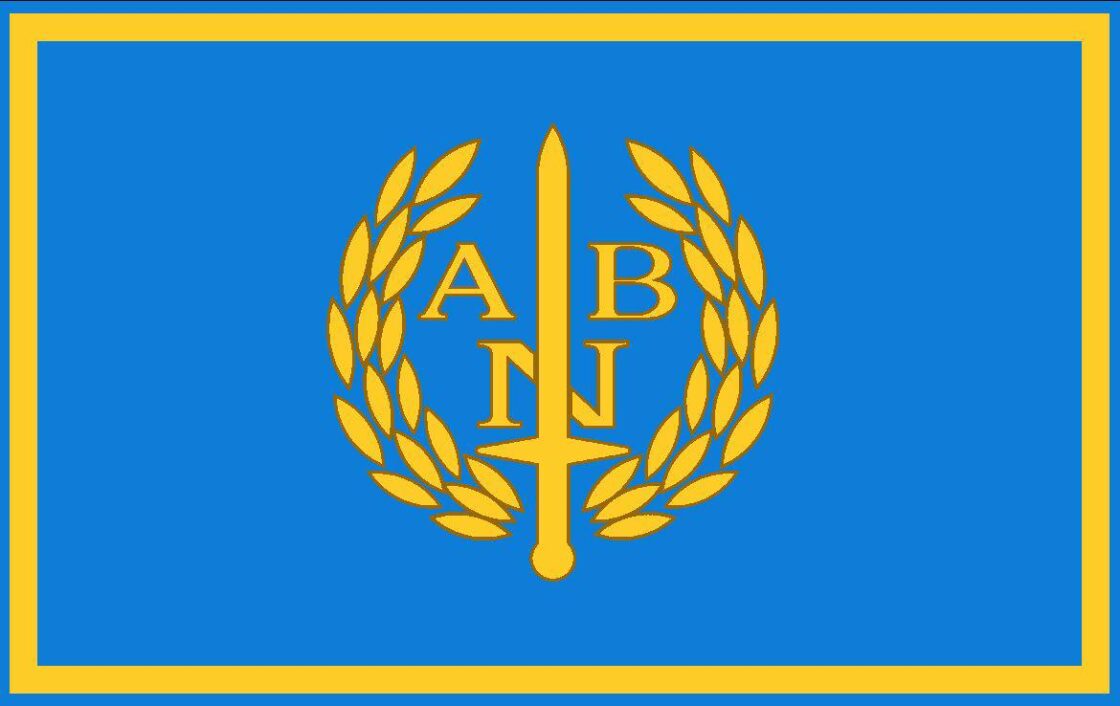
80 years ago, on 16 April 1946, in one of the districts of post-war Munich, at the initiative of members of the Bandera wing of the OUN, the First Congress of the Anti-Bolshevik Bloc of Nations was held, an organisation that united representatives of the Eastern European and Central Asian nations in emigration who fell into the Soviet sphere of influence after the end of World War II.
“ABN is an association of freedom-loving nations for a joint fight against Bolshevism. Its geopolitical reach is all of sub-Bolshevik Europe and Asia. Finns, Estonians, Latvians, Lithuanians, Belarusians, Poles, Slovaks, Czechs, Magyars, Serbs, Croats, Slovenes, Albanians, Bulgarians, Romanians, Ukrainians, Cossacks of the Don and other Cossack lands, Kalmyks, North Caucasian nations, Georgians, Armenians, Azerbaijanis, Turkestans (Turkmens, Uzbeks, Tajiks, Kazakhs, Kyrgyz, Karakalpaks), nationalities of the so-called RSFSR, Tatars, Bashkirs, Mongolians and other nationalities of Siberia and the Far East, for all of them in ABN there is one main thing: the fight against Bolshevism!” It was noted in the Declaration of ABN, adopted at the 1946 Congress.
At the same time, the main postulates of the joint anti-communist struggle of the enslaved nations for democracy, sovereignty and equality, the liberation of people, the return to their ethnographic lands, the free choice of forms of state and political systems, free spiritual and cultural development, and the liberation of man from pressure and terror were clearly established.
The 1946 Congress was held in secretive conditions. Apart from the congress resolutions, declaration and communiqué, there is no detailed information about the composition of the participants, the reports delivered, or specific decisions. The security conditions were not conducive to full transparency of the Congress’ work.
In January 1946, the first part of the journal “Liberal Politics” was published in Prague, which was published until 1949 and introduced readers to the ideas of the joint struggle of enslaved nations. Yaroslav Stetsko published his articles in almost every issue. All of them concerned the programmatic development of the ABN. For example, in the first issue, even before the First Congress of the ABN, Stetsko published an article entitled “Ukraine in the Vanguard of the Revolution of the Nations (Ideas and Ways)”. Stetsko’s text is important because it continues the main idea of the First Conference of the Enslaved Nations of Europe and Asia in 1943, the collapse of the USSR through national revolutions. In early 1946, Stetsko wrote: “The Great Revolution of the Nations is coming – national-political, social and cultural under the main slogans: For the freedom of the nations; for the freedom of the individual. “This revolution,” Stetsko continued, “will radically change the current political map of the world. At the centre of this revolution, as its ideological and political leadership and carrier of new social and cultural ideas, stands Ukraine.”
In another article published in “Liberal Politics” after the First Congress of the ABN, Stetsko emphasises the comprehensive ideological nature of the bloc, which seeks to involve as many representatives of the enslaved nations as possible in a joint struggle, not limited to representatives of those nations who should be engaged in the implementation of national revolutions. “The ABN encompasses not only the revolutionary anti-Bolsheviks (although primarily them), but in general all the patriotic independence forces of the enslaved or threatened by Bolshevism peoples who seek the overthrow of Bolshevism and Russia and the construction of a new order, the basis of which will be the idea of self-determination of nations and the idea of social justice…”.
In the above quotes and facts from the First Congress of the ABN in 1946, three key positions can be identified.
The first is a combination of nationalism and internationalism. Representatives of the Ukrainian nationalist movement demonstrated the ability for international cooperation – coordination of actions with representatives of other nations to achieve a common goal. This goal was the collapse of the USSR into national states and the overthrow of communist regimes in satellite countries. It united the participants of the ABN throughout the Cold War. The ideological basis of this course was anti-Bolshevism – a form of anti-communism that focused primarily on the disintegration of the Soviet Union.
To achieve this goal, the ABN actively developed international contacts and adapted its activities to the changing geopolitical situation. While in 1946-1950 significant hopes were placed on the possibility of a new war, from the mid-1950s the organisation integrated into the global anti-communist network. During the period of détente, it focused on creating a European network of support among political elites and on highlighting human rights violations in the USSR.
The second is reliance on its own resources. The ABN was one of the few anti-communist organisations that functioned continuously throughout the Cold War. Unlike other structures that ceased operations or changed focus in the late 1980s and early 1990s, the ABN maintained its organisational stability. Its activities were financed mainly by contributions from the Ukrainian diaspora. In particular, the ABN mission in Taiwan was supported by the OUN Central Committee in Great Britain, Canada, and partly Australia. To ensure its work, regular fundraisers were held and specialised literature was published.
The third is the anti-imperial nature of its activities. Along with anti-communism, a key element of the ABN ideology was the interpretation of the USSR as a new Russian imperial project. This position was formed even before the organisation was created and was consistently defended throughout the Cold War. The spread of this idea took place through publications, public actions, international contacts and correspondence with anti-communist organisations. Particular attention was paid to criticism of Russian émigré circles, which proposed the restoration of the empire in a renewed form.
It was this anti-imperial approach that ensured the continuity of the ABN’s activities after the end of the Cold War. In the 1990s, the organisation, led by Slava Stetsko, focused on countering the resurgence of Russian influence.
Today, this idea takes on a new meaning: representatives of the indigenous people of Russia fight in the ranks of the Armed Forces of Ukraine, and national movements advocating for the independence of their republics operate in emigration.
In 2023, the bloc resumed its activities in the format of the Anti-Imperial Block of Nations. In April 2026, at the Second Anniversary World Congress of the ABN, it adopted the Munich Declaration, which stated that “A just peace and world order are impossible without the emergence of nation-states on the ruins of the Russian Empire.”
Hrygoriy Riy






