

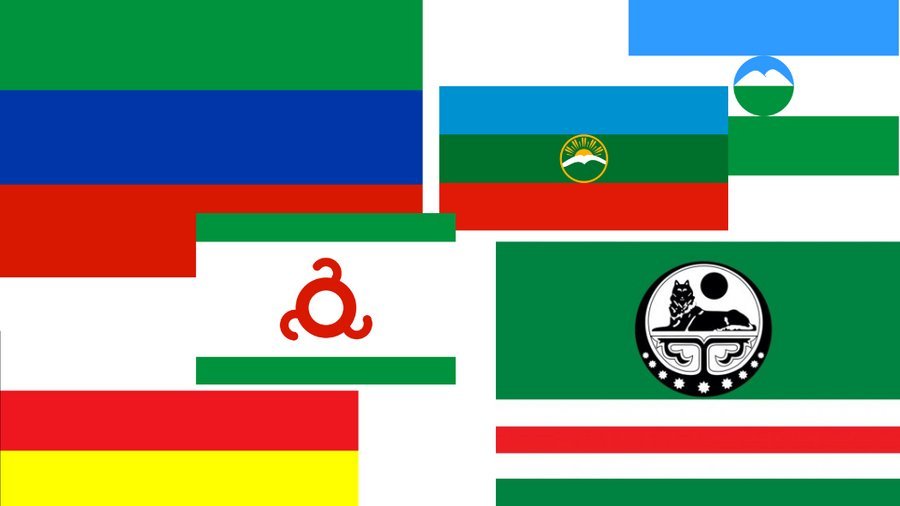
As an ethnic Ichkerian whose parents were killed by Russia during the Second Russo-Chechen War, I see the ongoing war somewhat differently than most Ukrainians do. For me, it all boils down to the process that followed the collapse of the USSR, and the West’s position that gave no chance to conduct this collapse fairly, instead handing over excessive power to the Russian Federation as the new centre of power in the post-Soviet space.
For those who have ever had any relationship with the people living in the territory of the Russian Federation, it has never seemed as simple as the Western media wrote about it at the time. For the independent Ichkeria of the 1990s, having a real ally from among the states of the former USSR or the Western world would have been an indescribable happiness, but the Ichkerians, unfortunately, did not have this ally. Ukrainian patriots helped Ichkeria as best they could. There were friends from other countries, but no government at that time changed its attitude towards the Russian Federation for the bloody massacre unleashed in Ichkeria by federal troops. The Russian authorities exposed my people to the whole world as terrorists and bandits, and this narrative still accompanies the idea of an Ichkerian in the minds of Russians.
The world community simply did not know and did not believe that anything could be done about it. The West believed that these aggressive attacks and chauvinistic scenarios from the Russian media were just a form of voter mobilisation, some alternative mythology, or simply a children’s conflict in the sandbox that could be smoothed out by giving both participants a piece of cake.
After the war against Georgia in 2008, US President Barack Obama even pressed the symbolic button to “reset” relations with the Russian Federation, which lasted until the seizure of Crimea in 2014. Until the full-scale invasion of the Russian Federation in 2022, the position of the Western world regarding the mood of the Russian authorities was a childish attempt to bury its head in the sand and completely fail to see the obvious and natural in the chain of aggressions and wars unleashed by the Russian leadership.
The main reason why the West perceived it this way was the understandable reluctance of the Western consumer and politicians to go into details. The West was afraid of getting an uncontrolled situation in the place of the largest state in the world, which could have happened as a result of the disintegration of the Russian Federation in the 1990s. Now the West has already received this uncontrolled situation in a different form: now it simply does not know what to do next and is waiting for the Russian Federation’s position to change, as the weather changes. We are in this situation because at the previous stage, the understanding that would be necessary for making fundamentally different decisions regarding the Russian Federation and a fundamentally different reaction from the powerful of this world was not formed.
Despite all the difficulties, fatigue, and bloody everyday life that Ukraine’s struggle for its freedom is saturated with, today it is Ukraine that has the support and the chance that neither Georgia nor Ichkeria had. In this context, draft law No. 11402 on the state policy of Ukraine, towards the indigenous nations of Russia, which the Verkhovna Rada of Ukraine will consider in the near future, seems to me to be extremely relevant.
Under this law, Ukraine considers indigenous colonised nations as its allies in the cause of Russia’s collapse and will assist national liberation movements.
This is the first stage of forming the Ukrainian position in the discussion about the future of the Russian Federation in the world. We all understand that the current regime in the Russian Federation is not eternal, and someday it will still fall or enter the stage of transformation. However, the future of our state, all the peoples of the former post-Soviet space and the security of the entire world depend only on how Ukraine and the world prepare for this moment.
We must lay the foundations so that the Russian authoritarian regime cannot be reassembled into a geopolitical monster again after a series of new transformations and a pseudo-democratic stage, as was the case in Russia in the 1990s. In this discussion, Ukraine and the nations of the former post-Soviet space have a special voice. Unlike Western politicians of the past, we have seen the real Russia as it is, up close. No one knows better than us what modern Russia really is, and no one can tell the world about it better than us.
Each of us dreams of victory over the enemy. And it should not be relative, conditional, or temporary, but absolute and irreversible. Irreversible victory is not only achieved by the heroism of the military, but also by a policy that looks to the future and prepares others for a possible development of events. Whatever the situation on the battlefield and the results of this war, we need a long-term and serious conversation with the world about the future of the Russian Federation.
Murad “Bankai” Amagov, commander of the Azov unit. Integration of the 12th Special Forces Brigade “Azov” of the National Guard of Ukraine
Українська правда





