

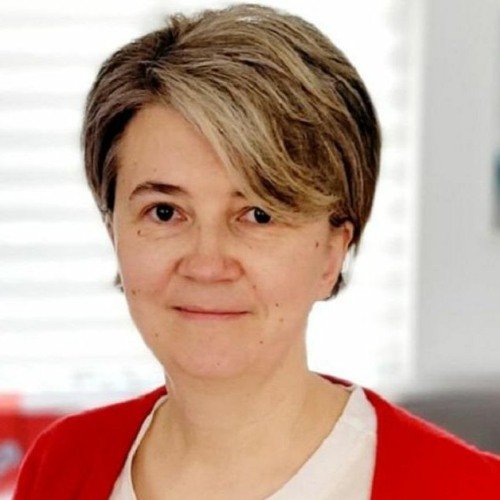
The latest news from neighboring Belarus – the placement of Russian tactical nuclear weapons on its territory, Lukashenka’s proposals for some other post-Soviet countries to follow suit, Putin’s persistent attempts to involve the Belarusian armed forces in the war in Ukraine – are increasingly worrying Ukrainians. They also worry Belarusians themselves. We talk about this with the head of the Association of Belarusians in Canada, Alyona Liavonchanka from Toronto.
– Mrs. Alyona, first, please tell us a little about yourself. Where are you from, how old are you, what did you graduate from and what profession (specialty) did you acquire? How and when did you end up in Toronto? Where do you work now?
– I am 44 years old, I come from the village of Vysoky Borak, which was before the accident at the Chernobyl nuclear power plant in the east of the Mogilev region. In the first year after the accident, our entire village was evicted because the level of radiation was dangerous for health, and all the houses were buried. Now only the cemetery remains, the road is slowly becoming overgrown with forest, but it is still possible to drive, the last time my grandparents were at the cemetery was in 2019.
Our region, Krasnopil Region, lies on the border with Bryansk Region and very close to Chernihiv Region. I still remember my grandmother’s stories about Chernihiv fairs. My grandmother’s surname is Kondratenko, my grandfather is Leonchenko , half of my relatives live in Ukraine. That is, on the example of my family, we have Belarus, Ukraine and Russia, which are united at the level of family ties. I consider myself Belarusian, my first language was Belarusian, and even in Canada I continue to speak Belarusian so that my daughter knows her roots.
I am a chemist by profession, I have a diploma from the Belarusian State University and a PhD from the University of Goettingen in Germany. In 2008, after writing her thesis, she came to Canada to work at the University of Toronto. I am engaged in biotechnology, I have been working for a large pharmaceutical company in Toronto for the past 8 years.
I will try to explain why I moved to Canada. After the Chernobyl accident, there were many programs for Chernobyl children, and I (I was 10-12 years old at the time) went to Europe. We were taken to Spain, Belgium, where we lived with families there, and I think that what I saw had a great impact on me. I saw a completely different life. Therefore, after graduating from the university, I left first for Germany, and then for Canada – in addition to the desire to get a European-level education and a decent job, my childhood experience also worked.
– How long have you been the head of the Association of Belarusians of Canada? When was it created , what are its goals ? If we take it more broadly, what is the general history of the Belarusian movement in Canada?
– I was elected to the post of the head of the Association (Union of Belarusians in Canada) in 2017, that is, I have been leading the organization for the sixth year. It was a great discovery for me when I came to Canada to learn that there are “non-Soviet” Belarusians who emigrated after the Second World War because they fought in the Polish army of General Anders, and in the USSR after the war death or the Gulag awaited them.
The founders of the ZBK were people with European education, military experience, respected religion, who very soon after arriving in Canada founded Belarusian Orthodox churches with their own money and formed an association of Belarusians abroad. They are very different in spirit and beliefs from emigrants of the 1990s and 2000s and have preserved a large piece of the true history of the Belarusian people abroad. To the people who since 1918 fought for the independent European state of Belarus, remembering our roots in the Grand Duchy of Lithuania, and well aware of the threat of the Russian occupation that has lasted for more than 200 years on Belarusian lands.
ZBK was established in 1948 with the aim of uniting Belarusians in Canada and protecting the interests of Belarus and the Belarusian people. The activity was mainly conducted in the province of Ontario, there were branches in Toronto and nearby cities. In 1975, a branch was established in Ottawa. Since 1952, meetings between Belarusians in Canada and the USA have been held every two years, and this tradition continues to this day. In 2024, the 35th such meeting will be held in Toronto. The great merit of the Belarusian post-war emigration is its work with Western politicians, to whom it constantly informed that Belarus is not the USSR, not a province of Russia, and that Belarusians have the right to their independent state.
Many of these people lived to the collapse of the USSR, and when Belarus gained independence, they began to come to their homeland and help. In 1993, a large congress was held, which was attended by more than a thousand Belarusians from different countries of the world. They greatly helped children who were affected by the Chernobyl disaster, sent millions of dollars to hospitals and orphanages. In Canada, the Belarusian foundation also operated, and the Council of the Belarusian People’s Republic in Exile, founded in 1919 and headed by Ivonka Survilla , worked . Ms. Survilla founded her own fund, which brought 5,000 Belarusian children affected by the accident at the Chernobyl nuclear power plant to Canada for vacation.
When Lukashenko came to power, a new wave of Belarusian emigration to Canada began, because it became difficult to live economically, people were deprived of business, and persecuted for their political views. They have also united here, and the old emigration has already transferred its business to them. They, including me, picked up this baton of generations. They took an active part in the elections, in human rights affairs, organized pickets in support of those whom Lukashenko imprisoned, wrote letters, met with European and North American politicians. And in 2017, I received the honor of becoming the head of the Canadian Coalition of Belarusians – an organization whose activities have intensified since 2020, when mass spontaneous protests began in Belarus, and, of course, in 2022, when a full-scale war began in Ukraine. The reaction of the Belarusian emigration to the events in Ukraine was very strong.
What has changed recently? We understood that the Ukrainian problem is bigger than ours. We supported the Ukrainians, we hung Ukrainian flags everywhere, we went to anti-war pickets, but we did not fully understand how unjust this war was, and how unlike what is being done in Belarus. In the same way, the Ukrainians of their time did not fully understand the Russian occupation of Belarus. And after February 24, 2022, we realized that this is our one common problem – imperial Russia, Putin, who seeks to subdue both Ukraine and Belarus. Only in Ukraine he does it openly, killing people and seizing Ukrainian territories, and here we have Lukashenka, who is sold to Moscow in order to hold on to the throne until his death, although the majority of Belarusians do not want to see him as president. He, you know, lost the 2020 election. But the people in Belarus cannot do anything now, as in Ukraine, where people came out in the occupied territories against the aggressor. The same young, unarmed boys in Kherson Region who went out to confront the Russian army and died (it is about the Teroboronmen, who on March 1, 2022, met Russian armored vehicles in the Lilac Park of Kherson. Most of them died in battle. – Ed .). In our country in 2020, unarmed people came out against the security forces, they thought they could change the government peacefully, but received bullets in response. Several were shot on the street, others were killed and hanged in prisons. After that, everyone realized that you can’t go against this government with your bare hands, you need to look for other methods. We believe that Belarus, “thanks” to Lukashenka, is now under Russian occupation, so we take what is happening on the occupied Ukrainian lands very close to our hearts.
– What is the size of your Canadian Association? Do you have your own websites, printed publications?
– Today ZBK has its branches in Alberta, Montreal, Ottawa and Toronto, a little more than 100 registered members of the organization, and in total more than 1300 active subscribers, donors and participants of our events. We have a website ( belarusians.ca ) and social networks, we do not publish printed editions yet. Our partner organization is the Belarusian Institute of Science and Art in Canada ( binim.org ), which publishes a quarterly online magazine ( sakavik.net ), books and films about Belarusian culture and studies of Belarusian culture and nation.
– What are the current plans of the Rally for this year?
– Our main focus in 2023 is strengthening the Belarusian diaspora in Canada, creating new communities so that Belarusians remain active and are ready to support democratic changes in Belarus. Now it is very important to support the families of political prisoners in Belarus, many of them are not allowed to work, and they do not have any income for living. And our third priority is the support of Belarusian volunteers in Ukraine, the Kalynovsky regiment ( formed in 2022 from Belarusian volunteers to protect Ukraine from the Russian invasion – Ed.) Fundraising for three cars for this regiment has now ended. Our friends from the Canadian Battalion for Ukraine, a Ukrainian volunteer organization in Toronto, helped send the cars to Ukraine. We cooperate very well with them, hold public concerts and help the battalion in various matters.
– How do Belarusians feel about the placement of Russian tactical nuclear weapons in their country since the end of May this year? Besides, only Moscow can control this weapon.
– There are statistics according to which about 30% of the population of Belarus still supports Lukashenka, is nostalgic for the Soviet Union, and sympathizes with Putin. But when a survey was conducted regarding the placement of nuclear weapons in Belarus, only 10% of respondents spoke “for”. That is, even those who support Lukashenko and Putin are against nuclear weapons. This suggests that even those people who are not interested in politics and do not understand who Lukashenko is and who Putin is, understand what nuclear weapons are and what threats they pose to them. The explanation for this is simple: Belarus survived Chernobyl, 30% of its territory was in the zone of radioactive contamination, people still continue to get sick and die. I myself am from such a territory, and the last time I was at the place of the village in which I was born, which was completely destroyed and buried under the ground due to radiation, it was a very scary picture. when you imagine that here was your house, here was a school, here was a hospital, and now there is nothing but weeds and bushes. Almost every Belarusian family has someone affected by Chernobyl. Therefore, in Belarus, like nowhere else, they understand what nuclear weapons are, that there will always be a probability of accidents, explosions, God forbid, war, and no one wants a repetition of such a disaster, a new contamination with nuclear nuclides. You have radiation research in Ukraine, there is radiation medicine, and in Belarus Lukashenko banned all this. There was a professor at the institute in Gomel, and no one wants a repetition of such a disaster, a new contamination with nuclear nuclides. You have radiation research in Ukraine, there is radiation medicine, and in Belarus Lukashenko banned all this. There was a professor at the institute in Gomel, and no one wants a repetition of such a disaster, a new contamination with nuclear nuclides. You have radiation research in Ukraine, there is radiation medicine, and in Belarus Lukashenko banned all this. There was a professor at the institute in Gomel,Yur and Bandazhevsky, who conducted research on diseases caused by the Chernobyl disaster, were arrested and imprisoned for 8 years, and then he founded the Center for Ecology and Health in Kyiv.
– How serious are the fears of Putin involving Belarus in a war with Ukraine? If this happens, what could be the consequences?
– I don’t think that our people, even the 30% that I said are for Lukashenko and Putin and who do not understand what Russia is doing and where Lukashenko is taking Belarus, want war. Especially the war with Ukraine. You saw the protests in Belarus in 2020, and I know that for many people in Ukraine and in the West, peaceful demonstrations by Belarusians were perceived as naive. But they still showed our values and that we as a people, as a nation, respect the law and like to do everything according to the law. There are many jokes about the fact that Belarusians are law-abiding people, they do everything according to the law, and this is true, it is in our blood. But war, especially war with Ukraine, seems impossible to us. For example, like many Belarusians, half of my family on both my mother’s and father’s lines lives in Ukraine. Ask every Belarusian family and everyone has close or distant relatives in Ukraine. I simply cannot imagine that any Belarusian can voluntarily go to Ukraine to kill Ukrainians. Another thing is that Putin can pressure Lukashenko and give him an order, and Lukashenko will not be able to evade and will be forced to send the Belarusian army to Ukraine. But in such a case, I think, the Belarusian military will surrender, lay down their weapons, and maybe they will join the ranks of the Belarusian Kalynovsky regiment, which, as part of the Armed Forces of Ukraine, opposes the aggressor.
– What do you know about the activities of Belarusian cyber-partisans who are fighting the Lukashenka regime and helping Ukraine?
– I admire them. I know that they hacked important databases of the police and special services of Belarus and extracted from them a large amount of information about Lukashenka’s security forces and, I think, shared this information with the Ukrainian special services, and also helped Western countries root out Russian and Belarusian spies. Not so much is written about them in Belarus, which is understandable, more in the Western press, but this is an example of how it is possible to hurt Lukashenka with non-violent methods. There was a case when they blocked the operation of a plant in Belarus and demanded the release of political prisoners from prison in exchange for the unblocking. Lukashenko did not go for it, but it was another example of how you can put pressure on the regime. They hacked the internal network of the Main Radio Frequency Center, which is involved in Internet censorship in Russia, tracking users, and also affects Belarus. After that, a video was published on YouTube, where they talked in detail about the Russian “bot farm” – artificially created accounts of non-existent people who communicate with users and create a “majority effect” satisfied with the Kremlin’s policy. I am familiar with one of the two speakers of the cyber-partisans –Yuliana Shemetovets, who lives in New York. I think she can tell more.
– Due to the illness that the President of Belarus experienced at the beginning of May this year, some political scientists began to think about what will happen if Lukashenka is not there. And what do you think about this? Will something change in Belarus?
– I believe that there will be changes. But, as my grandmother used to say: “God is God, but don’t be bad yourself.” Of course, when it does not happen, very strong turbulence will begin. Lukashenko has two sons, the “heirs to the throne”, the eldest son Viktor Lukashenko cooperates very closely with the KGB and border guards, according to some information, he sold weapons to Africa and the Middle East. He will definitely try to take his father’s place. There are still several key figures for the new president of Belarus. For example, Prime Minister Roman Golovchenko , a man with a military past. There is also Natalya Kochanova,Speaker of the Upper House of Parliament. She is said to be assembling her influence group. In addition, there are several groups that are at a “low start”, realizing that Lukashenko, as a politician, has already exhausted himself. The most dangerous of these groups is the group of Russian influence. In Belarus, all the top management of the army and special services are now people with Russian passports. Recently, the head of the border guard service was changed, and now it is headed by a person with a Russian passport as well.
Most likely, a fight for power will begin, but those who get it will not be able to hold on for long. Their problem is that Lukashenko built a very autocratic regime during his 30-year rule. There is even such an anecdote about how Lukashenko manages. He comes to the office in the morning, sits in his presidential chair and listens to reports on the phone. “Yes, yes, yes, that’s no, it’s not good, yes, yes, leave it, and throw it away.” And so until the evening. Then he hangs up and says: “Well, what is it? Without a father, they can’t even sort out a tuber.” Everything depends on him personally, and without him the entire management system will fall apart.
I believe that democracy and the transition to a new state are possible when all our political prisoners are released from prison. This is the main thing that will have to be done when Lukashenka is gone. The real leaders of the nation will be released. Among them, for example, nationally oriented retired military officer Mykola Stankevich , a former candidate for the post of president. Lukashenko is very afraid of such strong people. The same Pavlo Siverinets , one of the founders and leaders of the youth opposition movement “Young Front”, was sentenced to 7 years in prison. The entire political national elite of Belarus has either been forced out of the country or is in prison.
– Does your Rally maintain contact with Svitlana Tykhanivska, Lukashenka ‘s main rival in the 2020 presidential elections ?
– Yes, my deputy for external relations has been dealing with this issue since 2020. We went to a conference that Tykhanivska held for the Belarusian diaspora, helped her in a meeting with Canadian Prime Minister Trudeau, with the Ukrainian diaspora. We help her, support her. She and her cabinet are doing a very good job in diplomacy, in international relations, but they do not yet have a clear plan for what to do in Belarus. And I don’t think anyone else has that clear a plan right now. I believe that it is necessary to do what the Belarusian emigration did to us: to meet with Western politicians and convince them not to make the same mistakes they made in the early 90s, when they asked not to leave the USSR. They were afraid of the spread of nuclear weapons to the newly independent states, and in the end they got two countries with dictatorial governments, whose leaders in their agony can unleash the Third World War in Europe with terrible consequences.
– Perhaps the trials that have befallen Ukraine and Belarus today were sent to us by God? In 1991, we gained independence in Bialowieza Forest under the signatures of three people . And maybe we need to not just receive it, but choose whether it will pass through the heart of every Ukrainian and Belarusian, and then it will become irreversible ?
– I think you are right. In the Soviet Union, no one thought about it, there was one collective ideology, one collective morality. But it did not work, because the main value of life is the individuality of each person. What does she think, what does she want to do for herself, for her family, for the state and what does she do for this. In the generation of Soviet people, there were bright personalities, there were dissidents, there was a national elite both in Ukraine and in Belarus, which was suppressed, but the majority of people were zombified by Soviet propaganda. They did not realize the value of their national, and I did not understand this until I came to Canada.
– I’m sorry, but I remember one sketch where a Ukrainian language teacher communicates by voice on the Internet on the topic of language and suddenly hears an elegant Ukrainian language. “Where are you from,” she asks, “from which region?” In response: “I’m not from Ukraine, I’m from Canada.” But keep going.
– Well, when I came to Canada, I learned for the first time how many people died, how many were shot just because they wanted to speak their national language, to write the truth about the history of their people. And we in the Soviet Union, in Belarus, during the period of Lukashenka’s rule, were constantly being proven that we cannot live without a state. My great-grandfather told me that he had his own small agribusiness, if it were to be called now, and when the Soviets came, he broke everything with his own hands overnight and buried it, because he understood that he would be arrested and sent to Siberia. However, 30 years after the collapse of the USSR have shown that we are now growing further from our historically European roots. The historical awareness of our mentality in comparison with the Russian mentality is gaining more and more support, where the Russian Federation does not care how many of its soldiers die in Ukraine. “Nothing,” they write in blogs, – women give birth to others.” When the change of generations ends, then the changes will begin, and we will return to our Christian-European civilization. You rightly said that you have to pay for it with blood, but this is what the state of free people grows on.
– What could ideally be the relations between the Ukrainian, Belarusian and Russian peoples? How do you see Belarus in the future?
– We, Belarusians, showed in 2020 what we want, what we strive for. We see Belarus as a European country. Those who went to the protests then defended such values as individual freedom and public freedom, that they just want to do their own thing and not depend on the state. Lukashenko says: “I am your father, I give you everything, and you should love me for that and not interfere with ruling.” I think that the number of Belarusians who do not agree with this is increasing, because the generations have changed, and the Soviet Union has already left.
Plus we have a great history. As it turned out, people remember that we were the Grand Duchy of Lithuania, in one state together with Ukrainians and Poles. And I believe that everything will return, that we, Belarusians, Ukrainians, Poles, residents of the Baltic countries, while remaining within our borders and statehood, will find forms of mutually beneficial cooperation.
Why does everyone want to live in Canada? Because she says: “We accept everyone, with different languages, with different cultures, religions. We have multiculturalism. If you respect basic human rights, pay taxes and respect our laws, then do what you want: speak any language, pray to any gods, implement your cultural projects. It only makes our country stronger.” We have to come to this, come to such a union, where we will live freely, exchange cultures and learn from each other.
Oleksandr Hvozdyk
Кобза





