

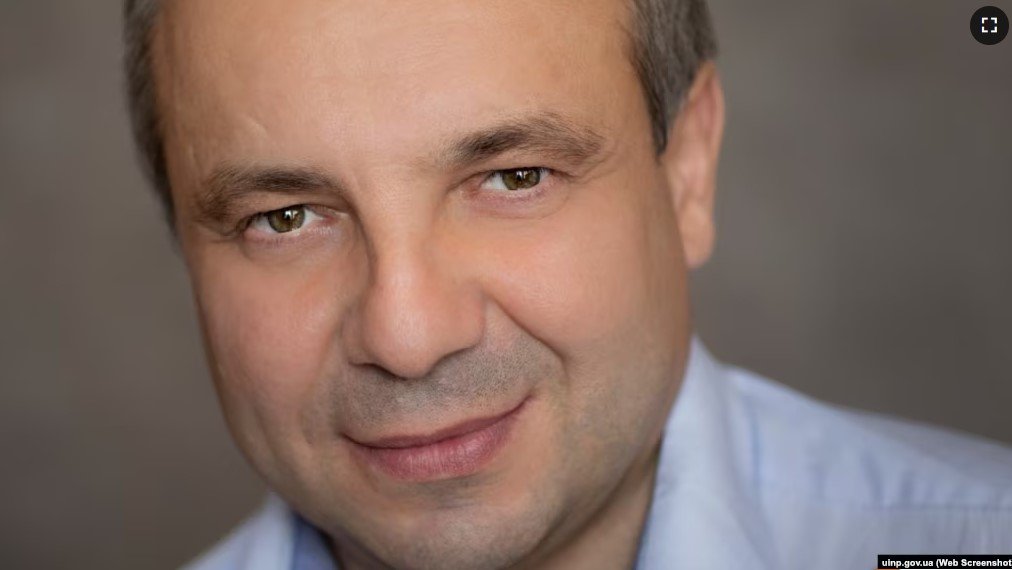
In early August, the League of Free Nations, which unites the national liberation movements of several peoples and regions of Russia, and the Ukrainian Institute of National Remembrance held a joint symposium on the topic of Russian imperialism and colonialism. The event was held in an online format, it was attended by representatives of the Tatars, Bashkirs, Erzyans and other peoples of Russia. Idel.Realii talked about Russian imperialism, Ukraine’s relations with the indigenous nations of Russia and Ukraine’s lobbying potential in the West with Volodymyr Tylishchak, deputy head of the Ukrainian Institute of National Remembrance.
— The Ukrainian Institute of National Remembrance and the League of Free Nations acted as co-organizers of the symposium. And who initiated the project?
– The Ukrainian Institute of National Memory is the central executive body, which is called upon to implement state policy in the field of restoring and preserving the national memory of the Ukrainian people. We have been working for a long time to debunk the myths about the past, created by the Russian imperial and communist propaganda. This is one of our most important tasks. In this we support the initiatives of the public and scientific institutions. We hold the vast majority of our events in cooperation with scientific and educational institutions or public institutions. Such a combination of efforts of both the state and non-state sectors in a common cause is the fundamental principle of our activity.
When representatives of both Ukrainian initiatives and the League of Free Nations approached us with the idea of holding this public event – more of a dialogue than a discussion – we gladly agreed and supported, providing our resources for its broadcast.
– The Ukrainian side is increasingly and actively raising the issue of Russian imperialism and colonialism, but such activation occurred after Russia invaded your country. However, Russia has waged such wars in the recent past. August 8 was the anniversary of the Russian attack on Georgia. Even earlier, Russia waged two wars in Chechnya. Then Ukraine was not so active. Tell me, is Ukraine’s current efforts in this matter an attempt to fight Russia, or is there a real realization of the need for rethinking?
“When we say that Ukrainians are a freedom-loving people, it may seem to someone that this is just a grandiloquent phrase prepared by officials for official speeches. However, the entire history of Ukraine shows that it was the Ukrainian people who chose the civilizational vector of the country’s development, and when this vector was imposed by force from outside and against the will of the people, the Ukrainians put up the most fierce resistance. That is, we are not just a freedom-loving people who go with the flow – we are ready to make great sacrifices for the sake of personal freedom and the freedom of our nation and state.
Therefore, regardless of the names of our presidents and heads of government, the Ukrainian people treated those who defended their freedom and independence with great empathy and compassion. Those times you are talking about – the beginning of the 1990s – the Ukrainians were one of the few who sent their volunteers to help the Georgians (we are talking about the Georgian-Abkhaz conflict, as a result of which Georgia ceased to control the territory of Abkhazia – “Idel.Realii” ), and later to the Chechens. Not because of sympathy or antipathy for a particular ethnic group, but because the Ukrainians wanted to support those who decided on an armed struggle against Moscow and its forces.
In 2008, our president was among the few leaders of states who visited Tbilisi during the aggression of the Russian troops. In addition, Ukraine transferred air defense systems to Georgia, which are so necessary to protect the Georgian state from Russian aggression. Therefore, even before 2014, we, as a people and as a state, had rich experience in the struggle against the colonial domination of Moscow.
Today is the time to share this experience with those who yearn for freedom for their people.
— At the event, it was said that the symposium was the first of a cycle on this topic. What else do you have planned?
— The issue of conveying to the Ukrainian and world community the truth about the colonial nature of Russian imperial domination is a priority both in the activities of the Ukrainian Institute of National Remembrance and Ukrainian public initiatives with which we cooperate.
Today, the Institute is working on the creation of a number of information projects that reveal the nature of Russian imperialism. In particular, we will soon present a series of videos dedicated to the content of the phenomenon, which is called “rashism”.
We hope that the dialogue with the historians of the peoples whom Russia deprived of their independence will continue. The event was intended to start such a dialogue; in future events, I hope we will be able to deepen the focus on the preservation and revival of languages and cultures of indigenous peoples, on assessments of genocides, deportations and other crimes committed by Russia. We are considering the possibility of holding scientific conferences and other public events.
I also believe that the history of Russian imperialism will be written through joint efforts, with the disclosure of crimes committed by the empire against the colonized peoples.
– Representatives of ethnic movements from among the peoples of Russia were noticeable at the symposium, but there was no one from the Russian opposition. Is it by chance?
– Colonialism, conquest and oppression are the foundations of Russian statehood. Speaking about the future of Russia, we must also talk about the future of those territories that were conquered by force from other peoples and incorporated into the empire. This is more than 40% of the territory of modern Russia. Considering that the voice of indigenous peoples in the Russian Federation itself is muffled and marginalized, we are obliged to provide a platform for those who are aware of the enslaved status of their fatherland to speak. In other words, the future of Sakha-Yakutia or Tatarstan should be discussed with the Yakuts and Tatars, and not with Moscow intellectuals.
Therefore, the event was conceived as a dialogue between Ukrainian historians and historians, intellectuals of peoples deprived of independence by Russia. Therefore, representatives of the Russian opposition were not invited to this particular conversation.
However, discussions with Russians about Russian imperialism and colonialism are quite possible in the future. Such conversations are very important for Russian intellectuals and Russian society to comprehend and accept the truth about the crimes committed by their rulers against other peoples.
– Don’t you think that the representatives of ethnic movements themselves will not be able to turn over the idea of Russians about the essence of the current Russian state?
– Changing the understanding by Russian society of the imperial, colonial essence of today’s Russian Federation, the rejection and overcoming of imperial complexes are a necessary condition for the further civilized development of Russia itself. Obviously, as long as the Kremlin rulers feed these imperial complexes, as long as the Kremlin propaganda will impose its own narratives, the opportunities for Russians to rethink something are minuscule. Therefore, the defeat of Russia in the current war of conquest, unleashed and waged by the Putin regime, is one of the conditions for such a rethinking of the essence of the Russian state.
But not the only condition. Obviously, Russians both now and after the defeat of Putinism need to be told, explained, conveyed the truth. And this can be done by representatives of national movements. Their word is important. It shouldn’t be underestimated. And the work of research, publication and dissemination of information about the essence of Russian imperialism, which is carried out by representatives of national movements, will be important for such a rethinking.
— Experts say that there is no unity in the West on the issue of Russia’s future. Do you think Ukraine is able to influence Western elites in this sense?
– In the West, there was no unity about the future of the USSR in the early 1990s. Many of the then experts and politicians did not see the expediency of its collapse. They also tried to convince Ukraine not to withdraw from its composition. But it was not the opinions of Western experts that became decisive at that time, but the position of societies, including the Ukrainian one, which resolutely spoke out for independence.
The “Kiev Cutlet” speech is a comic name under which the speech of US President George W. Bush, delivered on August 1, 1991 in Kiev, 23 days before the declaration of independence of Ukraine from the Soviet Union and 4 months before the speech in Ukraine, went down in history. referendum on independence. In that speech, Bush warned Ukrainians against “suicidal nationalism.”
The speech was prepared by Condoleezza Rice, Director of Soviet and Eastern European Affairs at the US National Security Council, later US Secretary of State under President George W. Bush. President Bush’s speech outraged Ukrainian nationalists and American conservatives so much that conservative journalist William Safir, editor of The New York Times, accused Bush of a colossal miscalculation and called the speech “Chicken Kyiv speech” (play on words: “chicken Kyiv” literally – “chicken Kyiv speech”). [cutlet] in Kiev”, but “chicken”, “chicken” also has a colloquial meaning “cowardly”).
So today, the key to the future fate of the Russian Federation will not be the arguments of experts, but, above all, the will and desire of the peoples that are part of Russia: whether they agree to continue their historical path together with Moscow or independently.
In any case, Ukraine is not interested in such a future for Russia, which could be a source of threats to the security of Ukraine and other states. And it seeks to convince the West of this as well.
– Do you think that the Kremlin notices the activation of Ukraine in the issue of supporting the indigenous peoples of Russia?
– I have no answer to this question, I have not studied the reaction of the Kremlin. In any case, and this, I think, is obvious to everyone, the Kremlin is painfully and with increasing fear accepting any initiatives of Ukraine. But I don’t think that the Putin regime will be able to interfere with Ukraine’s cooperation with the indigenous peoples of the Russian Federation.
— What would you say to the leadership of Russia if you spoke to them in the current conditions?
– First of all, I don’t think I would have enjoyed such a performance. And secondly, it would be more interesting for me and all Ukrainians to listen and see what the prosecutors will say to the current leaders of Russia sitting on the dock in the international court.
Idelreal.org





