

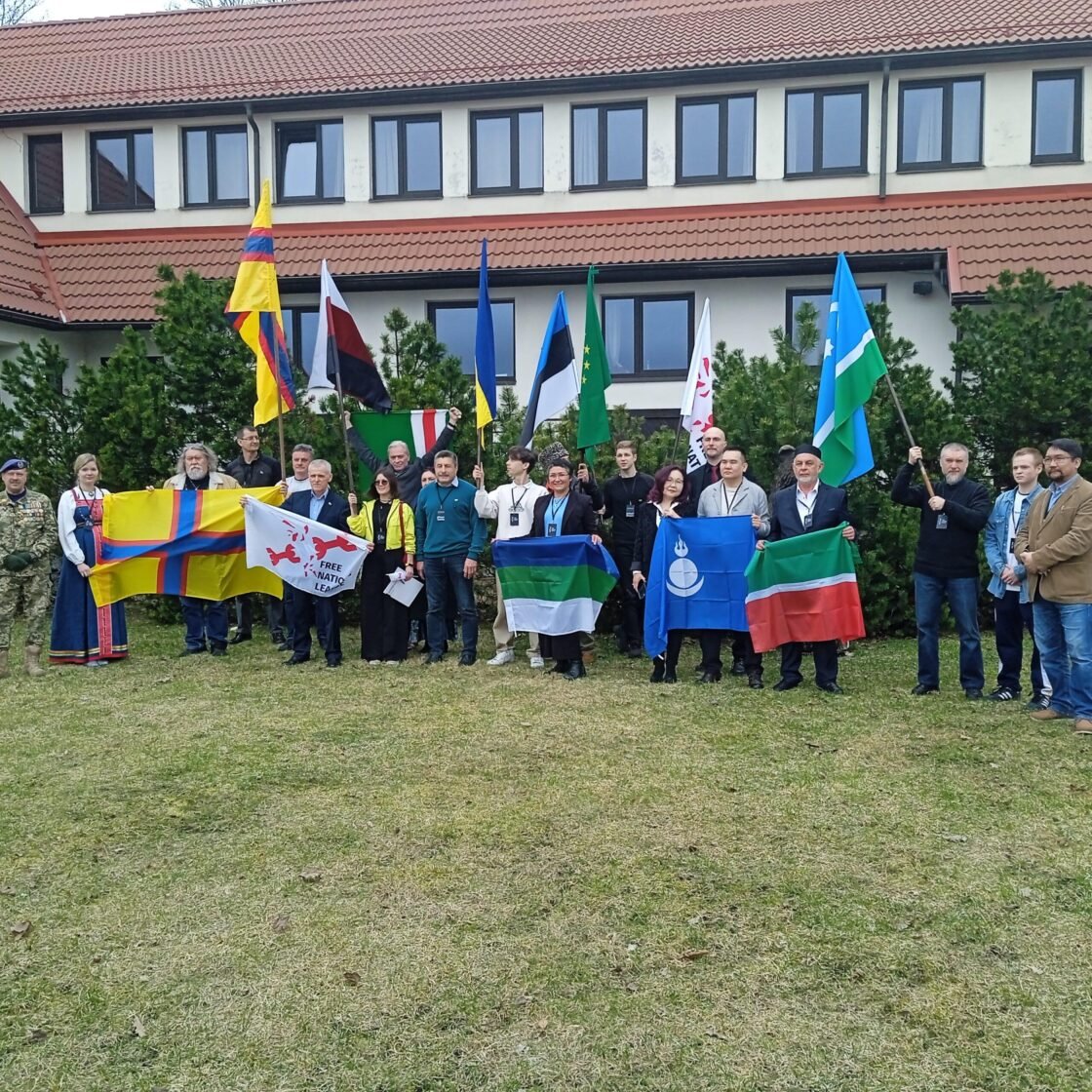
Until recently, the demands of Russia’s peoples were often framed in terms of autonomy, federalism, or cultural protection. Today, another word is increasingly entering the political vocabulary: decolonisation.
A new study published by Cambridge University Press in July 2026 shows that decolonial rhetoric has spread significantly among activists and representatives of Russia’s ethnic minorities in the digital sphere since the beginning of Russia’s full-scale invasion of Ukraine.
The researcher identifies three major strands. The first is political self-determination, in which older demands for autonomy are reframed as resistance to Moscow’s colonial domination. The second focuses on Indigenous cultures, languages, historical memory, and land. The third is an Islamic intellectual discourse emerging among parts of Russia’s Muslim communities.
Importantly, this struggle is no longer confined to Russia itself. Diasporas, digital platforms, and transnational networks allow Bashkirs, Tatars, Sakha, Buryats, Chechens, Komi and other peoples to speak about their rights not simply as an “internal Russian issue,” but as a question of self-determination and decolonisation.
This does not mean that these peoples share identical political goals. They do not. The study itself emphasises the differences between these movements. What increasingly connects them, however, is the understanding that the imperial model is not the only possible future.
For decades, Moscow portrayed the peoples of its imperial periphery merely as “ethnic minorities.” Decolonial discourse gives them another form of political subjectivity — the right to be peoples capable of determining their own future.
And this is where the most important change begins.
An empire weakens not only when it loses territory. It weakens when its subjected peoples stop seeing it as their only possible future.






