

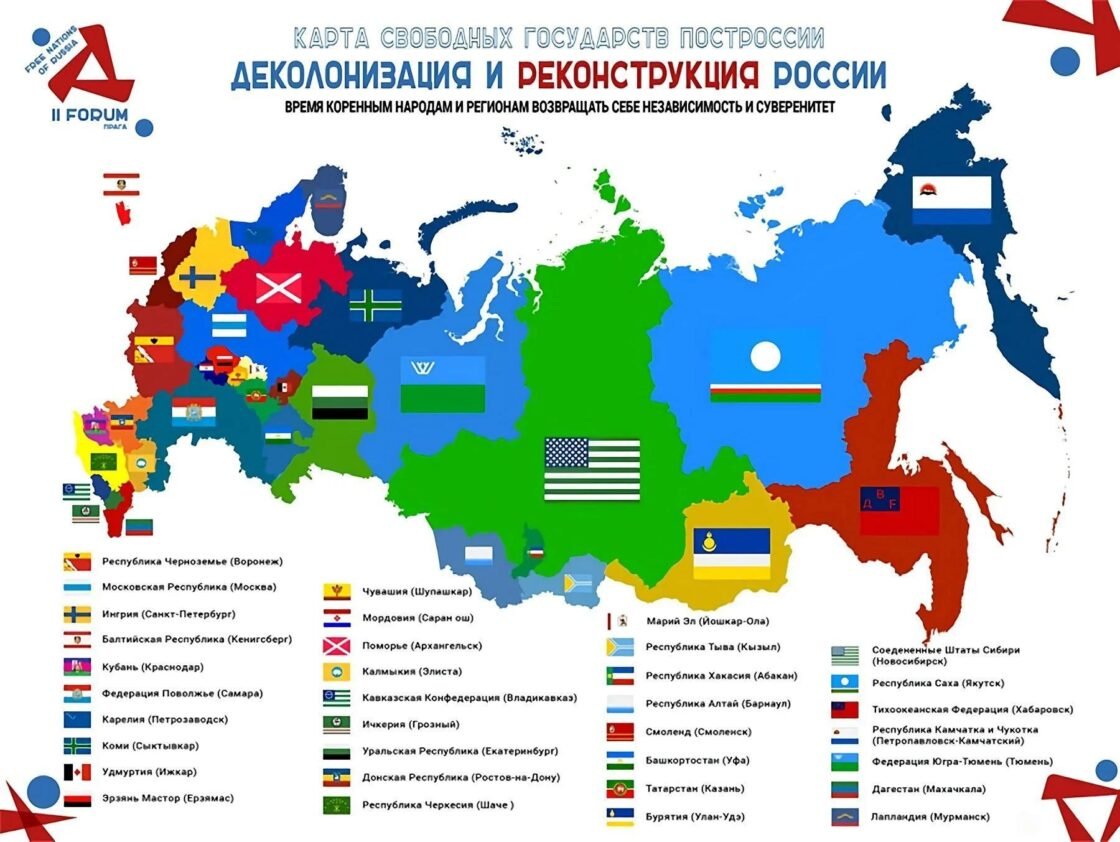
The Russian Empire rests on more than military power. Its foundation is centralisation, control over resources, and the belief that every road, decision, and future must lead to Moscow.
But that model is weakening.
In June 2026, a study was presented in Kyiv examining the capacity of ten regions of today’s Russian Federation for independent development. They included Bashkortostan, Buryatia, Sakha, Tatarstan, Komi, Kalmykia, Siberia and other potential post-Russian states.
This is significant because the question of Russia’s future is moving beyond abstract discussions about its possible collapse. The real question is what could replace the imperial centre.
For nations subjugated by Moscow, this could become a historic opportunity — to restore their languages and cultures, build political institutions, and determine their own future.
Bashkirs, Tatars, Sakha, Buryats, Komi, Kalmyks, Chechens and other peoples do not have to remain the permanent periphery of someone else’s empire.
Empires do not always begin to collapse when their capitals fall. Sometimes they begin to collapse when peoples stop seeing the imperial centre as their only possible future.
The post-Russian space is not an empty void after Moscow. It is an opportunity for nations to finally draw their own map.






