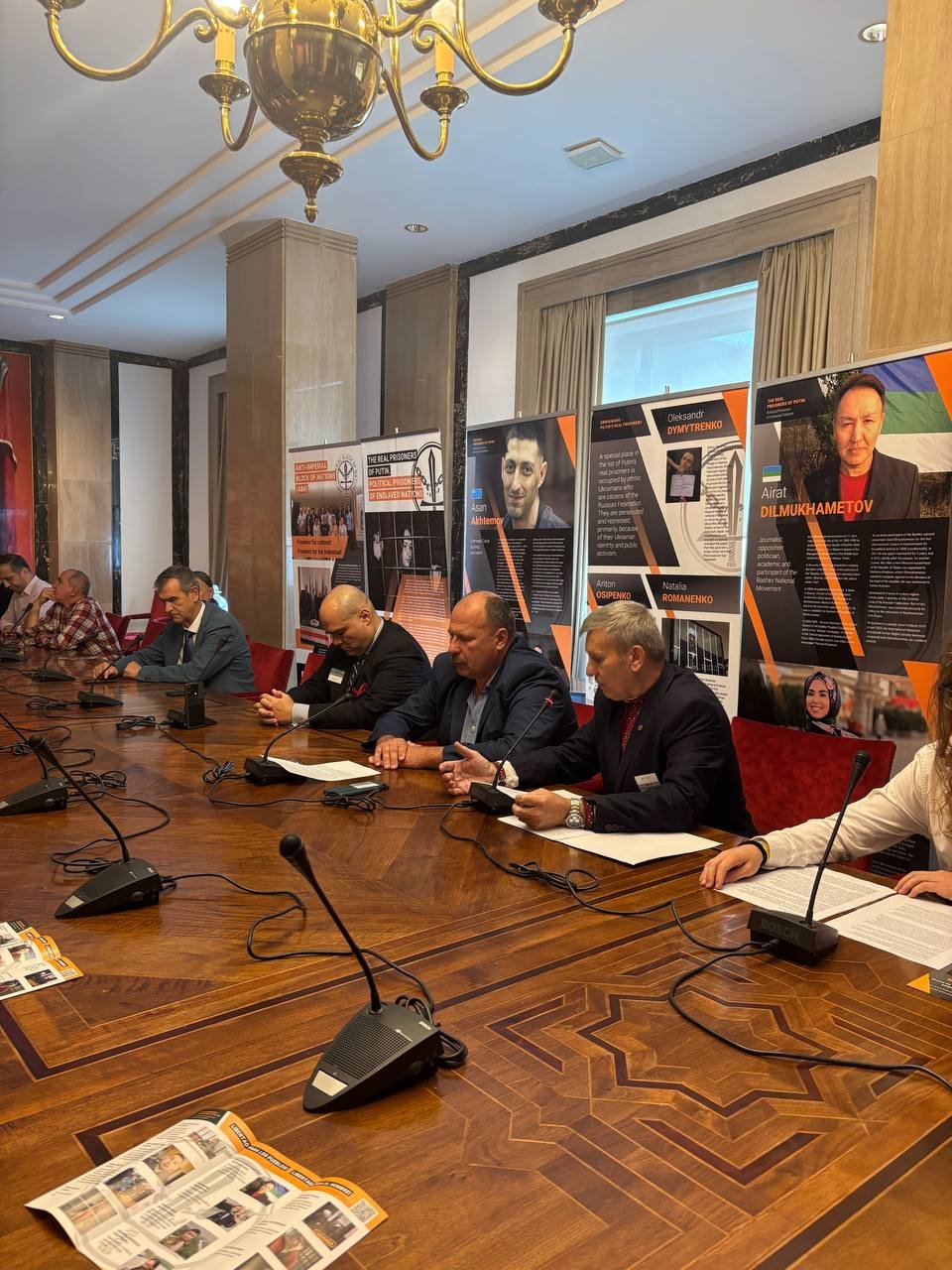
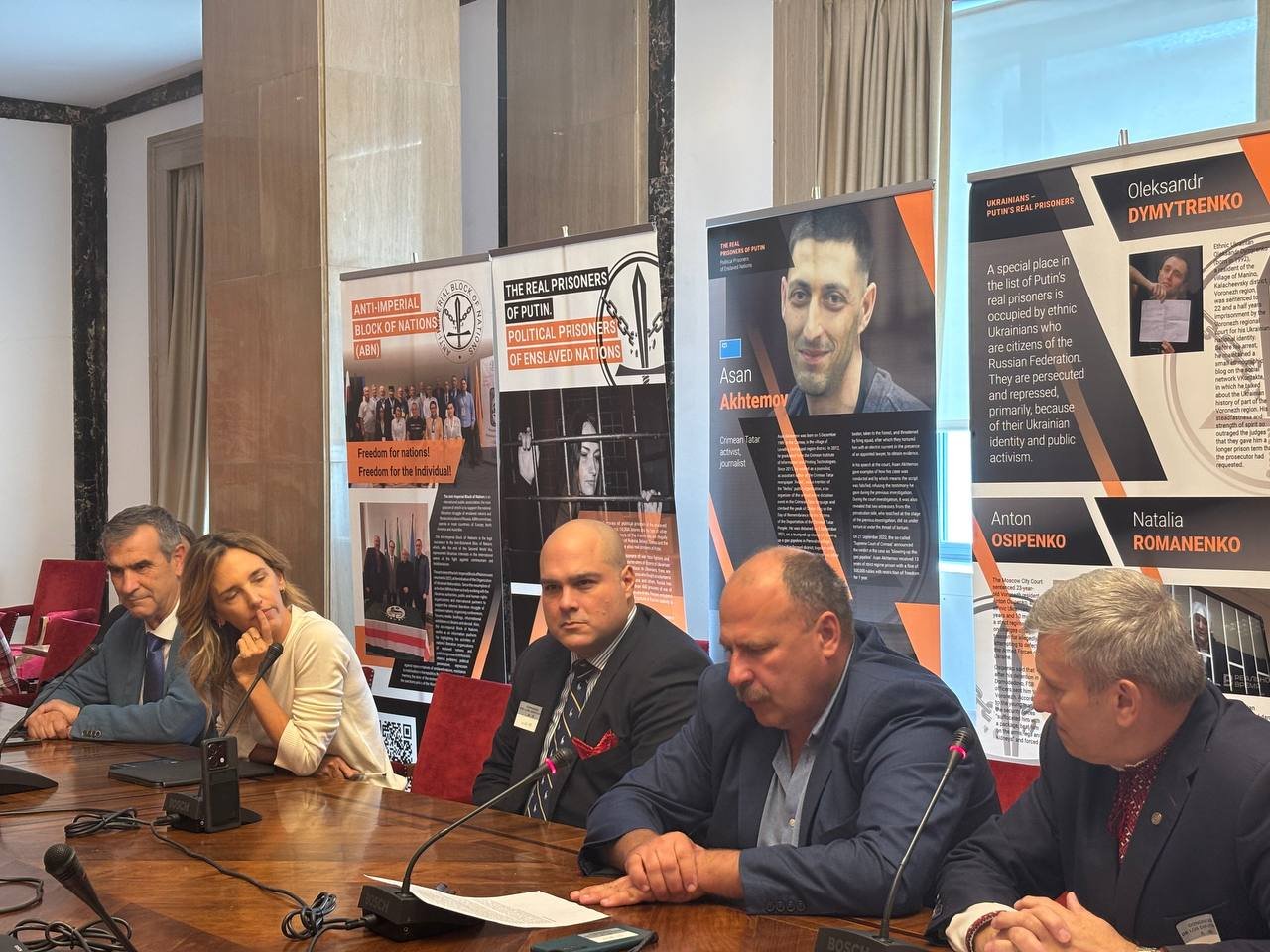
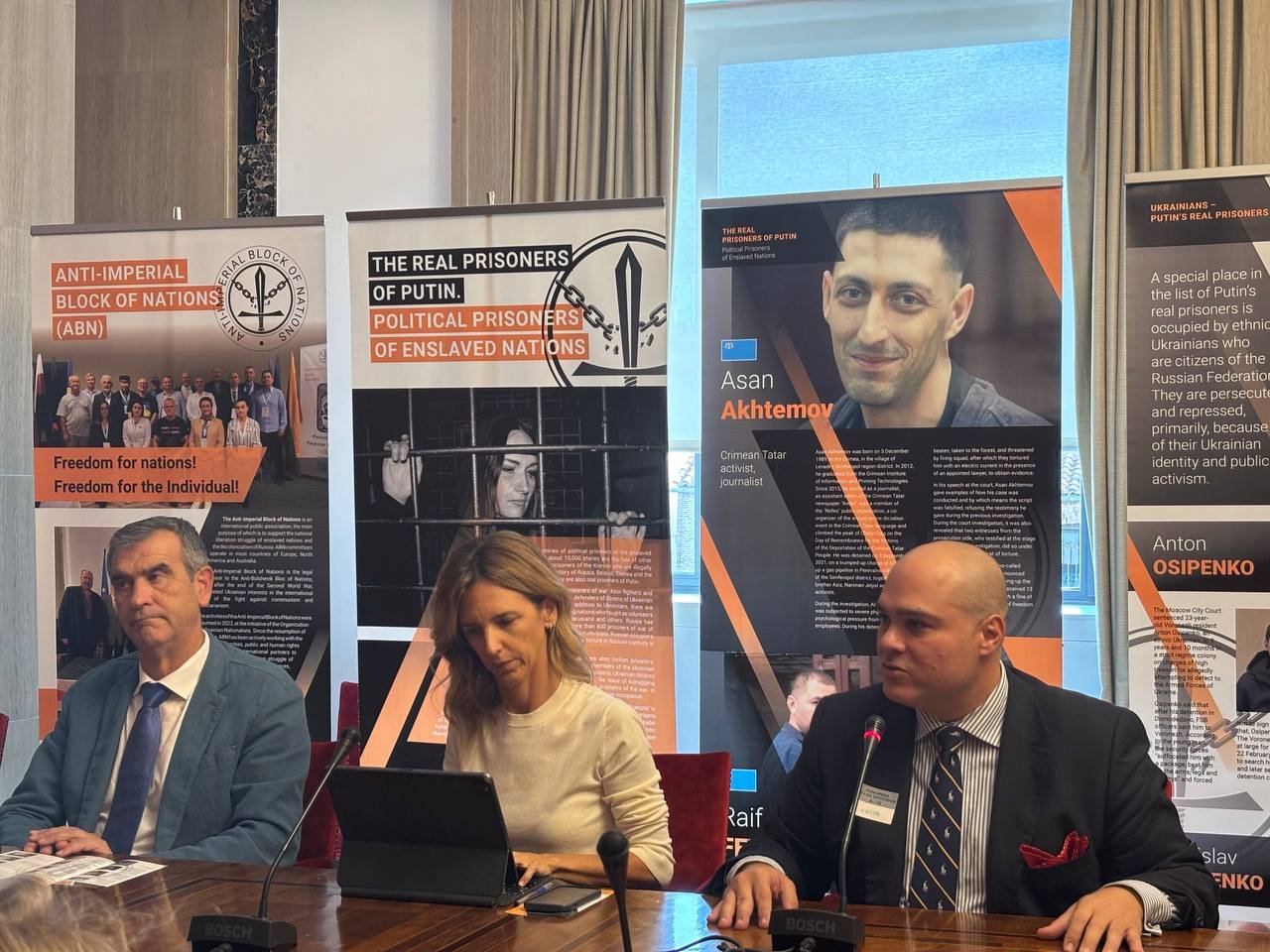
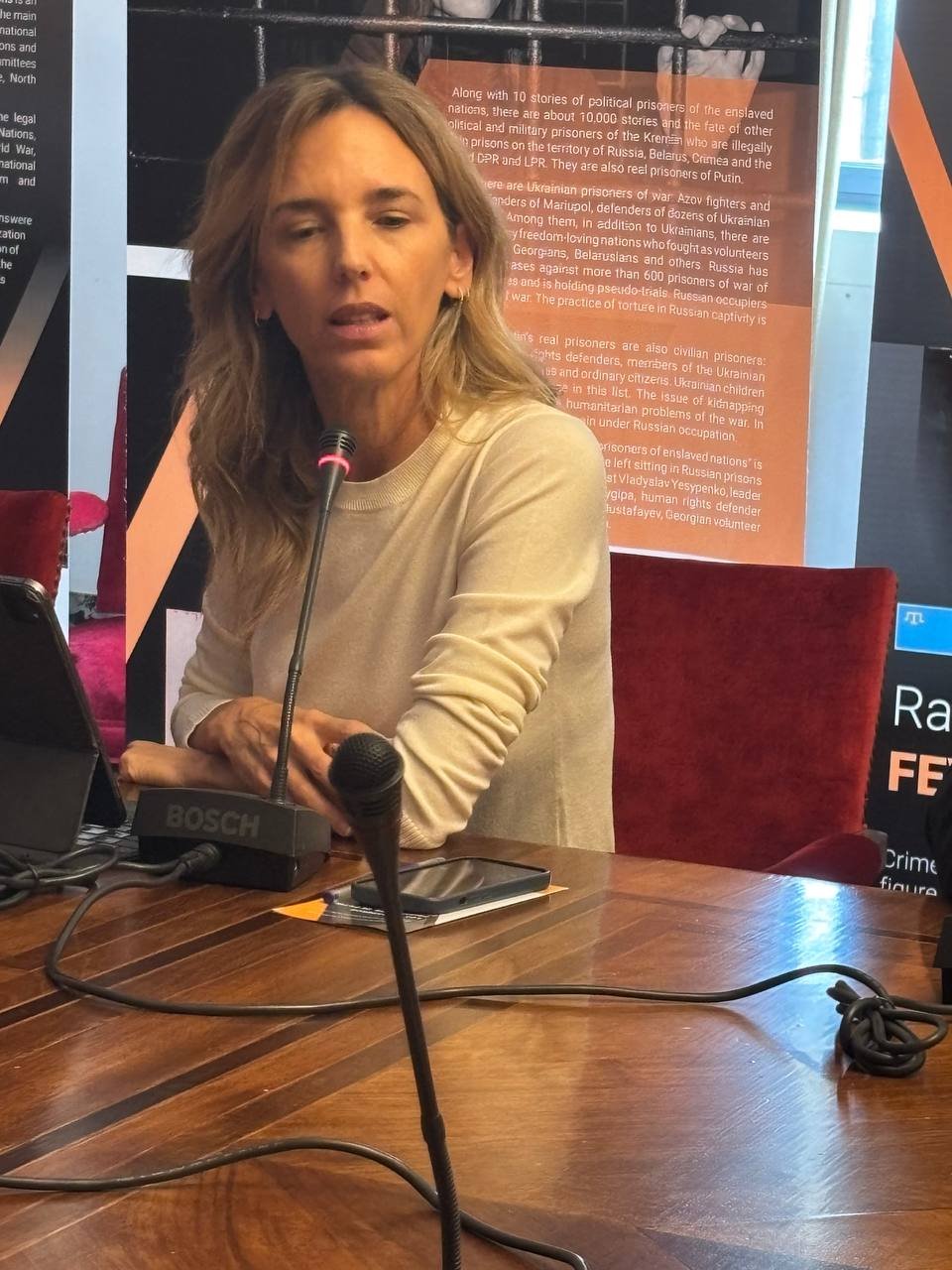
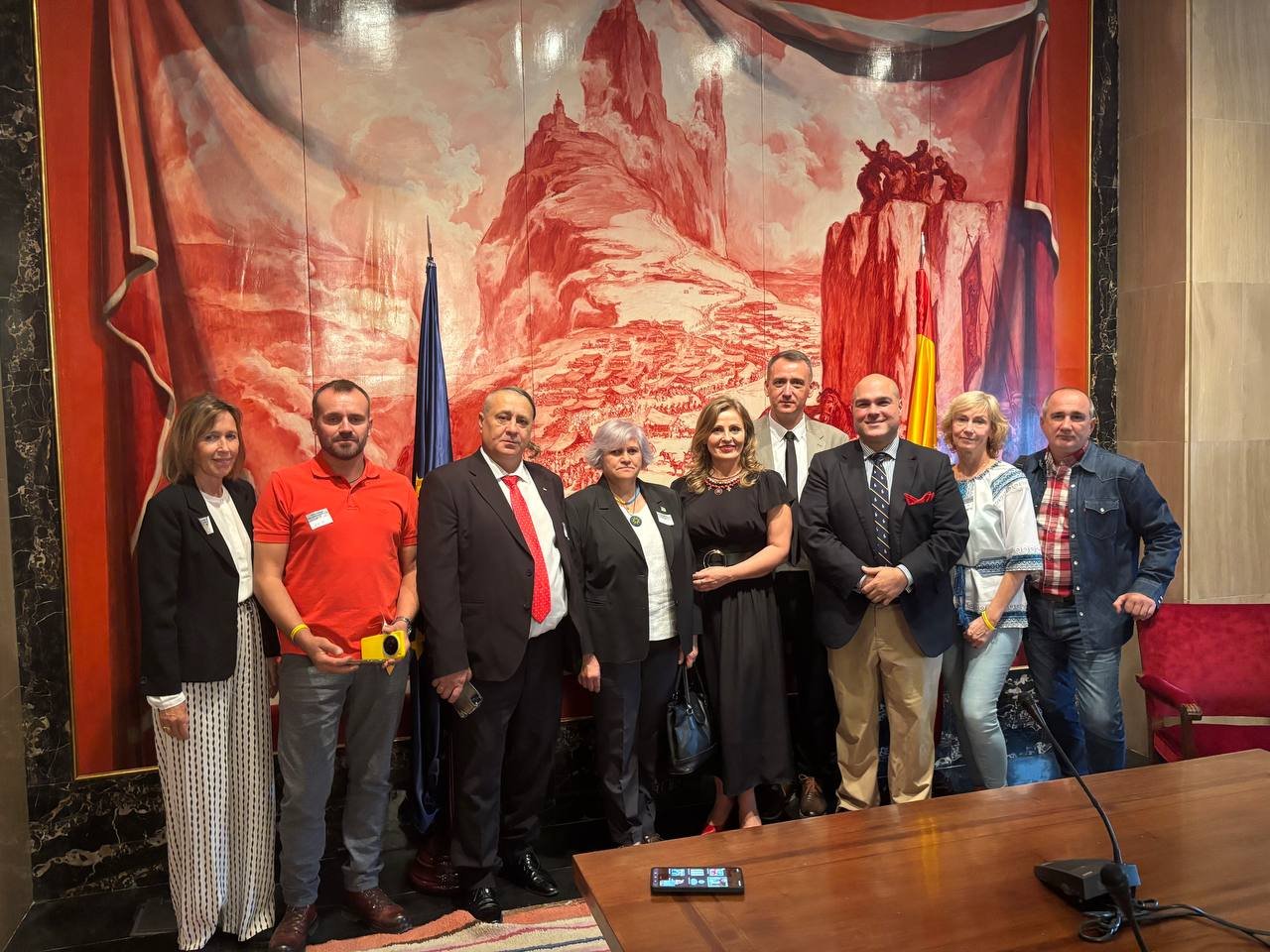
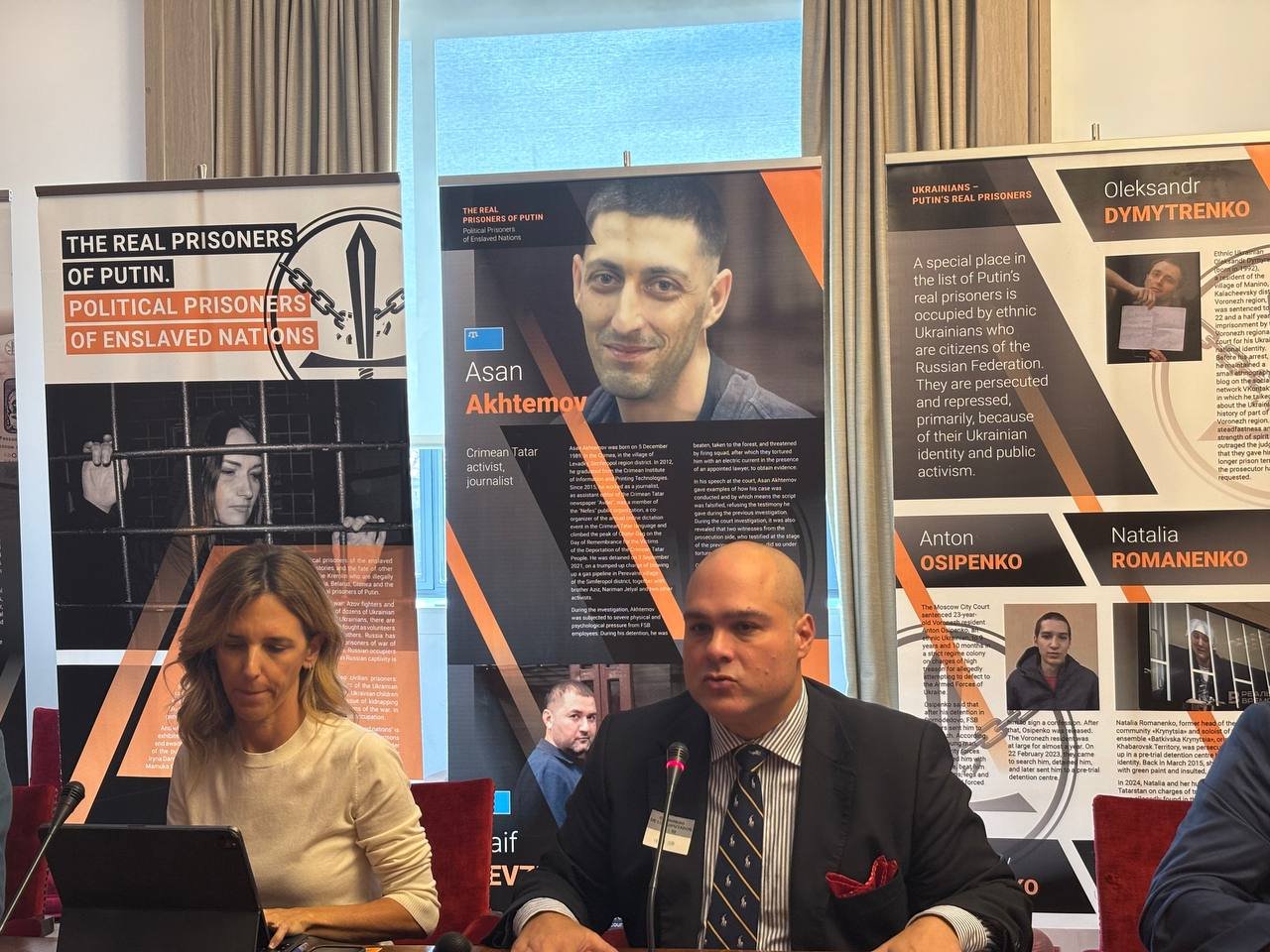
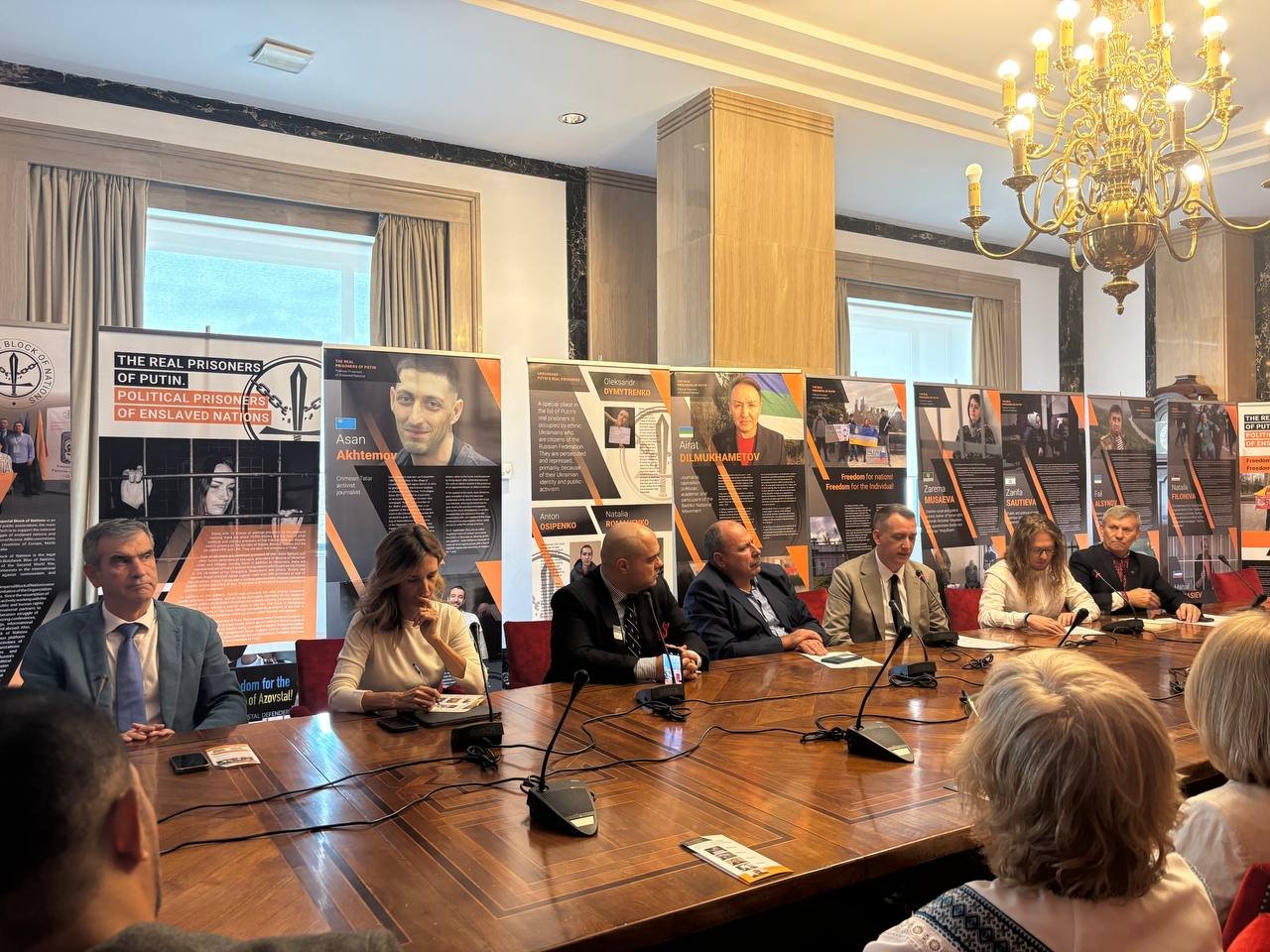
On 10 October, the Anti-Imperial Block of Nations’ human rights project “Putin’s Real Prisoners. Political Prisoners of the Enslaved Nations” was presented at the Spanish Congress. The presentation was held in partnership with the Ukrainian Community of Spain, “For the Rights, Honour and Dignity of Ukrainians.”
The presentation drew a large delegation of Spanish politicians, public figures, activists from Venezuelan, Chechen, and Georgian opposition movements abroad, and representatives of the Ukrainian diaspora.
Opening the event, the head of the Ukrainian community “For the rights, honour and dignity of Ukrainians”, Yuriy Chopyk, stressed the importance of support for the Kremlin’s political prisoners, who represent the national liberation movements of enslaved peoples, by European politicians and human rights activists. According to Yuriy Chopyk, Russia is testing the possibilities of the EU and NATO to respond to modern geopolitical challenges.
Spanish Congresswoman Cayetano Álvarez de Toledo expressed support for the main goal of the human rights project – the release of Kremlin hostages. She emphasised that she considers Putin’s regime criminal and totalitarian, one that poses a threat to the entire civilized world, something that some modern politicians are afraid to speak about openly.
In his speech, ABN President Oleh Medunytsya thanked them for the opportunity to hold a high-level presentation and appealed to those present for cooperation.
“The idea of creating this exhibition arose after the prisoner exchange between Western countries and Russia last year. Then, in August 2024, Russia released sixteen political prisoners and citizens of the European Union and the United States from prisons. In return, it received killers, arms dealers, spies and cybercriminals from European prisons,” said Oleh Medunytsya. “We carefully analysed who exactly Putin released from prisons. Most of these people represent the so-called “Russian democratic opposition.” We believe that this exchange was not fair because the presence of another opposition in Russia was ignored. Those who are truly afraid of Putin’s regime. Those who are truly fighting not only Putin, but also the Russian empire. These irreconcilable fighters remained unnoticed by the West.
“Democratic countries often identify Russia with Russians,” the President of the ABN noted, “but this is a delusion inspired by Russian international propaganda. In fact, Russia is an invented country with an invented history. Formally, it is a federation, but in reality, it is a cruel empire that colonised smaller peoples who lived, and some still live, in large territories rich in natural resources and minerals. The goal of the Kremlin’s colonial policy is to exploit these resources. Resources, for which the war against Ukraine is being waged, for which Russian nuclear weapons are being created, which threaten the civilized world.”
“These conclusions are not my invention,” emphasised Oleh Medunytsya, “every second prisoner captured by the Ukrainian army is not an ethnic Russian. These are representatives of the peoples enslaved by Russia. In addition to exploiting resources from its bowels, Russia takes its people into the hell of war. But not everyone agrees with this. Some disagree with both the Kremlin’s policy and the fact that their peoples are part of the Russian Federation in general. These people, like us, believe that victory in this war will be the dismantling of the Moscow imperial creation. An empire cannot exist alongside democracy.”
Executive Director of the ABN Oleh Vitvitskyj introduced the attendees to the materials of the thematic exhibition of the project. “A special place in the list of Putin’s real prisoners is occupied by representatives of the national liberation movements of the enslaved peoples,” Oleh Vitvitskyj said. “These are activists from the North Caucasus, the Idel-Urals, the Far East, Karelia, Oirat-Kalmykia and other regions. After all, in addition to the demand to stop the war, they proclaim the idea of the right of their own peoples to self-determination and freedom, that is, separation from Russia. And it is this that scares the Kremlin leader the most. Putin understands perfectly well that after their release, they would have every chance to lead the national liberation struggle of their nations. That is why he does not offer them to the existing ‘lists for exchange’ of prisoners or captives, trying to destroy them morally and physically behind prison bars.”
“We have formed a list of the most ardent opponents of the Kremlin dictator who are persecuted or imprisoned,” continued Oleg Vitvitsky. “These are, first of all, Zarema Musayeva, Altan Ochirov, Natalia Filonova, Ayrat Dilmukhametov, Parvinakhan Abuzarova, Fail Alsinov, Andriy Vasyurenko, Alexander Gabyshev, Zarifa Sautieva, Mikhail Afanasyev, Azat Miftakhov, Ramilya Saitova, Aruna Arna, and other political prisoners of the Kremlin.”
“To this list, in our exhibition, we added two more imprisoned Crimean Tatar activists and five histories of ethnic Ukrainians, born in the Russian Federation, who are in prison simply for the reason that they were born Ukrainian.
“Their histories of struggle, resistance, and hardship are different, but they all have in common that they suffered in the fight for truth, justice, and the right to freedom,” the ABN executive director concluded.”
The presentation was also attended by the well-known Venezuelan human rights activist, President of the Refugees Without Borders association, Sergio Contreras, who compared the situation related to human rights violations in Venezuela and in Russia.