


China has long demanded from the Russian Federation permission to navigate on this river, and Moscow resisted. Only now, when the Kremlin has become a de facto vassal of Beijing, will Russia fulfil this condition.
Russia will hand over the Tumanna border river to China so that Beijing can access the Sea of Japan.
Political scientist Vadym Denisenko told TSN.ua exclusively why Putin quietly handed over part of the territory of the Russian Federation to China while everyone was following his visit to North Korea.
“Everybody here is talking about this treaty of comprehensive friendship and scaring a million Koreans, and at the same time, it should be understood that a part of the essentially Russian border was handed over to China very quietly. China got direct access through the Russian-North Korean border to the Sea of Japan. Across the river, which is called “Tumannaya” in the Russian transcription, says the political scientist.
The expert noted that all of Putin’s actions in the Far East should now be considered from two points of view.
“First, it is an attempt to find some or other equipment that will allow the war to continue. On the other hand, it is the creation of points of tension, which would allow us to conduct various negotiations with the People’s Republic of China, so as not to fall into even greater political dependence on China in the whole spectrum of issues,” Denisenko explained.
As reported by The Moscow Times, the Tumanna River, which flows through the border of the People’s Republic of China and North Korea, and then the border of the Russian Federation and the DPRK, is located on lands that belonged to China until the middle of the 19th century. Currently, Chinese ships can only navigate the river as far as the village of Fangchuan and do not have access to the lower reaches, the 15-kilometre stretch that allows access to the sea.
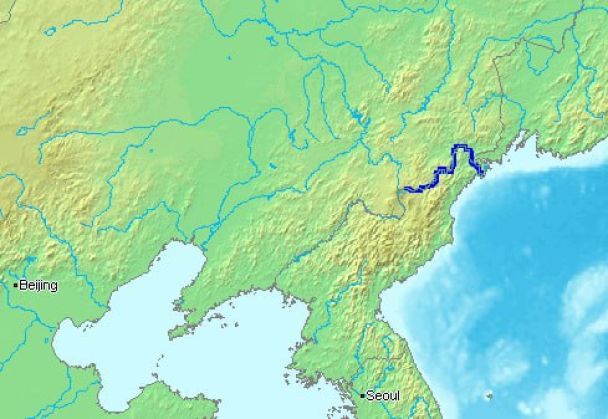
The transfer of the river was discussed at the May negotiations in Beijing between President Vladimir Putin and Chinese President Xi Jinping, Nikkei notes. The official statement based on the results of the visit included an item on the participation of the Russian Federation and China in a “constructive dialogue” with North Korea regarding the Tumanna River. The passage of Chinese ships is hindered by the “Friendship Bridge”, erected on the border of the Russian Federation and the DPRK back in the times of the USSR.
China is considering widening the Nebula in its lower reaches and demolishing the bridge. Previously, Russia did not support this initiative by China, fearing that Beijing would thus increase its influence in Northeast Asia. However, against the background of the sanctions introduced against the Russian Federation for its invasion of Ukraine, Moscow is becoming increasingly dependent on the Chinese side.
On the other hand, the Russian-Chinese negotiations over the Tumanna River are causing concern in Japan.
We will remind everyone that on 18 June, the Russian dictator Putin arrived in Pyongyang to meet with the North Korean dictator Kim Jong Un. This is Putin’s first visit to the capital of North Korea since 2000.






