

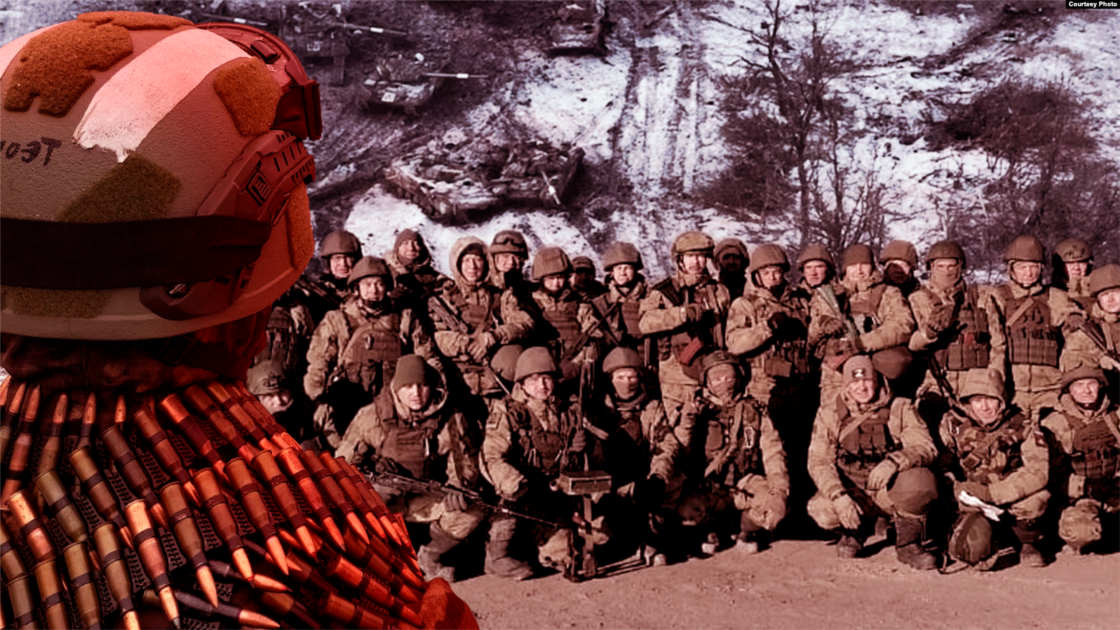
The remains of the Alga fighters who died on 6 February 2023, began to be returned to Tatarstan. On that day, three incomplete Alga companies (out of only three existing in the battalion) were sent to storm a forest plantation near Ugledar. In total, about 120 people went there, but not all of them managed to get out alive. For more than a year and a half, dozens of fighters were considered missing, their families tried to get at least some information from the authorities. In the fall of 2024, after the capture of Ugledar by the Russian army, the bodies of the volunteers began to be returned to the republic. Tatarstan political scientist Ruslan Aisin believes that the authorities could have decided that “the background from the events of a year and a half ago is no longer so strong and it is possible to return to this issue.”
Most of our memories, as the French writer Proust wrote, “slumber” within us, awaiting an external impulse to “awaken.” Then these memories suddenly become conscious, regain sensory presence, and under the right conditions are given verbal expression to become part of the complex of memories present in consciousness. To the present memories and “preconscious” memories are added the inaccessible “unconscious” ones, which are forbidden; they are guarded by guards whose names are “repression” or “trauma.”
The so-called “politics of memory” in Russia is part of the state ideology, the purpose of which is to interpret historical reality in a way that is useful to the authorities. It is expressed in the following: Russia is fighting against global evil, and all those who disagree with Moscow’s line are traitors and envious people. The aggressors who died during the so-called SVO are declared holy defenders of the homeland. Those who fight them back are fascists and agents of the dark forces.
The authorities themselves decide who is worthy of mention in the chronicles of the war and who is not; what can you ask of the residents and what should be stubbornly kept silent? Disobedience is fraught with receiving a nation’s article on “discrediting the army”. Something similar happened with the Alga battalion formed in Tatarstan (“Forward” in Tatar). Relatives of fighters from the republic sought the truth about what happened to the Alga battalion for a year and a half and demanded that their bodies be handed over for burial. But the authorities remained silent.
The background is as follows. In February 2023, three incomplete companies of the battalion were sent to storm a forest plantation near the Ukrainian city of Ugledar. In total, about 120 people went there. They were defeated by the Ukrainian Armed Forces. In October 2023, it became known that the remnants of the Alga battalion were destroyed near Bakhmut. Fierce battles were fought for these two settlements. Russia did not spare manpower. The task was clear – to capture at any cost.
At that time, the commander with the call sign “Shaitan” (what a telling nickname, reflecting the whole essence of this undertaking!) was taken prisoner. It was him that the other battalion fighters blamed for the death of their comrades near Ugledar.

The Alga Battalion is defeated again, this time near Bakhmut. The commander with the call sign “Shaitan” was captured
In the summer of 2024, the editorial board of Idel.Realii found that more than 130 volunteers from the Alga battalion were still listed as missing. Now this list has reached 150 people. And this it seems is not the limit.
Already this autumn, the remains of those killed during the assault near Ugledar from the Alga battalion began to be returned to their relatives in Tatarstan. Relatives actively inform each other about this in the relevant groups on social networks. What caused such a change in the authorities’ mood on this issue is unclear.
At the very beginning of this story, the directive was clear: the authorities did everything to hide the losses and not talk about the failures at the front. Incidentally, at that time, the head of Chechnya, Ramzan Kadyrov, called on the leaders of Russian regions to stop reporting losses among the participants in the war in Ukraine.
“There is no need to manipulate the topic of our heroes, to write that in such and such a region so many died, and in another – so many. I call on local authorities to deal with the issues of the dead and injured soldiers’ families, and not to comment on the losses,” he wrote on his Telegram channel.
It is possible that now the Kremlin leadership has decided that the emotional background from the events of a year and a half ago is not so strong and it is possible to return to this issue. Especially, since Ugledar and Bakhmut have been captured.
As I have already described above, the Moscow political command is actively trying to build its own memorial culture of the so-called “heroes of the SVO”. It is largely caricatured, and crude, with vague elements of ethical duty and patriotism. But at the same time, this remembrance coexists with oblivion. They only contradict each other at first glance. Their hybrid status is incredibly tenacious and effective in Russia. One of the first researchers of this paradox, the thinker Friedrich Georg Jünger, proposed distinguishing two types of oblivion: one of them is associated with loss, the other with preservation.
The Putin regime adheres to this strategy. It deliberately and systematically washes out of collective perception all the negativity associated with losses in the war, the crimes and destruction, and concentrates on the few successes and pompous actions. However, there are not many of them. The BRICS summit recently held in Kazan is one of them.
The history of the Alga battalion is a Russian event of “oblivion”. Remember how they were loudly and pompously sent off to war, focusing on the national character of this volunteer military unit, trying in every way to maintain a positive attitude? But as soon as they found themselves on the battlefield, all the victorious plaster began to crack and crumble. It turned out that they were experiencing difficulties on the front lines, they lacked basic things, there was no coordination with other units, and they were not allowed to go on leave. The war from a beautiful picture in propaganda reports turned into a quiet horror for them with the prospect of remaining forever in the Ukrainian black soil. In the end, that’s what happened.
Will this tragic misadventure of the Alga battalion fighters serve as a lesson to other “volunteers”? That is the big question. There are still those who, unfortunately, go to this criminal war for money or are intoxicated by Russian propaganda. Although there are fewer and fewer of them. North Koreans are taking their place. But that’s a completely different story, without a prologue…
Ruslan Aisin is a Tatar activist, publicist and political scientist, currently living outside of Russia.
Idel.Реалии





