

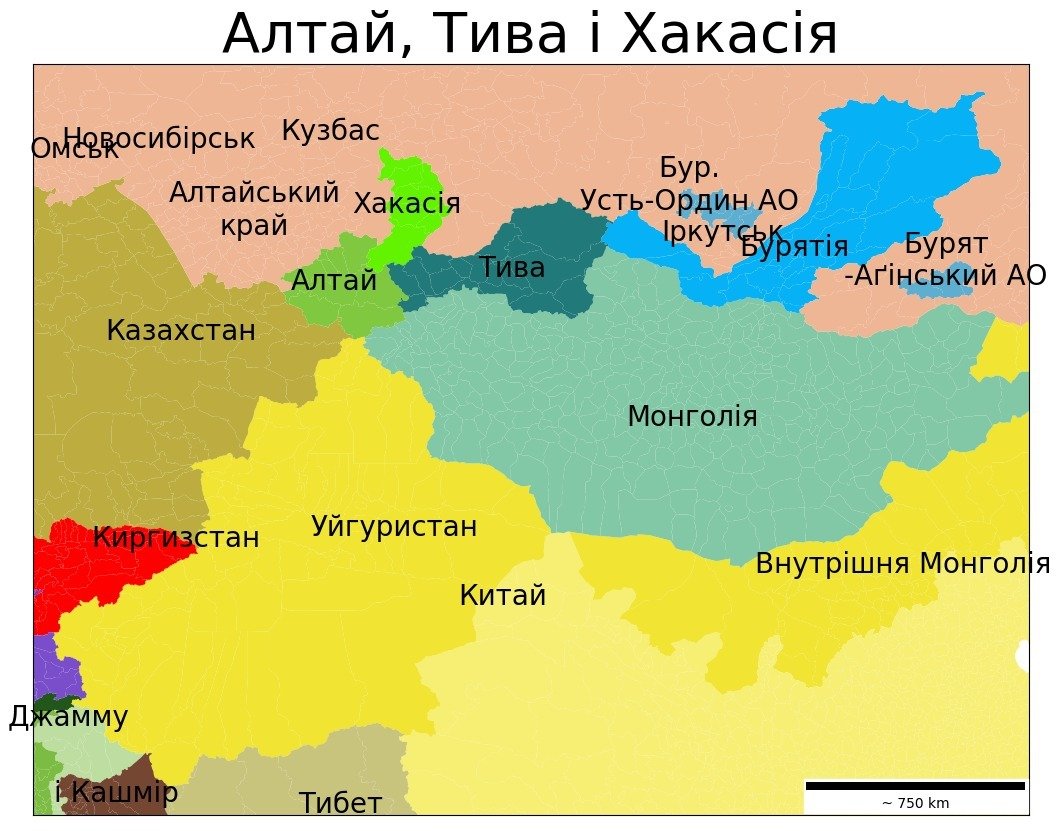
There are so many republics in the Russian Federation that the average (and extraordinary) observer gets lost. While Bashkir activists constantly create infomercials, and Ichkerians and Erzya fight on the side of Ukraine, there are absolutely “uncountable” republics – such as the Altai Mountains or Khakassia.
Along with Tyva and Sakha (Yakutia), Altai and Khakassia belong to the Turkic-speaking republics. However, Tyva stands apart due to its relatively recent (only since 1944) incorporation into the Russian Federation, and Sakha in a cultural and customary sense is closer to the Arctic people of Siberia. Nevertheless, as evidenced by the study “Symbolic and socio-normative aspects of the modern ethnopolitical movement of the Republics of Altai, Tyva and Khakassia (late 20th – early 21st century)”, which we offer to your attention today, it is appropriate to consider these three republics – Tyva, Altai and Khakassia – as a cluster of cultural, civilizational and socio-politically related and in many ways similar nations. And when we say “nation”, we, like the English-speaking public, mean not so much an ethnos or nationality, but a country.
This cluster in Russia is considered either a marginal periphery (Altai or Tuva) or a hopelessly Russified semi-periphery for any sovereign ambitions (like Khakassia, where the titular population is less than 20%). Nevertheless, the very fact of the presence of the title “republic” in the name of those subjects indicates that their then leadership, together with the public, did not miss the parade of sovereignties. Did these republics have a socio-political asset, like our Rukh, and how bold was their independence rhetoric? Think for yourself, here is a quote from the text:
“The Khakass state for a long time in the 17th-18th centuries. put up military resistance to the Russian Empire in the person of the Cossacks and was defeated in an unequal struggle, nevertheless, it did not conclude any agreements regarding its voluntary entry or accession to the Russian Empire. The government in the occupied territory of the Khakass state ceased to exist, and thus the Khakass state and the system of Khakass people’s rule were destroyed, and then forcibly annexed to the territory of the Russian Empire. Thus, the military occupation of the territories of the Khakass state became the very root cause that gave rise to the current political discrediting of the Khakass people”…
Usually, authors manage to convey their own, uncensored opinions or attitudes to the phenomena described in the work. We do not have sufficient reason to suspect the author of this dissertation, Ekaterina Samushkina, of either sympathy for the decolonizers or blood loyalty to the “unity and indivisibility” of Russia. The author either considers these ethnopolitical movements not to be serious, and not politically unstable enough to achieve sovereign goals, or she was aware of the danger (to herself) of officially voicing the prospects for the realization of such aspirations, or, rather, both at the same time. This already gives reason not to share the skepticism that permeates this study – both in direct text and between the lines.
Moreover, given the undeniable fact that both the regional population (regardless of ethnicity) and regional elites are unlikely to be satisfied with the consequences of the last 25 years of their stay in the Russian Federation, nothing allows us to consider the potential of those movements hopelessly buried, nor does it guarantee the impossibility of their revival under the right opportunity and favourable conditions now or in the near future.






