Drone attacks appear to be becoming commonplace in Tatarstan. Over the past few months, they have flown to the republic five times. Tatarstan political scientist Ruslan Aisin reflects on how such “arrivals”, coupled with repression, can affect the political sentiments of the population of the Volga republic.
Tatarstan increasingly appears in the chronicles of the war. The other day, on 31 May, an unmanned aerial vehicle was shot down again over the territory of Tatarstan. For a short time, airports in Kazan and Nizhnekamsk stopped accepting and sending flights. Employees of several enterprises were evacuated.
Over the past two months, this is already the fifth attack by UAV forces on the territory of Tatarstan. The first was on 2 April.
In early April, drones attacked a factory for the production of military drones on the territory of the Alabuga SEZ in Tatarstan. The hostel complex, built for employees of the special economic zone and students of the local college “Alabuga Polytech” in 2022, was damaged. As a result, 14 people were injured in the Alabuga SEZ, including foreign students. After the attack, Tatarstan President Rustam Minnikhanov said that enterprises themselves must protect themselves from drone attacks.
There is still no detailed answer as to how these air rams managed to cover a distance of 1,300 km if we take the territory of Ukraine as the starting point.
As a version, the option of launching these air rams from the territory of Kazakhstan was considered. Distance – less than 500 kilometers (by air). The border itself, over 7,000 km long, between Russia and Kazakhstan is almost transparent. At the same time, the Ministry of Defence of Kazakhstan issued a communique, which stated that “the information disseminated in some Telegram channels, that allegedly drones that attacked objects of the Republic of Tatarstan were launched from the territory of Kazakhstan is not true. Such insinuations are aimed at discrediting the Republic of Kazakhstan.”
On the eve of the next air attack, the new Russian Defence Minister Andrei Belousov visited Astana. He called the main areas of cooperation the improvement of the Unified Regional Air Defence System of Russia and Kazakhstan, the exchange of experience of the armed forces activities, and ensuring the functioning of test sites of the Russian Ministry of Defence on the territory of the republic.
Meanwhile, Ukraine’s Western partners, one after another, give the go-ahead to launch strikes on Russian territory using weapons from these countries. At the meeting of NATO foreign ministers in Prague, this issue was primarily considered. Alliance Secretary General Jens Stoltenberg unequivocally stated that the Ukrainian Armed Forces should receive such a right since Ukraine was subjected to aggression from Russia.
Now Ukraine can use weapons received from some allies to retaliate against Russian territory. This approach can change the paradigm of the course of this war. As you know, the best defence is an attack. And in this case, Russia’s actions acquire the opposite thrust. That is, the conflict vector is turning towards Russia. Everyone is already accustomed to the event that the Belgorod and Kursk regions and annexed Crimea have become front-line zones. But few people expected the heat of war would scorch the Volga region, and specifically Tatarstan. Distances longer than 1000 kilometers no longer seem safe.
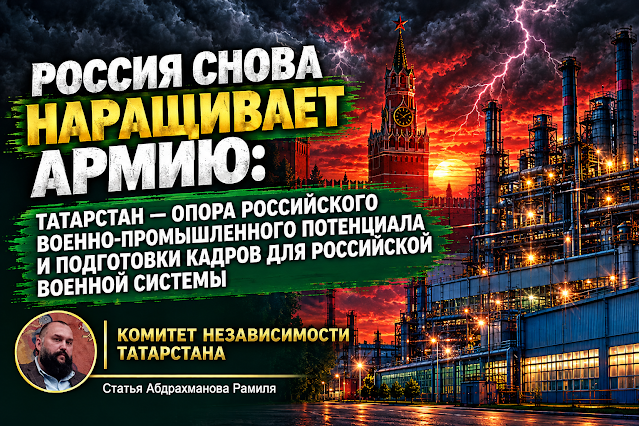
Tatarstan became a target because of a UAV production plant and several important military-industrial and oil refining facilities there. These include the Kazan Aviation and Helicopter Plants, which are currently fulfilling defence orders for the war.
Tatarstan has essentially already switched to an (incomplete) front-line territory regime. Sirens, evacuations and suspension of airport operations are no longer unusual events.
Is it possible to get used to war, even if it is distantly rumbling somewhere? This is a question without a clear answer At the same time, one can ask another question: how much will the “partial entry” of the war into Tatarstan affect the support of Vladimir Putin and the government in general among the residents of the republic?
We cannot apply representative sociology for obvious reasons. In Russia now, this is impossible. In the current situation, only special closed institutions that execute the Kremlin’s order can carry out real public measurements. Public sociology is strictly prohibited.
However, we can project the general situation and understand how a war, carried out a thousand kilometers away, but echoing in the republic, is generally reflected in the psychological state of people. It can be assumed that the residents of Tatarstan have lost their sense of security. For the third year now, people have been plunging into collective depression because of the war itself, the fear of mobilization, increased repression, a hopeless future, the economic crisis, rampant crime, and the experience of helplessness in the face of this bureaucratic machine.
This factor can sooner or later generate a large-scale crisis in relations between the state and society. For some time, the effect of rallying around the authorities works, but then it will begin to crumble and stratify. Then the trust of the lower classes in the upper classes will be completely lost. No society can vegetate for a long time in mobilization and existential fear. There are no nerves of steel.
Ruslan Aisin, Tatar activist
Idel.Реалии