
Today, we finally have the opportunity to dedicate material for the first time to another region of the aggressor country – a region that is special in many ways.
First, the Kaliningrad region, previously known as the northern half of East Prussia, never belonged to the Russian Empire or its predecessor countries.
So, accordingly, secondly, Russians were never its population, much less its indigenous population: the autochthons of this region were the Western Baltic tribes – the Prussians, the Jatvyags (Sudovians), and the Goliads, Germanized by the Teutonic expansion.
Thirdly, this administrative-territorial unit was included in the RSFSR contrary to logic and the absence of adjacent borders, so after the restoration of the independence of the Baltic countries in 1991, the Kaliningrad region turned into an exclave cut off from the rest of the Russian Federation, the distance to which at its narrowest point is 375 km.
Such are the consequences of Stalin’s greed, whose “wise” decision, we are certain, will sooner or later result in the aggressor country losing not only this territory, but also a good million of this increasingly “precious” Russian-speaking European population.
The Germans of East Prussia had no illusions about the civility of the Russian soldiers, so by the time the province was “liberated” by the Soviet army, only 130,000 Germans remained out of a population of almost a million. And even those who remained (or tried to return) after the massacres, abuses, robberies, and rapes were deported.
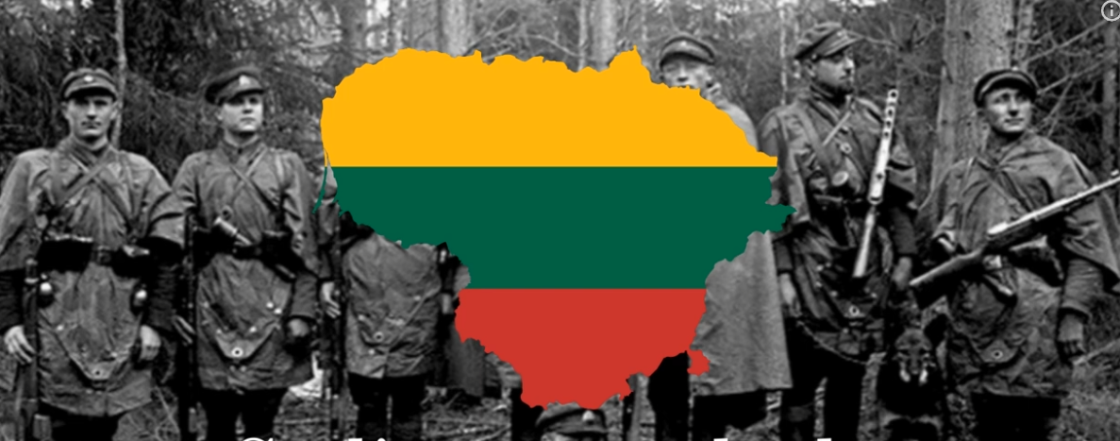
However, the region also included the so-called “Little Lithuania” – a narrow strip of the left bank of the Neman River inhabited by an indigenous Lithuanian minority. And although both the Germans and the majority of Prussian Lithuanians fell under the deportations of 1945-47, a certain number of them remained (especially since the Soviets faced a shortage of people willing to settle in the newly annexed territory).
Thus, according to statistics, between 1959 and 1979, about 20 thousand Lithuanians (~2.5-3.5%) still lived in the region, but since the late 1980s, their number (and share) has been decreasing, and as of 2021, only 4,279 (0.48%) Lithuanians have been recorded – in principle, a typical dynamics of the decrease in the indigenous population in territories once forcibly annexed to Russia.
But the real blasphemy is the destruction of any cultural and historical memory of the region’s pre-Russian times: as evidenced by recent material from LRT (Lithuanian National Radio and Television, link in the first comment), since the beginning of the full-scale Russian invasion of Ukraine, the regional authorities have been increasingly diligent in dismantling visible references to the region’s Lithuanian or German identity, and have also kept architectural and religious monuments from the pre-Soviet era in a neglected state.
Such paranoid aggressiveness towards the remnants of local pre-Russian memory and identity indicates that both the Kremlin and its governors in North-East Prussia are panicking about losing the region, because they are aware of the growing chances of such a loss. We should add that there is a fairly noticeable independence movement in the region (and we will also write about this later).