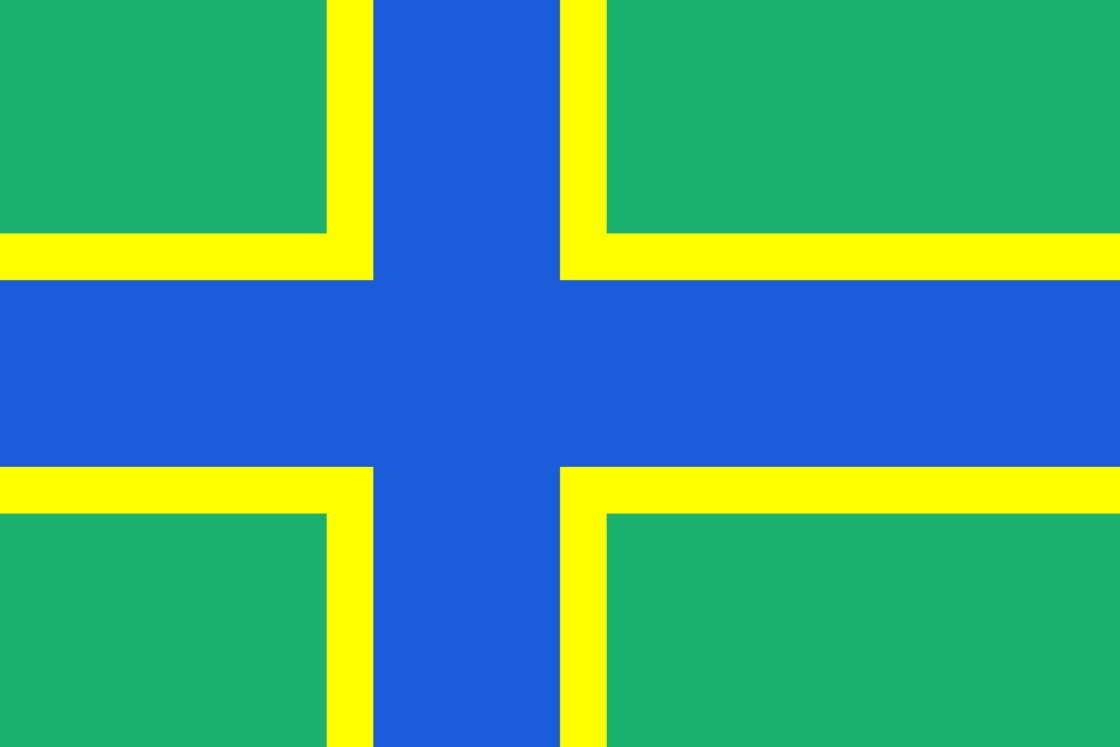
Veps – The ancient Karelian people are part of the Caucasoid race with a Ural admixture. Vepsians are small in stature, with an average head size, their face is slightly flattened, their forehead is low, the lower jaw is slightly expanded, the cheekbones protrude, the tip of the nose is raised, and a slight growth of hair on the lower part of the face is also characteristic. The hair of the inhabitants of the Republic of Karelia is straight, mostly light.
Self-name “Veps”, “Vepsya”, “Lyudinikad”, “Vepsline”. The Russians, along with the name “all”, used the ethnonym “Chud (meaning: Chud Zavolochskaya)”, which was used for all the Baltic-Finnish peoples. The Vepsian language, belonging to the Baltic-Finnish group, has three dialects: northern, middle and southern. Veps belong to the White Sea-Baltic type of a large Caucasoid race.
The territory of the traditional settlement of the Veps in the Leningrad region is located in the border areas of four districts of the Leningrad region: Podporozhsky (Vinnitsa rural settlement, Voznesensky urban settlement), Boksitogorsky (Radogoshchinsky rural settlement), Lodeynopolsky (Alekhovshchinsky rural settlement) and Tikhvinsky (Pashozerskoe rural settlement).
The reliability of population census data, especially in the 20th century, is questionable, since many were afraid to call themselves Vepsians, on the other hand, some local authorities often declared Vepsians to be Russians. The current number of Vepsians according to the 2002 census in the Leningrad region is 2019 people, according to the 2010 census – 1380 people.
We have little information at our disposal related to the history of the Vepsians, sometimes the sources are silent about them for whole long centuries. The ethnonyms Vas, Vasina in the Chronicle of Jordan in the 6th c. n. e., probably belong to the Vepsians. The ethnonym and toponym “ves” in Russian chronicles, apparently denoting a region inhabited by various tribes and nationalities, but having its own identity, has acquired local significance in this region since the 9th century. The chronicle mentions all among those peoples who called on the Varangians (Vikings) to reign in Novgorod. Along with the name “all”, the Russians also used the common name “chud” in relation to the Veps, which was used to designate all the Baltic-Finnish peoples. Perhaps the name “Northern Chud” most likely referred to the Vepsians. According to some scientists, the inhabitants of Bjarmia, repeatedly mentioned in the Scandinavian sagas, could be members of the tribe of Veps ancestors. The travel diary of the Arab traveler Ibn Fadlan (X century) mentions the Vepsians under the name “Visu”. Religious historian Adam of Bremen in the Hamburg history of the church, written in the tenth century, and “Gesta Danorum” (“Acts of the Danes”) by Saxo Grammar of the XII century. mention the people Vepse (“Vepse”).
From the end of the tenth century until the beginning of the 12th century. the ancient Ves expanded in eastern and northern directions and reached the eastern shore of Lake Ladoga. Soon after this, the name “Ves” disappears from Russian chronicles, from which Russian historians of the last century concluded that the whole suffered the same fate as the measure and murom, that is, they disappeared among the Russian people. However, the Vepsian people continued to live on their traditional territories, where they managed to successfully maintain their own characteristics and ethnic independence. As a result of Russian colonization, the southern part of the region inhabited by Veps by the beginning of the 11th century. It turned out to be inhabited mainly by Russians, the Vepsians were converted to Orthodoxy, and monasteries were built on their lands. Due to the ever-increasing burden of feudal obligations and forced conversion to the Orthodox faith, many Veps fled to the north and northeast throughout the 15th century. and even later. Most of them took part in the ethnogenesis of other peoples