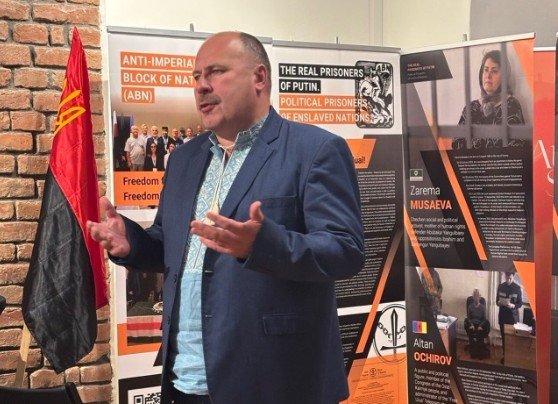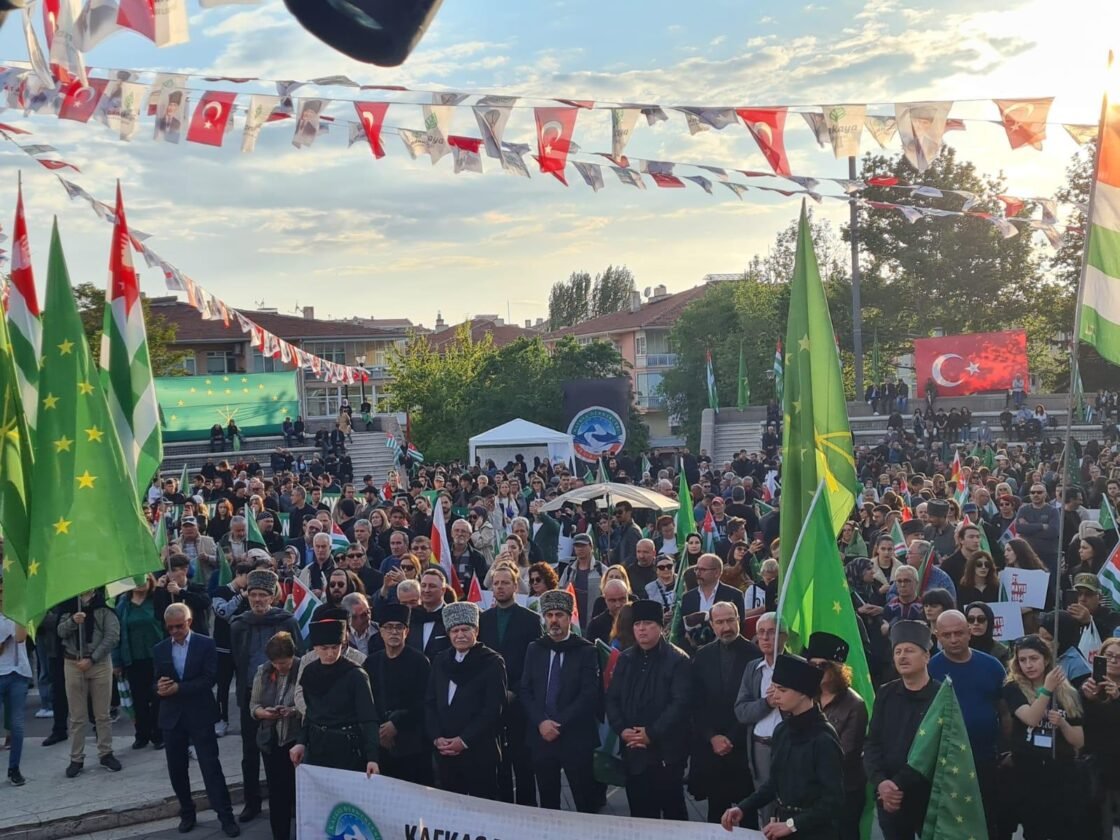

Dear participants of the conference, I am very glad to be here with you today and to have the opportunity to deliver to you some of my ideas regarding the necessity of restoration of the international security system and the future of Russia.
We need to pay attention, first of all, to our own traditions of understanding the essence of Russian imperialism and chauvinism. Currently, the new term “Russizm” is often used. I would immediately like to note that two concepts of national identity, which are widespread in modern Russia, should be distinguished. Those are “Russkie” and “Rossianie”. In English, both concepts are translated as Russians, which does not give an understanding of their real content.
So, the first term means that a person is actually Russian. The second corresponds to the unsuccessful Soviet attempt in the 1970s at the times of Leonid Brezhnev to present all the Nations who lived on the territory of the Soviet Union as one Soviet Nation. The goal of both approaches is Russification, the destruction of national peculiarities and cultures, and ultimately – social oppression. Additionally, it must be clear that not all people who have Russian passports are Russians.
Here I want to mention distorted history as part of the fake media reality in Russia. Under the current authoritarian regime, the daily life of citizens of the Russian Federation is increasingly immersed in media and historical fakes, when a huge population believes literally in the most fantastic fiction offered by the Government. The human dignity of Russian society, the ability to think critically and recognize any rules of international law have long since migrated there, to the fake media and historical reality that best represent modern Russian political culture.
Secondly, the Ukrainian liberation movement has used the concept “Russia is a prison of nations” since the 19th century. This concept belongs to the most famous Ukrainian poet Taras Shevchenko, whose poetry is familiar to all Ukrainians since childhood. That is, this expression has not only a clarifying but also a mobilizing significance. It is universally understood, complete, and final. Also, it can have a wide international sound and meaning.
There is no doubt that the Russian Federation is an empire in its invasive and exploitative essence. In this case, the principle of the right of nations to self-determination should be applied. The history of the Russian Empire, the Soviet Union, and the Russian Federation is the history of the same state that terrorizes all Nations living on its territory. Russia is unable to govern without repressive methods, just as it is unable to ensure decent living conditions.
We also have to somehow help the Russians to find their own history that would not be the history of the empire, which is hated by all the Nations who live in it or managed to escape from this prison. This prison must be destroyed. Then Russians would be able to focus their efforts on creating a new own civilized independent Russian state and political culture of self-respect and respect for others.
Thirdly, the task of achieving mutual understanding (finding a common language) between all representatives of the anti-Russian / anti-imperial front acquires special importance. It is a very serious challenge that potentially can destroy such unity if own traditions, which people rely on in the East and in the West, among different religions, and races, among the right and the left, the rich and those who want to live better, would contradict their common understanding and would divide them in front of Russian imperialism. People are all different, but they have a common goal. Therefore, modern political language should bring them closer.
So, the task is to create a special platform of political and cultural mutual understanding not only to recognize the danger of Russian imperialism for the further fate of world civilization but in the future also to informally resolve various misunderstandings, which could accompany the reconstruction of the international security system from the point of international law. The ideas of justice, dignity, and freedom could become the basis of such global understanding and mutual respect.
Thank you so much for your attention.
Serhiy Kvit, President of the Kyiv-Mohyla Academy