
The day before, Yulia Navalnaya spoke at a strategic forum in Slovenia, where she criticized the idea of decolonizing Russia.
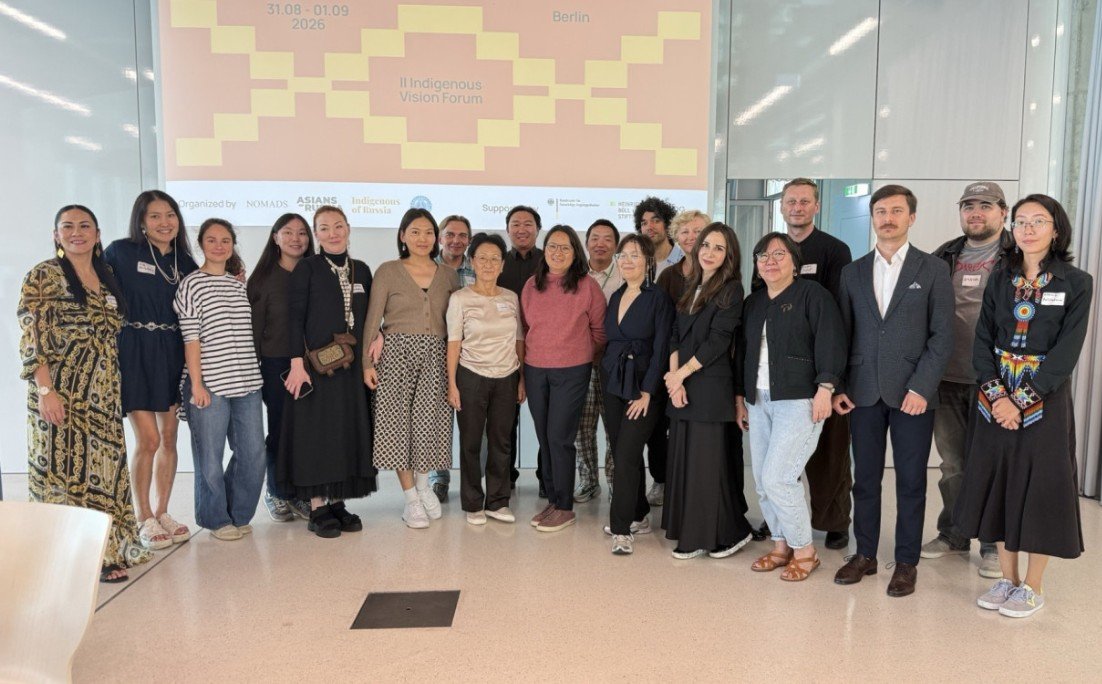
In a conversation with Idel.Realii, Buryat anti-war and decolonial activist Maria Vyushkova and member of the Congress of the Oirat-Kalmyk People Daavr Dorzhin told how they feel about criticism from Russian oppositionists.
— <…> They [the Russian opposition] are similar to Putin and his administration in terms of their attitude towards us, non-Russians, so it is much easier for them [the Russian opposition] to try to marginalize us, — noted Daavr Dorzhin.
Vyushkova noted that the leaders of the Russian opposition are extremely skeptical about decolonial movements.
— <…> If they [decolonial movements] are mentioned, it is usually in an ironic way. I think this is deeply wrong because the decolonial direction is what everyone really needs, not just indigenous nations, — she shared.
The day before, Yulia Navalnaya spoke at a strategic forum in Slovenia, where she stated that the decolonization of Russia does not correspond to the country’s development strategy. According to her, those who advocate the need to “urgently ‘decolonize’ Russia” cannot “explain why people with a common background and cultural context should be artificially divided.”
In her opinion, “threatening to divide Russia into many parts, playing into the hands of Putin’s propaganda,” does not correspond to Russia’s development strategy.
Not only supporters but also critics of the politician’s message gathered under the post with this statement by Navalnaya.
— Well, what if, for example, the North Caucasus decides to voluntarily separate from a free and democratic Russia in the future, realizing its right to self-determination? They have a different cultural context and a painful background. What will happen then? — wrote one of the subscribers.
In February 2023, the Forum of Free Peoples of the Post-Russia was held in Brussels, in the building of the European Parliament, which brought together representatives of various political forces, including from among the people of Russia. Tatars, Bashkirs, Chechens, Buryats, Kalmyks, Nogais and speakers from other ethnic groups spoke out on several issues regarding the arrangement of the post-Russian space after what they believe is the impending collapse of Russia.

A forum of increasingly clear demands
- Even before Russia’s full-scale invasion of Ukraine, Moscow was criticized for its pressure on activists advocating for federalism in the Russian Federation and its “assimilationist” policies toward its indigenous people and national minorities. At the same time, experts and activists pointed to the dismantling of the federal foundations of the state.
- The Russian authorities are stepping up the persecution — now criminal — of activists who speak out in defence of federalism, regional powers, and the rights of indigenous nations inhabiting the Russian Federation, criminalizing even political speech (guaranteed by the country’s Constitution). This has led to activists increasingly speaking out about their desire to separate from Russia. These include, for example, the Buryat activist Marina Khankhalaeva, who at the end of April in New York at the UN Permanent Forum on Indigenous Peoples spoke out with harsh criticism of Russian policy. She spoke about colonization, about the Buryat territories being deprived of autonomy, and also about the fact that after a full-scale invasion of Ukraine, Russia used its non-Slavic citizens as “expendable material.”
- Not only the Russian authorities but also representatives of the Russian opposition disagree with the separatist rhetoric of the regionalists. Thus, with the beginning of Russia’s full-scale invasion of Ukraine, Mikhail Khodorkovsky repeatedly said that he was against separatism, and representatives of the Anti-Corruption Foundation (FBK) made a forecast about the unlikelihood of Russia’s disintegration. Leonid Volkov spoke about this in July 2022, and Vladimir Milov in February 2023. In mid-July 2023, Georgy Alburov wrote about this, calling the idea of the separation of Bashkortostan and Tatarstan marginal. Maria Pevchikh also does not see any prerequisites for the disintegration of Russia. Russian President Vladimir Putin shares the same opinion. In May 2023, he spoke ironically about supporters of separation from Russia, hinting at the participants of the Prague Forum of Free Peoples of Post-Russia, where both Tatars and Bashkirs were represented.